
fix the sentence
Sentences from the passage with the capitals and punctuation removed — rewrite each one correctly.
Web preview · Open larger preview (opens in a new tab)
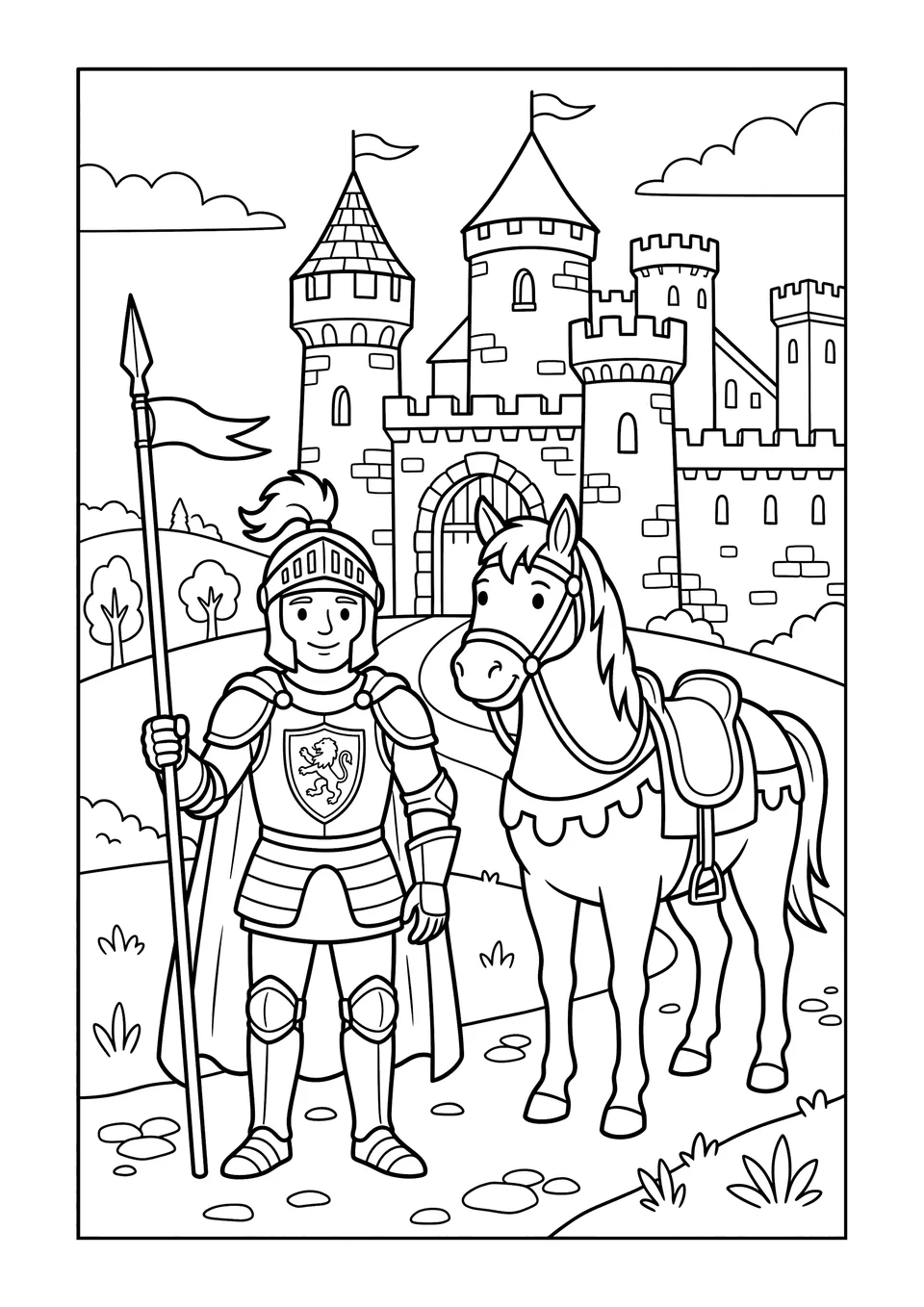
Step back into the Middle Ages with our free printable medieval knight coloring page and educational reading activity. Perfect for upper elementary students, this worksheet combines history learning with creative coloring fun!
PDF · Your plan’s download limits apply
During the Middle Ages, from about the fifth to the fifteenth century, the most famous warriors in Europe were medieval knights. These highly trained soldiers rode on horseback and served noble lords and kings. However, being a knight was about much more than just fighting. It was a lifestyle defined by duty, intensive training, and a strict code of behavior.
The journey to becoming a knight began in early childhood. At around the age of seven, a young boy from a noble family would leave home to become a page. As a page, he lived in the castle of another lord, where he learned polite manners, practiced riding horses, and trained in basic combat using wooden weapons. By age fourteen, the boy would progress to become a squire. A squire was a personal assistant to an active knight. He cared for the knight’s horses, polished the heavy armor, and even followed the knight into battle to assist him. If a squire proved his bravery and loyalty, he was dubbed a knight at around age twenty-one during a special, solemn ceremony.
Knights were famous for their incredible protective gear. Early knights wore chainmail, which was flexible armor made of thousands of tiny, interlocking metal rings. Later, they wore full suits of heavy steel plate armor that could weigh up to sixty pounds! To practice their combat skills during times of peace, knights participated in tournaments. The most popular event was jousting, where two armored knights on horseback charged at each other with long wooden poles called lances, trying to knock each other off their horses.
Under a code of honor called chivalry, knights promised to protect the weak, speak the truth, and defend their rulers. Although the era of knights ended hundreds of years ago when battlefield technology changed, their stories of courage and honor still capture our imaginations today.
During what historical period did medieval knights live?
At what age did a noble boy typically begin his training to become a page?
What was the main difference between a page's duties and a squire's duties?
At what age could a squire finally be dubbed a knight?
Describe what chainmail armor is made of.
According to the passage, how much could a full suit of heavy steel plate armor weigh?
What was the purpose of tournaments for knights during times of peace?
What happened during a jousting match?
What was chivalry?
Why did the era of medieval knights eventually come to an end?
More ways to practice with this story — every sheet is built from the text itself, answer key included where it counts.
One PDF with a cover, a contents page and every answer key at the back — color the page in, then keep going on paper.
Sentences from the passage with the capitals and punctuation removed — rewrite each one correctly.
Match the passage words to their meanings, then fill the missing words back into real sentences.
Two writing tasks that build on the passage, with plenty of lines to write on.
Bring history lessons to life with this engaging, free printable coloring page and reading passage bundle. Designed specifically for upper elementary students, this educational activity helps children explore the real history of knights—from their childhood training as pages to their final accolade as armored protectors of the realm. Combining a high-quality download coloring page with a reading passage is a fantastic way to boost reading comprehension and vocabulary in classroom or at-home learning settings.
Our history coloring pages are crafted with clear outlines and spacious areas, making them easy and fun for kids to color. After reading about the chivalric code, jousting tournaments, and heavy steel armor, kids can personalize their own medieval scene. Pair this coloring sheet with custom comprehension questions and a vocabulary glossary to create a complete, multi-sensory social studies lesson.