
Unlocking the Secrets of Rainbows
PicoBuddy7th GradeInformational3 min read404 words
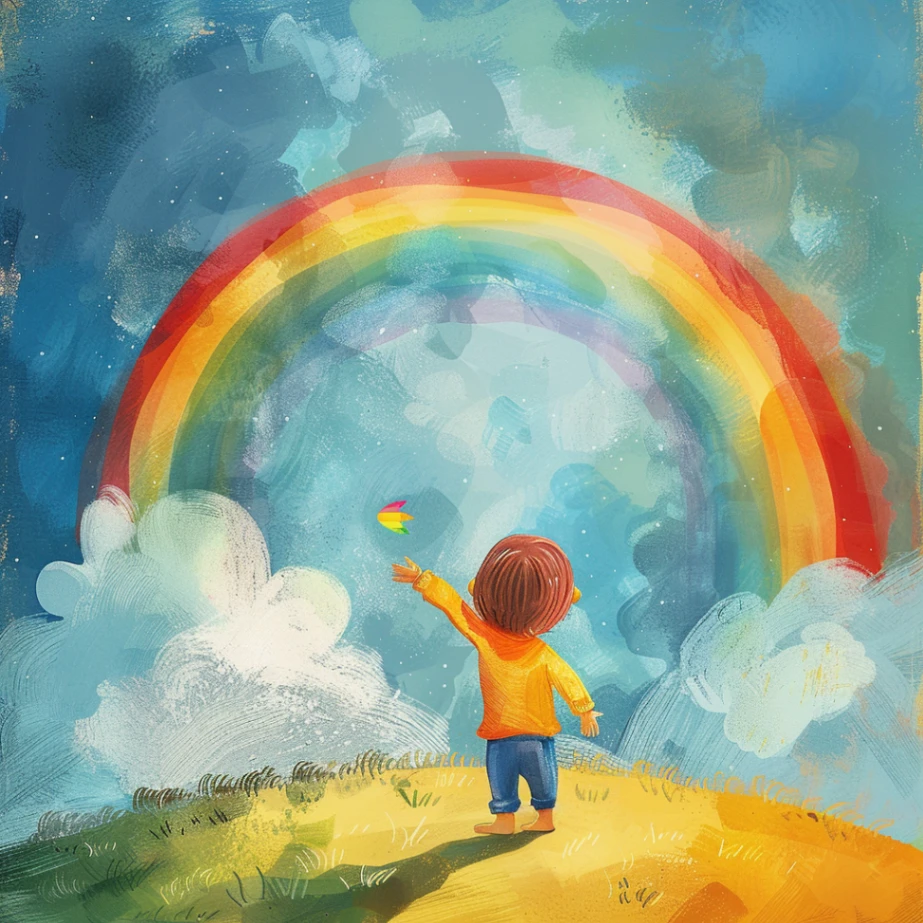
The Magic Behind Rainbows
Have you ever gazed at a rainbow and wondered how such a colorful arc appears in the sky? Rainbows are more than just beautiful sights; they are fascinating examples of physics in action! Let's dive into the science that makes rainbows possible.
What is a Rainbow?
A rainbow is an optical phenomenon caused by refraction and reflection of sunlight in water droplets. It appears as a multicolored arc in the sky, usually after rainfall. The most commonly seen rainbows are primary rainbows, which display the full spectrum of colors: red, orange, yellow, green, blue, indigo, and violet. These colors always appear in the same order due to the consistent way light bends.
How Rainbows Form
The formation of a rainbow involves several key steps:
- Sunlight: Rainbows can only form when the sun is behind you and the rain is in front.
- Refraction: As sunlight enters a raindrop, it slows down and bends. This bending is called refraction. Each color of light bends at a slightly different angle.
- Reflection: After being refracted, the light reflects off the back of the raindrop.
- Refraction Again: As the light exits the raindrop, it is refracted again, further separating the colors.
- Dispersion: This process of separation is known as dispersion. It is why we see the different colors spread out into an arc.
Why a Curved Arc?
Rainbows appear as arcs because of the angle at which the sunlight reflects and refracts within the raindrops. The angle between the incoming sunlight and the outgoing, refracted light is approximately 42 degrees for red light, and slightly less for violet light. This specific angle is what creates the familiar curved shape.
Imagine standing with your back to the sun. The raindrops that form the rainbow are at a consistent angle relative to you and the sun. This creates a circular arc with you at the center.
Double Rainbows and More
Sometimes, you might see a double rainbow! This occurs when light is reflected twice inside the raindrops. In a double rainbow, the colors are reversed in the outer arc – red appears on the inside, and violet on the outside. Double rainbows are fainter because some light is lost during the second reflection.
Rainbows remind us of the beautiful interaction between light and water. They are a colorful demonstration of physics in our everyday world, turning ordinary rain into a spectacular display.
- Refraction:
- The bending of light as it passes from one medium to another (like from air to water).
- Reflection:
- The process where light bounces off a surface.
- Dispersion:
- The separation of white light into its different colors.
- Optical Phenomenon:
- An observable event caused by light.
You Might Also Like


About this informational passage for 7th Grade
“Unlocking the Secrets of Rainbows” is a informational reading passage about Rainbows, written for 7th Grade. It takes about 3 minutes to read (404 words) and comes with an interactive quiz and a printable worksheet with comprehension questions and an answer key.