
fix the sentence
Sentences from the passage with the capitals and punctuation removed — rewrite each one correctly.
Web preview · Open larger preview (opens in a new tab)
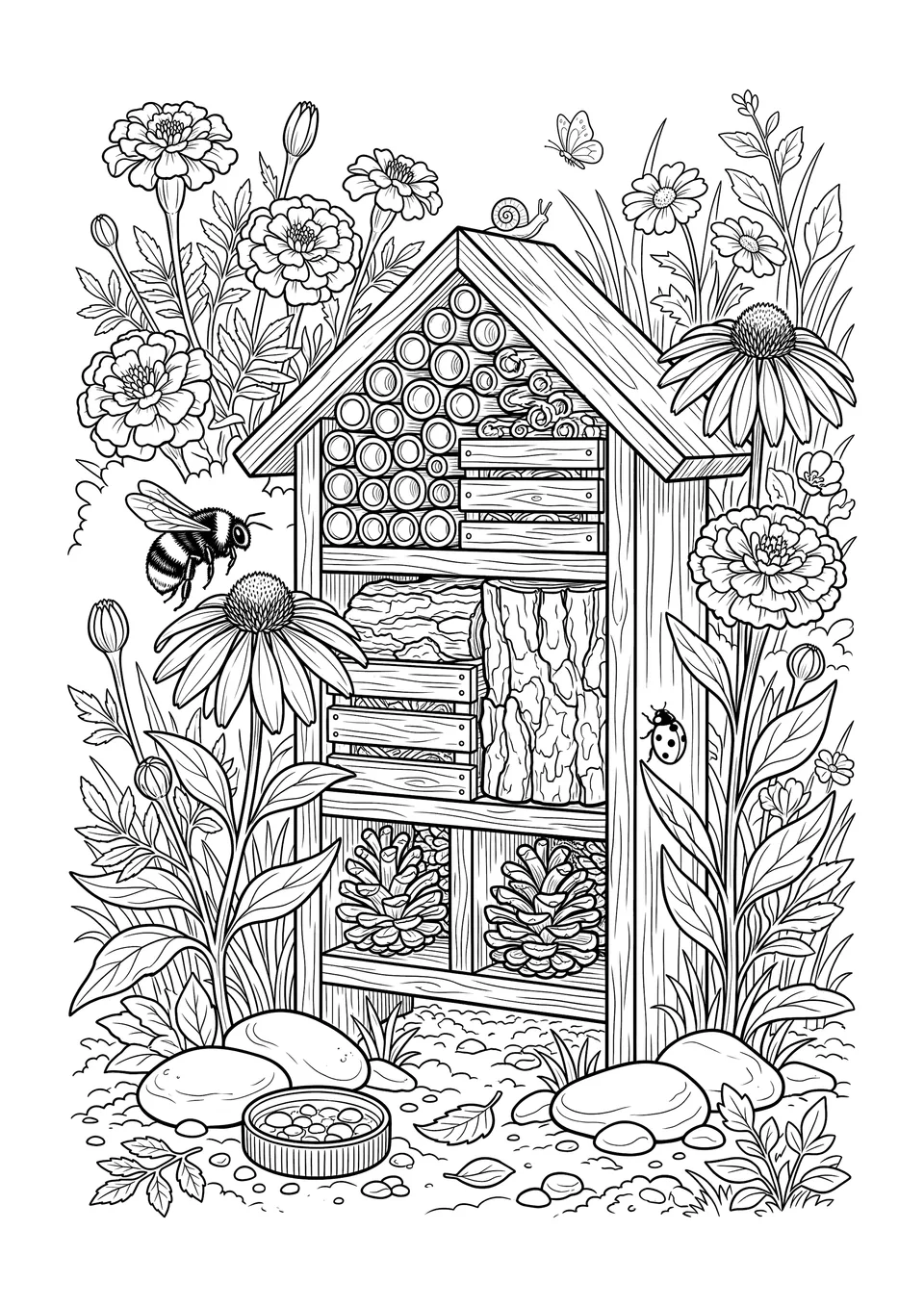
Bring Maya and Leo's pollinator habitat to life with this detailed bug garden coloring page! It is a wonderful way to explore the helpful insects that keep our ecosystems healthy.
PDF · Your plan’s download limits apply
Maya stared at the empty patch of dirt in the corner of the backyard. To most people, it looked like a useless, dusty square. But to Maya, it was a blank canvas waiting for its first brushstrokes. She had recently read about "pollinator pockets"—small gardens designed specifically to give insects a safe place to eat and rest.
"What are you doing with those old logs?" her brother Leo asked, kicking a soccer ball near the fence.
"I’m building a bug hotel," Maya replied, stacking hollow bamboo tubes and pieces of bark inside a wooden crate. "We need to make this corner welcoming. Most people want bugs out of their gardens, but we actually need them. Beetles recycle old leaves, and bees pollinate the flowers so we can have fruit."
Leo frowned, stepping closer. "But bugs bite. And they’re creepy."
"Some do," Maya agreed, "but most of them are just busy doing their jobs. If we plant wildflowers like marigolds and purple coneflowers, we’ll attract beautiful butterflies and helpful ladybugs. Ladybugs are like tiny superheroes because they eat the pests that ruin Mom's tomato plants."
Skeptical but curious, Leo dropped his soccer ball. "Can I help build the hotel?"
Together, they spent the afternoon transforming the dusty patch. They planted colorful, nectar-rich flowers and surrounded them with smooth stones where insects could bask in the sun. They even added a shallow bottle cap filled with water and pebbles, creating a safe drinking fountain where thirsty bees wouldn't drown.
A week later, Maya and Leo knelt quietly by the garden's edge. A bright yellow bumblebee buzzed softly, landing gently on a purple coneflower. Nearby, a shiny red ladybug crawled up a green stem. Leo grinned, nudging his sister. Their tiny wildlife sanctuary was open for business.
What did the empty patch of dirt in the corner of the backyard look like to most people?
According to the passage, what are "pollinator pockets"?
What specific materials did Maya use to build her bug hotel?
Why does Maya say that beetles are important for gardens?
Why was Leo initially hesitant or unhappy about the idea of attracting bugs?
Why are ladybugs described as "tiny superheroes" in the passage?
What are the two specific types of wildflowers Maya planned to plant to attract insects?
Why did Maya and Leo put pebbles inside the water-filled bottle cap?
What purpose did the smooth stones serve in the newly created garden?
Which two insects did Maya and Leo observe visiting their sanctuary one week later?
More ways to practice with this story — every sheet is built from the text itself, answer key included where it counts.
One PDF with a cover, a contents page and every answer key at the back — color the page in, then keep going on paper.
Sentences from the passage with the capitals and punctuation removed — rewrite each one correctly.
Match the passage words to their meanings, then fill the missing words back into real sentences.
Two writing tasks that build on the passage, with plenty of lines to write on.
Combine reading comprehension and artistic expression in your classroom or home. This printable coloring page is designed to accompany 'The Backyard Bug Sanctuary' reading passage, allowing upper elementary students to visualize the bustling ecosystem of a pollinator pocket. Downloading this educational coloring page offers an engaging, hands-on activity to reinforce science lessons on biodiversity, insect habitats, and conservation.
Our free coloring pages feature rich, detailed compositions tailored specifically for older kids who enjoy intricate line work. While coloring the detailed bamboo bug hotel, blooming coneflowers, and friendly garden insects, students can review vocabulary words with our integrated glossary and practice critical thinking with post-reading comprehension questions.