
fix the sentence
Sentences from the passage with the capitals and punctuation removed — rewrite each one correctly.
Web preview · Open larger preview (opens in a new tab)
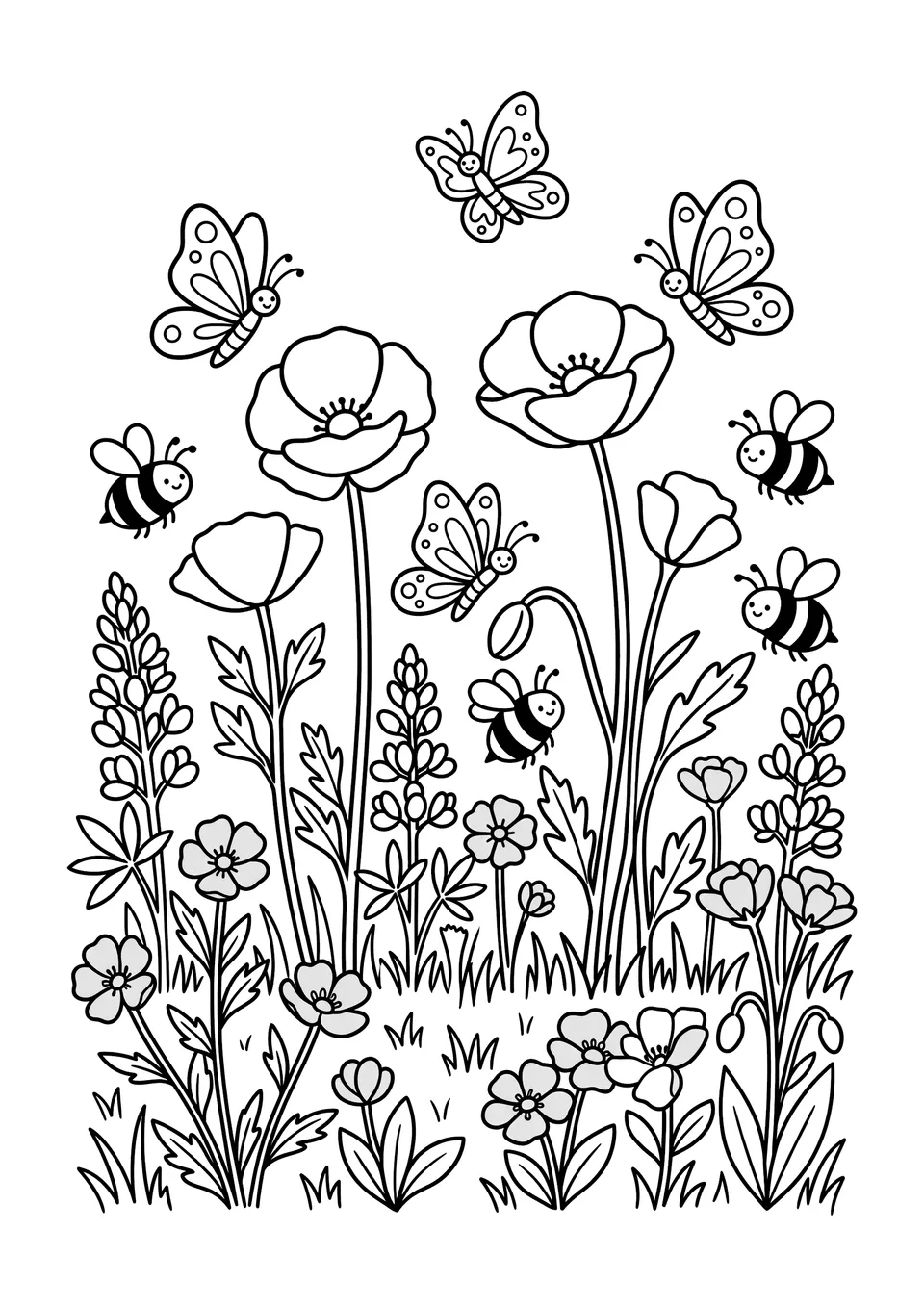
Celebrate the beauty of nature with this cheerful spring wildflowers coloring page. Pair hands-on coloring fun with a simple reading passage about buttercups, bluebonnets, and poppies.
PDF · Your plan’s download limits apply
Spring is here at last.
The warm sun wakes up the sleeping earth.
Bright wildflowers begin to pop up in the green grass.
Wildflowers grow on their own in nature.
People do not need to plant them in a garden.
They bloom across open fields, parks, and quiet hills.
One cheerful flower is the yellow buttercup.
It has shiny petals that glow like tiny cups of sunshine.
Buttercups look lovely when drawn with bright yellow crayons.
Another pretty plant is the bluebonnet.
It has many small petals shaped like tiny blue hats.
When they grow together, they look like a soft blue sea.
Poppies are also fun to see in the spring.
They have bright red or orange petals that feel like paper.
Hungry bees and butterflies love to visit them for sweet nectar.
You can draw and color your own spring garden.
Grab your favorite crayons, markers, or colored pencils.
Which bright wildflower will you color first?
What wakes up the sleeping earth in the spring?
Where do wildflowers grow without people needing to plant them?
Name two places where wildflowers bloom according to the passage.
What color are buttercups?
What do the shiny petals of a buttercup look like?
What shape are the small petals of a bluebonnet?
What do bluebonnets look like when they grow close together?
What colors can poppy petals be?
Why do hungry bees and butterflies like to visit poppies?
What art supplies can you use to draw your own spring garden?
More ways to practice with this story — every sheet is built from the text itself, answer key included where it counts.
One PDF with a cover, a contents page and every answer key at the back — color the page in, then keep going on paper.
Sentences from the passage with the capitals and punctuation removed — rewrite each one correctly.
Match the passage words to their meanings, then fill the missing words back into real sentences.
Two writing tasks that build on the passage, with plenty of lines to write on.
Bring the vibrant colors of nature into your classroom or home with this free printable coloring page. Designed especially for lower elementary students, this printable flower activity features clean, bold lines that are easy to color with crayons, markers, or colored pencils. Children can practice their fine motor skills while exploring the different shapes of buttercups, bluebonnets, and poppies.
This downloadable coloring page is paired with an educational reading passage, helpful glossary terms, and comprehension questions. Teachers and homeschooling parents can seamlessly integrate this activity into spring science lessons, plant life cycles, or early reading practice.
Download and print this spring wildflowers coloring sheet to give your early learners a fun, screen-free learning experience that builds reading confidence and sparks creative expression.