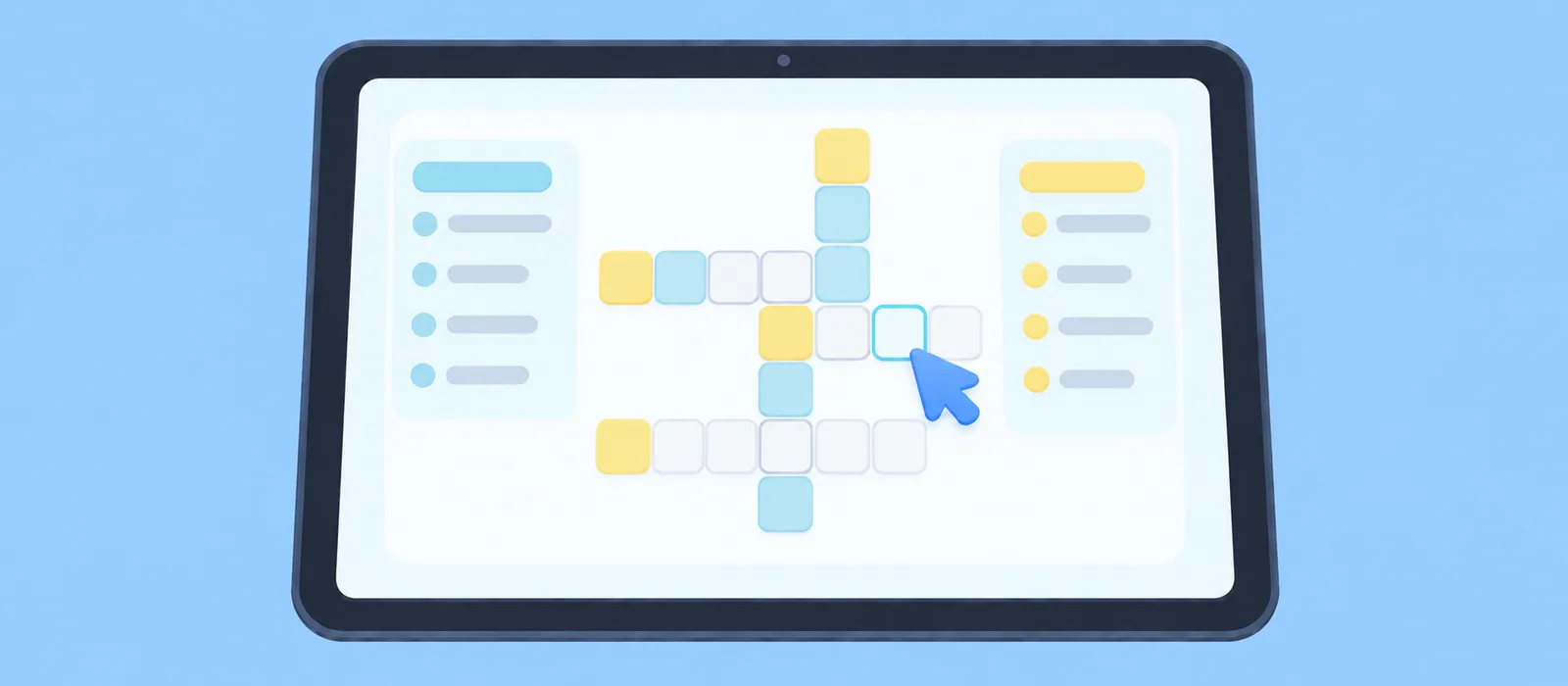
Online
Eight interactive ways to practice
Play with word meanings, spelling, clues, matching, movement, and stories in short repeatable rounds.
- Eight game types
- Helpful clues and responses
- Stars and replayable rounds
Kids can build essential reading and spelling skills with five interactive word games. Each playful challenge expands vocabulary and reinforces phonics using reviewed, kid-safe themes.
Rebuild a story's picture from shuffled pieces, then read it.
Guess the theme word letter by letter and save the melting snowman.
Steer the snake and collect the letters of each word in order.
Find the hidden theme words in a letter grid.
Unscramble the letters using a kid-friendly clue.
Flip the cards and match each word to its meaning.
Fill the crossing words using kid-friendly clues.
Guess the secret theme word letter by letter.
Word search or word scramble, with themes kids love. Many themes come straight from our reading passages.
Easy, medium, or tricky — bigger grids and longer words as kids grow more confident.
Finish a round to earn up to three stars. Play a little every day to build a streak.
Interactive word play helps young learners bridge the gap between phonics practice and confident reading. Our educational games allow kids to explore vocabulary through kid-friendly themes like Space Explorers and Ocean animals. Because the same themes work across every game, children get multiple ways to interact with and reinforce the same vocabulary terms.
Every game features easy, medium, and tricky levels, making it simple for parents and teachers to tailor the experience to a child's current reading grade. Each completed round awards up to three stars, providing positive reinforcement. Daily streaks encourage consistent, independent practice. Best of all, many themes connect directly to PicoBuddy reading passages, allowing educators to pair gaming with structured reading comprehension lessons.
Words come alive
Play 8 interactive word games for free, with kid-friendly themes, helpful clues, and three challenge levels. Explore 29 themes and start playing online right away.

Choose how to play
Open a game, choose a theme, and select the challenge level that fits today.
How to play
Choose the kind of challenge, open a theme, and adjust the level whenever you need to.
Choose a game
Pick a theme
Select a level
Online or on paper
Choose the format that fits the moment without pretending every online game has a printable version.
Online
Play with word meanings, spelling, clues, matching, movement, and stories in short repeatable rounds.
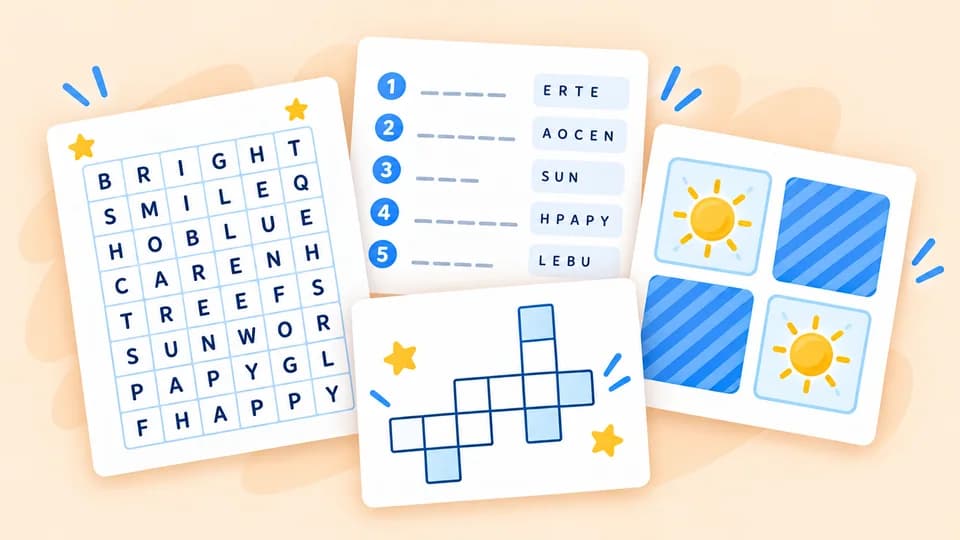
Print for later
Print a Word Search, Word Scramble, Crossword, or Memory Match activity for homework or a classroom station.
Practice without a grade label
Reuse a reviewed theme word list through finding, spelling, matching, clues, and recall.
A gentler starting point with smaller puzzles, shorter words, or simpler rounds.
More words and a little more challenge once the game feels familiar.
Larger puzzles, longer words, or tougher settings for confident players.
Used by families and educators
“I built a whole week of reading in one prep period.”
“My son finally asks to read. The topics hook him.”
Keep practicing in context
Connect playful recall with focused vocabulary practice, reading, and grammar.
 Vocabulary practicePractice context clues, word parts, meanings, and word relationships by grade and skill.Explore vocabulary practice
 Reading passagesMeet new words in stories and informational texts with questions and printable activities.Browse reading passages
 Grammar practiceBuild stronger sentences with focused grammar practice organized by grade and skill.Explore grammar practice
Start playing free
Create a free adult account to open game themes and save progress in My PicoBuddy.
Word games guide
PicoBuddy offers eight free online word games for children: Story Puzzle, Word Rescue, Word Snake, Word Search, Word Scramble, Memory Match, Crossword and Word Guess. Each game gives students a different way to meet spelling patterns, meanings, clues and topic words. Short, repeatable rounds make the collection useful for a lesson warm-up, independent practice, an early-finisher activity or a playful review at home.
Most games begin with one reviewed theme word list, so children can revisit related vocabulary through finding, spelling, matching, movement and recall. Story Puzzle follows a different route: players rebuild an illustration and then open its connected reading passage. This makes it a bridge between visual problem-solving and reading rather than another word-list game.
Start with the kind of thinking you want to practice. Word Search supports visual recognition, Word Scramble focuses attention on letter order, Crossword combines clues with spelling, and Memory Match connects words with meanings. Word Guess and Word Rescue use letter-by-letter reasoning, while Word Snake adds movement and sequencing. The best choice depends on the learning goal and what will keep the child engaged.
After choosing a game, open a kid-friendly theme and select Easy, Medium or Tricky. The exact change depends on the game: a higher level may introduce a larger grid, more cards, longer words, diagonal or backward entries, fewer supports or a denser round. Players can move between settings as the game becomes familiar.
Word games are strongest when they reinforce language children have already met. Preview unfamiliar words before play, read clues aloud when needed and ask players to explain a match or solved word. A quick follow-up sentence, definition or category check helps distinguish genuine understanding from recognizing a letter pattern or remembering a card position.
The same theme can support a simple practice sequence: meet words in a reading passage or vocabulary activity, retrieve them through a game and then use selected words in speaking or writing. Repeating vocabulary in different forms can make practice feel fresh without introducing a completely new word list every time.
Word Search, Word Scramble, Crossword and Memory Match also have printable versions with Easy, Medium and Tricky settings. Use them for literacy centers, homework, tutoring, classroom stations, substitute plans or screen-free practice. Printable puzzles with fixed solutions include the material an adult needs to check the activity.
Introduce the theme and model one clue, match or strategy before students begin. Word searches and scrambles work well independently, crosswords invite partners to discuss clues, and printed memory cards add repeated retrieval through play. Finish by asking students to choose one word to define, explain or use in a new sentence so the activity stays connected to language learning.
Questions families and teachers ask