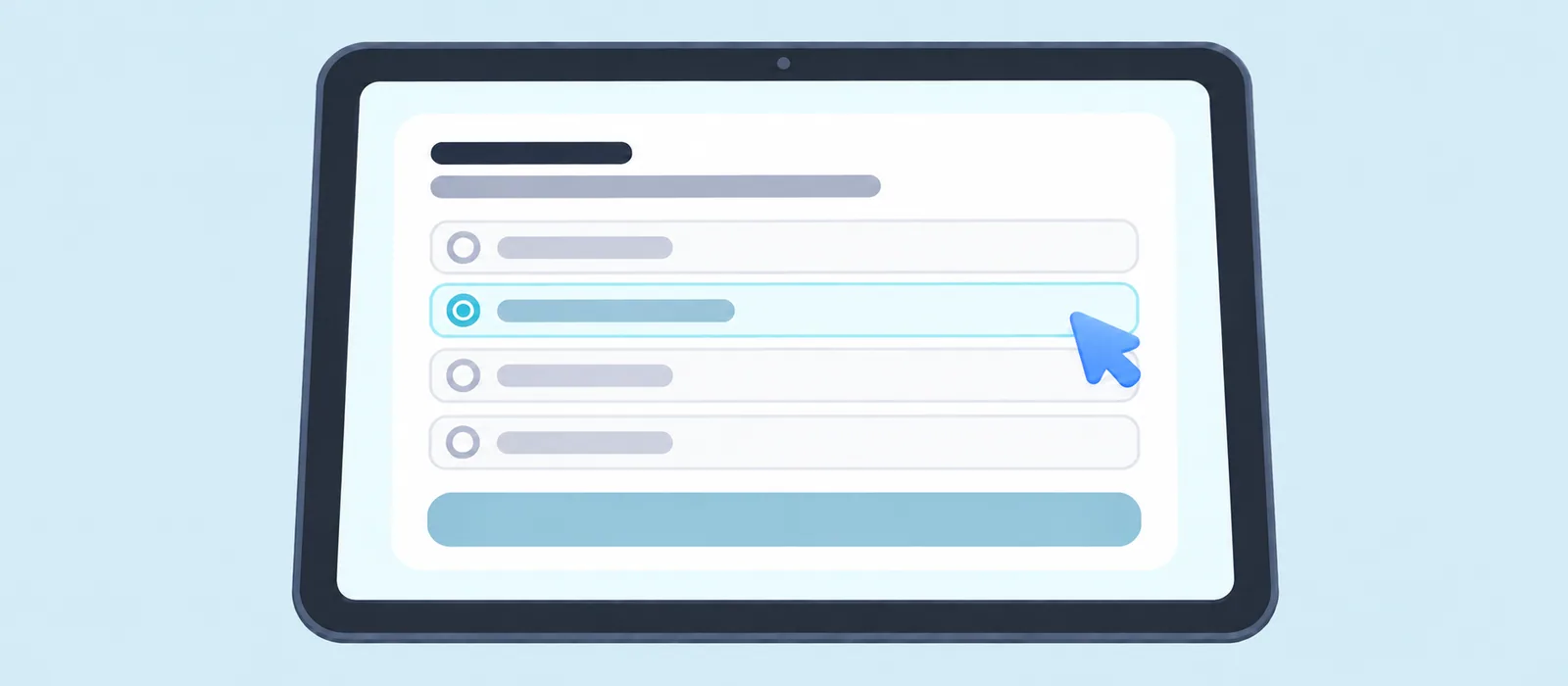
Practice online
Short quizzes with instant feedback
Choose one vocabulary skill, answer ten focused questions, and see feedback right away.
- Try the first quiz of every skill free
- Multiple-choice practice
- Scores saved with an account
Build a strong, expressive vocabulary through quick, interactive quizzes that give instant feedback. Kids can practice word meanings, synonyms, antonyms, and context clues to boost their reading and writing skills.
Context clues in a sentence · Prefixes and suffixes · Root words and word endings · +4 more
Prefixes and suffixes · Root word families · Compound words · +6 more
Context clues in a sentence · Prefixes and suffixes · Root word families · +7 more
Context clues: definitions and restatements · Greek and Latin roots · Dictionary and thesaurus use · +9 more
Context clues: cause and effect · Context clues: comparison and contrast · Greek and Latin roots · +9 more
Context clues across a paragraph · Word position and function clues · Greek and Latin roots · +10 more
Greek and Latin roots · Specialized reference materials · Checking and verifying word meanings · +8 more
Verbal irony · Puns and wordplay · Greek and Latin roots · +8 more
Skills follow the grade-by-grade curriculum ladder, so practice matches what kids learn in class.
From context clues and word parts to synonyms and idioms — each skill has its own short explanation and quiz set.
Ten questions per quiz with instant, gentle feedback. A free account opens the first quiz of every skill.
A robust vocabulary is the foundation of reading comprehension and effective communication. When children understand more words, they can decode complex texts more easily and express their thoughts with greater precision. Regular practice helps transition words from passive recognition to active daily use.
Using interactive quizzes is just one way to help children master new language skills. Here are a few ways to reinforce vocabulary at home or in the classroom:
Create your free account and start with the first quiz of every skill for free — instant feedback, scores saved to My Library. Basic lifts the limit.
Words grow here
Short vocabulary practice for Grades 1–8, organized by skill and available online or as a printable quiz.

Find their starting point
Open a grade to see the exact vocabulary skills students practice and the quizzes available at each level.
How to practice
Start with the format that fits the moment. Both routes stay focused on one grade and one vocabulary skill at a time.
Practice online
Choose one vocabulary skill, answer ten focused questions, and see feedback right away.
Print for later
Print a vocabulary skill quiz with its answer key for quiet practice, homework, or a classroom station.
A clear learning path
The curriculum introduces strategies when they are developmentally useful, brings important skills back for review, and lets students practice each published quiz at the level that fits today.
Shorter sentences and clearer choices for a gentler start.
The vocabulary level students are expected to practice in their grade.
Longer contexts and closer answer choices when they are ready for more.
Explore some of the vocabulary skills students practice in each grade.
Used by families and educators
“I built a whole week of reading in one prep period.”
“My son finally asks to read. The topics hook him.”
Keep practicing in context
Combine focused skill quizzes with reading, printable word work, and playful review.
 Vocabulary through readingOpen a passage, meet new words in context, and use its comprehension activities.Browse reading passages
 Printable vocabulary worksheetsTurn reading into word work with printable vocabulary, glossary, and follow-up activities.Browse printable worksheets
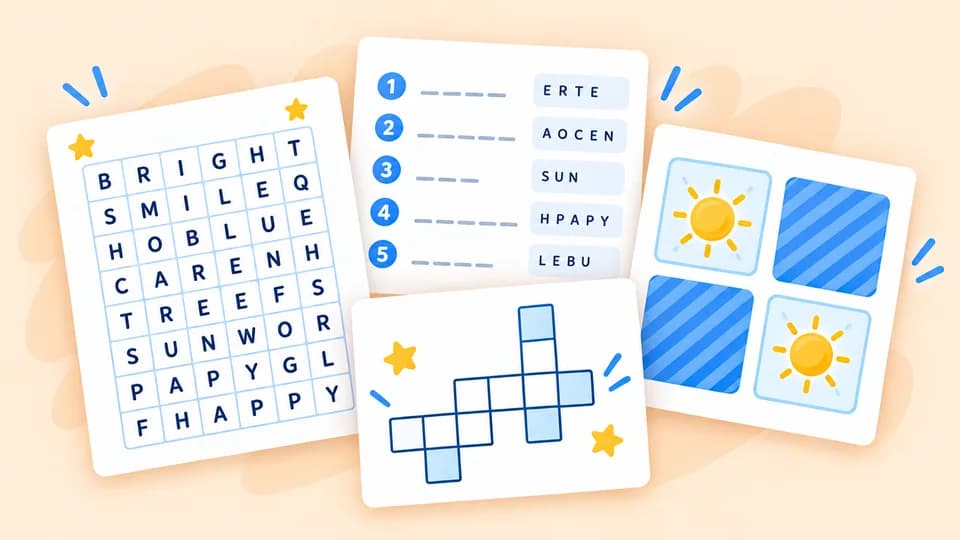 Play with wordsPractice spelling and recall through word searches, crosswords, matching, and more.Explore word games
Start practicing free
Create a free adult account to try the first quiz of every vocabulary skill and save scores in My PicoBuddy.
Vocabulary practice guide
PicoBuddy organizes vocabulary practice by grade and skill, so students can work on the kind of word knowledge they are expected to use in reading and writing. Grades 1–3 build meaning through sentence context, categories, prefixes, suffixes and familiar word relationships. Grades 4–5 add more advanced context clues, roots and reference skills. By Grades 6–8, students meet longer contexts, Greek and Latin roots, connotation, figurative language and more precise shades of meaning.
Each skill stays focused instead of mixing many unrelated targets into one activity. Open a grade, choose the exact vocabulary skill and then select Foundation, Grade level or Challenge. This gives teachers, tutors and families a clear starting point while still making it easy to adjust the amount of support or challenge without moving to a completely different topic.
Online vocabulary quizzes contain ten focused questions with immediate feedback. Students can use them for a short warm-up, independent review, intervention or practice after a reading lesson. The first quiz of every published skill can be tried free, and an adult-managed account can save scores so progress stays together in My PicoBuddy.
The same skill can also be printed as a ready-to-use quiz sheet with an answer key. Printable vocabulary practice works well for homework, a literacy station, tutoring, substitute plans or any moment when screen-free work fits better. Because the online and printable routes begin with the same grade and skill, adults do not need to rebuild the lesson when they change formats.
Vocabulary becomes useful when students can recognize a word, infer its meaning and use it inside real language. Begin with one short skill quiz, ask students to explain the clue or word part that guided their answer, and then revisit the strategy in a reading passage. Passage vocabulary worksheets and glossaries add a second route for meeting words inside meaningful sentences.
Word games can provide lighter retrieval practice after direct instruction. A crossword asks students to connect clues and spelling, Memory Match links words and meanings, and Word Search or Word Scramble reinforces visual recognition and letter patterns. These activities support recall, while discussion, reading and sentence use show whether students genuinely understand the vocabulary.
Use Foundation when students need shorter contexts or clearer choices, Grade level for the expected grade target and Challenge when they are ready for closer answer choices or more complex language. Read a question aloud, preview a word part, keep a passage visible or let students discuss their reasoning with a partner when extra support is useful. The vocabulary goal can stay the same even when the route to it changes.
These routines work in classrooms, homeschool lessons, tutoring and English-language learning. A short quiz can reveal which strategy needs attention, but it should sit alongside reading, speaking and writing rather than replace them. Ask students to define one answer in their own words, use it in a new sentence or point to the context clue that made the meaning clear.
Questions teachers ask