
Marie Curie: A Pioneer of Science

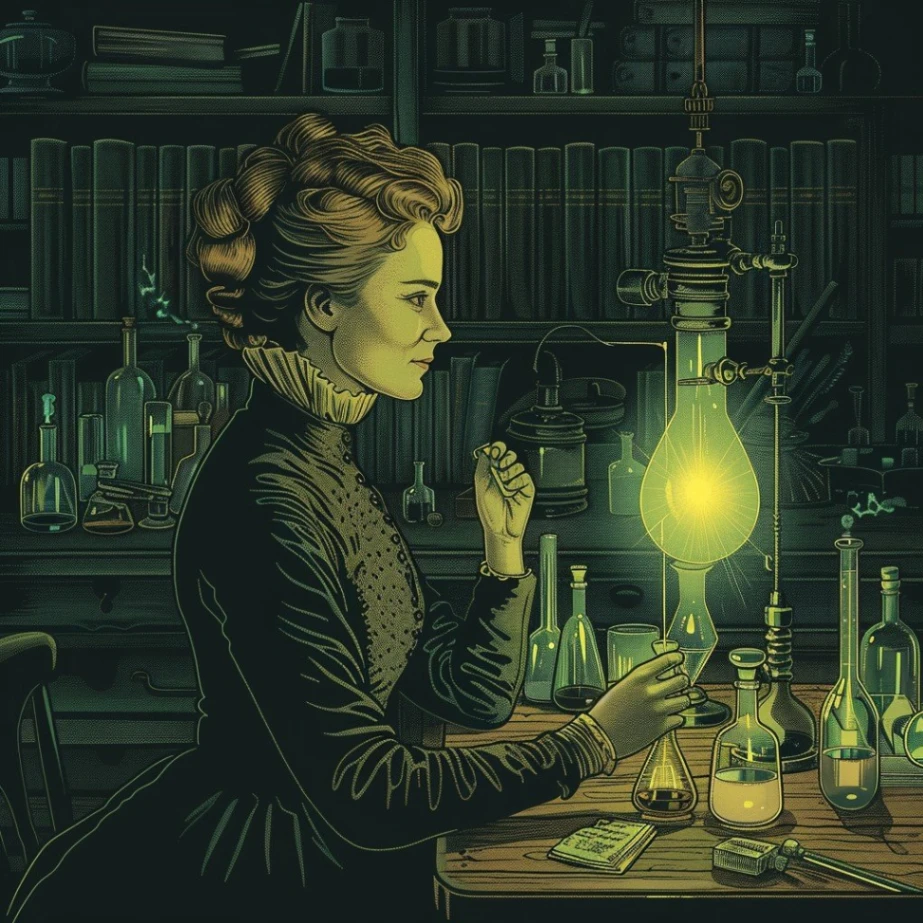
Marie Curie: A Pioneer of Science
Marie Curie was a groundbreaking scientist whose work changed our understanding of the world. Born Maria Skłodowska in Warsaw, Poland, on November 7, 1867, her journey to becoming a world-renowned physicist and chemist was filled with challenges and triumphs.
Early Life and Education
Growing up in Poland, which was then under Russian rule, Marie faced limited educational opportunities for women. Despite this, she excelled in her studies, showing a strong aptitude for mathematics and science. She and her sister Bronisława made a pact: they would support each other to get an education. Marie worked as a governess to support Bronisława while she studied medicine in Paris. Then, Bronisława would return the favor.
In 1891, Marie moved to Paris to study at the Sorbonne, where she immersed herself in physics and mathematics. She often struggled with poverty, living in meager conditions while dedicating herself to her studies.
Groundbreaking Research
After earning her degrees, Marie began her research career. In 1894, she met Pierre Curie, a physicist who shared her passion for science. They married in 1895 and began working together, focusing on the newly discovered phenomenon of radioactivity. This was a major turning point, leading to discoveries that would earn them both Nobel Prizes.
- Radioactivity:
- The emission of energy and particles from the nucleus of an atom.
- Polonium:
- A radioactive chemical element discovered by Marie and Pierre Curie.
- Radium:
- A highly radioactive metallic element discovered by Marie and Pierre Curie.
- Aplastic Anemia:
- A condition where the body stops producing enough new blood cells.
One passage, many ways to practice
Reading-skill questions, word work and writing prompts — all built from this text.
Main Idea
Identify the central idea and explain how important details develop it.
Context Clues
Use clues in the passage to work out what words mean. A separate printable Vocabulary worksheet is also available.
Summarize
Select, organize, and restate the most important information without adding opinion.
Purpose
Analyze what the author aims to do and how choices serve audience and purpose.
Structure
Analyze how sections and organizational choices build the text's ideas or effects.
Fact & Opinion
Distinguish verifiable statements from judgments, beliefs, and preferences in context.
Vocabulary
Practice words from the passage with a printable worksheet.
Writing Prompts
Use the passage as a springboard for short written responses, from personal reflection to evidence-based arguments.
Fix the Sentence
Practice editing sentences drawn from this passage with a printable worksheet.

Ready to use this passage in class?
Start free with the Mixed worksheet and 3 PDF downloads each week. Focused skill sets depend on plan.
Preview questions from this passageShowHide
- 1What challenges did Marie Curie face in her pursuit of education?
- 2How did Marie and Pierre Curie contribute to the understanding of radioactivity?
Where this passage belongs
About this biography passage for Middle School
“Marie Curie: A Pioneer of Science” is a biography reading passage about Scientific Discovery, written for Middle School. It takes about 3 minutes to read (449 words) and comes with an interactive quiz and a printable worksheet with comprehension questions and an answer key.