
The Power of Cubism in Art

Why You Should Explore Cubism
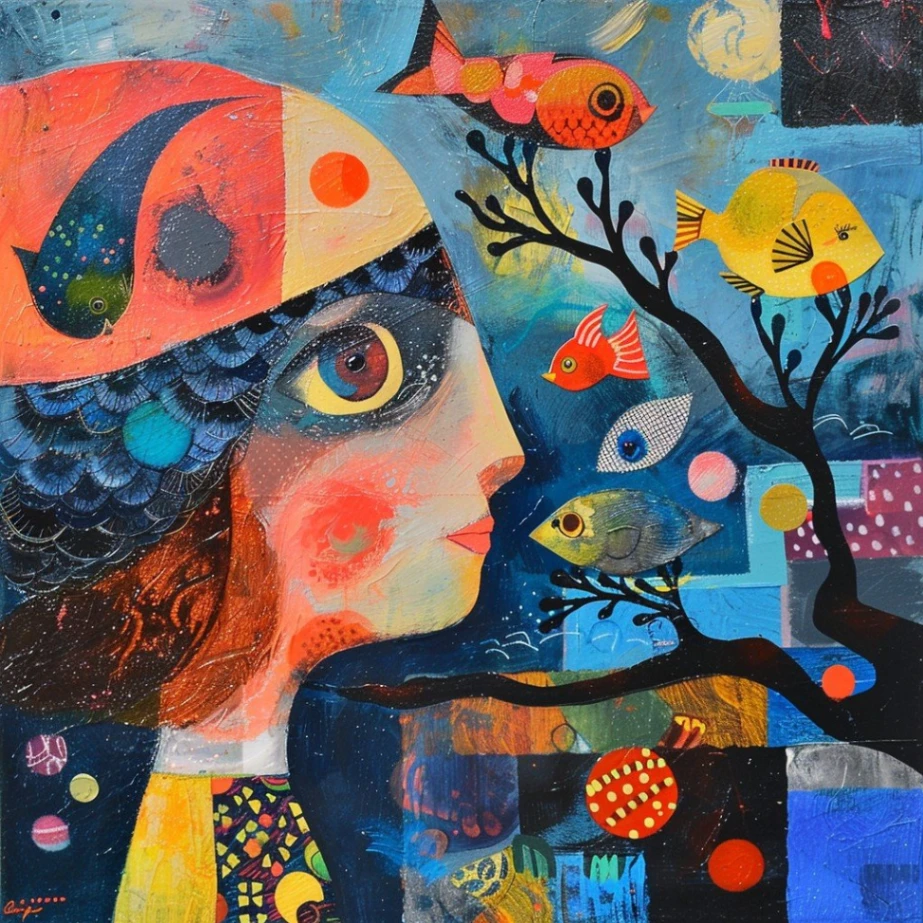
Have you ever looked at a painting and thought, "That doesn't look real at all!"? Well, if you have, maybe you were looking at a Cubist painting. Cubism is a style of art that turns the world upside down – or, more accurately, inside out. It's not about painting things exactly as you see them; it's about showing all sides of something at once. This can be confusing, but it's also incredibly cool, and here's why you should try it.
Seeing More Than Meets the Eye
Imagine you're drawing a cup. Usually, you'd just draw what you see from one angle: maybe the front or the side. But what about the handle you can't see? Or the inside of the cup? Cubism says, "Let's show it all!" Artists break down objects into shapes and show multiple viewpoints at the same time. It’s like taking an object apart and putting it back together in a new and exciting way. This teaches you to really see what you're drawing, not just copy what's in front of you. It also helps to understand the concept of forms and shapes in art which helps with other forms of art as well.
Unleashing Your Creativity
- Cubism:
- An art style that shows all sides of an object at once.
- Viewpoint:
- A particular way of looking at something.
- Creativity:
- The ability to create new and original things.
- concept:
- A general idea or understanding of how something works.
- textures:
- The visual or physical feel of a surface, such as rough, smooth, or bumpy.
- expressionistic:
- Art that focuses on showing feelings and emotions rather than making things look realistic.
- movement:
- A shared style or trend created by a group of artists during a period in history.
One passage, many ways to practice
Reading-skill questions, word work and writing prompts — all built from this text.
Main Idea
Identify the central idea and explain how important details develop it.
Context Clues
Use clues in the passage to work out what words mean. A separate printable Vocabulary worksheet is also available.
Summarize
Select, organize, and restate the most important information without adding opinion.
Purpose
Analyze what the author aims to do and how choices serve audience and purpose.
Structure
Analyze how sections and organizational choices build the text's ideas or effects.
Fact & Opinion
Distinguish verifiable statements from judgments, beliefs, and preferences in context.
Claims & Evidence
Trace and evaluate how claims are supported by reasons and evidence.
Language & Tone
Interpret nonliteral language and analyze how word choice shapes tone and meaning.
Vocabulary
Practice words from the passage with a printable worksheet.
Writing Prompts
Use the passage as a springboard for short written responses, from personal reflection to evidence-based arguments.
Fix the Sentence
Practice editing sentences drawn from this passage with a printable worksheet.
Ready to use this passage in class?
Start free with the Mixed worksheet and 3 PDF downloads each week. Focused skill sets depend on plan.
Preview questions from this passageShowHide
- 1What is the main idea behind Cubism?
- 2Why does Cubism show multiple viewpoints of an object?
Where this passage belongs
You Might Also Like

About this opinion / argumentative passage for Middle School
“The Power of Cubism in Art” is a opinion / argumentative reading passage about Art Styles, written for Middle School. It takes about 3 minutes to read (495 words) and comes with an interactive quiz and a printable worksheet with comprehension questions and an answer key.