
Is Listening to a Reading Passage Cheating?
Listening to a reading passage is not cheating. Learn how read aloud support can help students access meaning while still building reading skills.
Listening to a reading passage is not cheating. For many students, listening support helps them access the meaning of a text while they continue building reading skills.
Some students struggle so much with decoding that they lose the meaning of the passage before they reach the end. Others can understand the ideas clearly when the text is read aloud, but struggle to read the words independently.
That is why read-aloud support can be helpful for students with dyslexia, struggling readers, English learners, students with language processing difficulties, and children building fluency.
Listening support does not replace reading instruction. It supports access to comprehension.
What does listening to a reading passage mean?
Listening to a reading passage means a student hears the text read aloud while staying connected to the reading task.
This can happen in different ways. A teacher may read the passage aloud. A parent may read with a child at home. Students may use partner reading, an audiobook, text-to-speech, or an audio-supported reading platform.
Sometimes students listen before reading independently. Sometimes they listen while following along with the written text. Sometimes they reread after hearing the passage once.
The goal is not simply hearing words.
The goal is helping students understand the text, work with vocabulary, answer questions, reread with more confidence, or participate in a discussion about the passage.
Listening becomes most useful when it is active.
Students should still think about the meaning, notice important ideas, and interact with the passage in some way.
Is listening to reading cheating?
Listening support is a scaffold. A scaffold helps students access learning while they continue developing a skill. In the classroom, students may use graphic organizers for writing, visuals for vocabulary, manipulatives for math, or sentence starters for discussion.
Read-aloud support works in a similar way.
Some students understand much more than they can comfortably decode on their own. When all their energy goes into sounding out words, there may be very little attention left for comprehension.
Listening support can reduce that overload.
The student still needs to understand the passage. They still need to think about the topic, follow the ideas, answer questions, discuss vocabulary, and connect details across the text.
The learning still happens. The support simply changes how the student accesses the text.
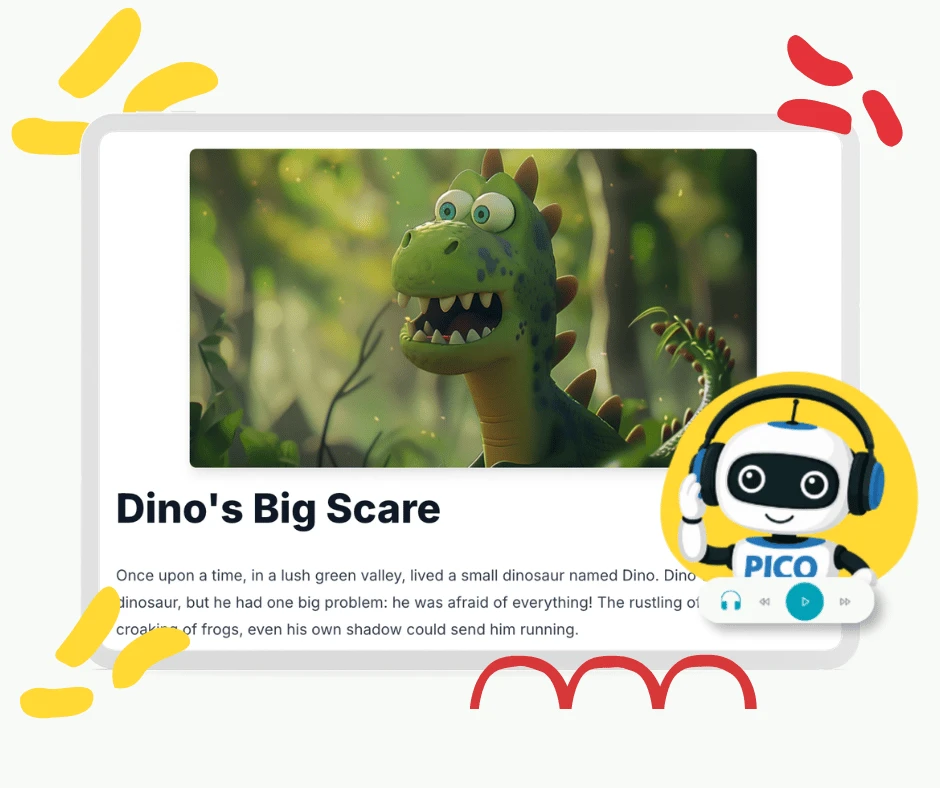
Why decoding and comprehension are different skills
One of the most important ideas in reading instruction is this:
Decoding and comprehension are not the same thing.
Decoding is the ability to read the printed words. Comprehension is the ability to understand what the text means.
A student may struggle to decode words, read slowly, lose their place, or become tired while reading. But that same student may understand the story well when it is read aloud. They may explain the main idea, answer inference questions, discuss character feelings, or connect ideas across the passage.
Listening support can help separate two questions: “Can the student read this independently?” and “Can the student understand this text?”
Both questions matter.
A student still needs reading instruction and independent reading practice. But if decoding is blocking comprehension, listening support can help the student show what they understand while reading skills continue to grow.
Why some students benefit from read-aloud support
Some students need support because reading feels exhausting.
A passage can become overwhelming when vocabulary is unfamiliar, sentences are complex, fluency is weak, or reading stamina is low. For these students, the challenge is not always the topic itself. The challenge may be the effort required to get through the printed words.
Read-aloud support can make the first step into the passage feel more manageable.
When students hear the passage first, the topic often feels clearer. Vocabulary becomes more familiar. Sentences are easier to follow. Students may feel more willing to reread because the text is no longer completely new.
This matters because many struggling readers begin avoiding reading when every reading task feels difficult.
Success matters.
When students can understand the passage, participate in discussion, and answer questions successfully, confidence often grows too.
Who can benefit from listening support?
Many different learners may benefit from read-aloud support.
Students with dyslexia
Students with dyslexia often spend a large amount of mental energy decoding words. Listening support can help them access comprehension, vocabulary, and content while they continue building reading skills.
This does not replace structured reading instruction. It gives students a way to stay connected to meaning while decoding and fluency continue to develop.
Struggling readers
Some struggling readers need temporary support while fluency, accuracy, and stamina improve.
Listening support can help them stay engaged with classroom reading instead of feeling blocked by the first few sentences.
Students with language processing difficulties
Students with language processing difficulties, including DLD, may benefit from hearing language while following the text visually.
For some students, hearing the sentence can make the structure, vocabulary, and meaning easier to process.
ESL and ELL students
English learners may benefit from hearing pronunciation, rhythm, sentence patterns, and vocabulary in context.
Listening support can help students connect spoken English to written English, especially when they follow along with the text.
Students practicing fluency
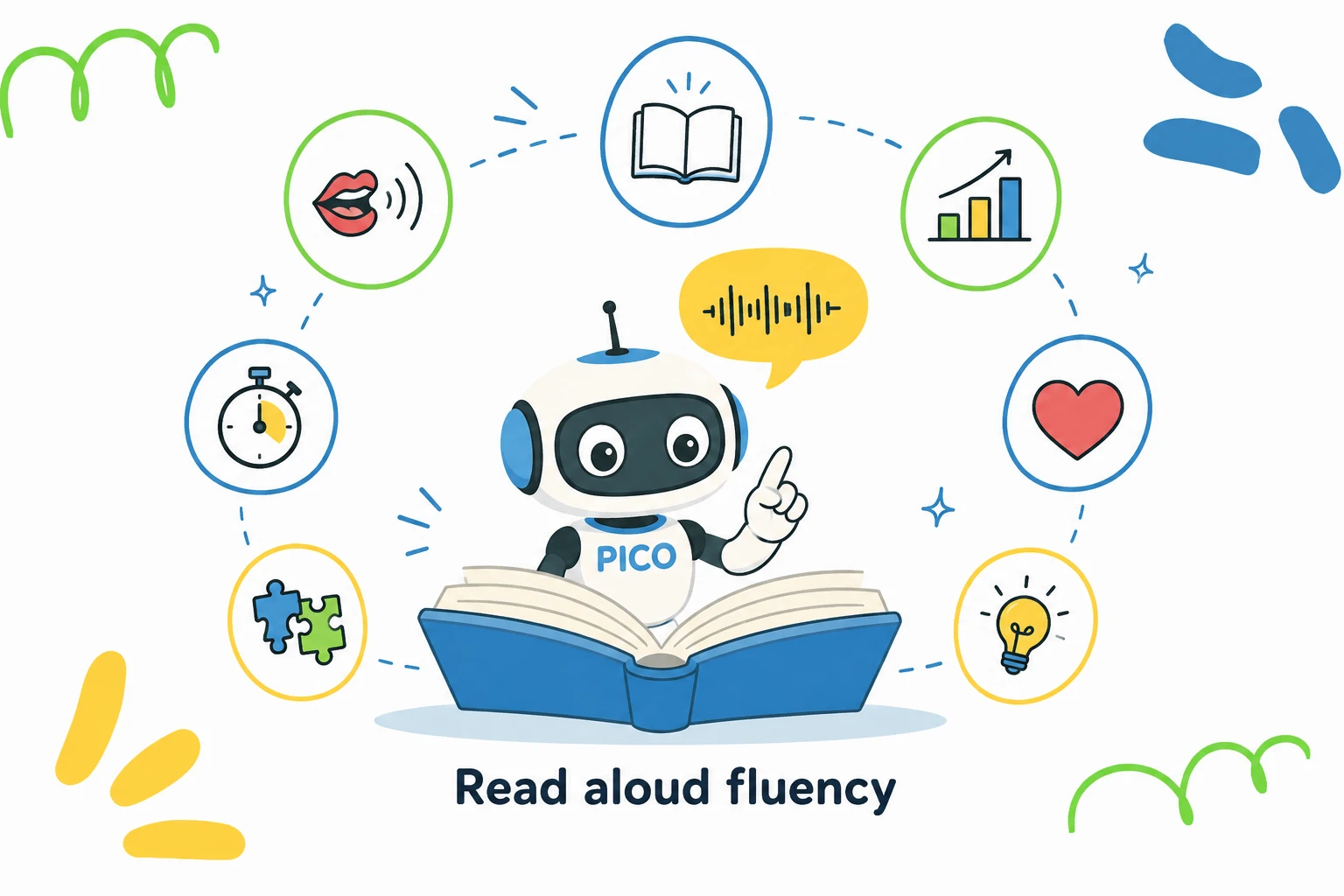
Students who are building fluency can hear a fluent model before rereading independently.
They hear pacing, phrasing, expression, and natural pauses. Then they can try to make their own reading smoother and more meaningful.
Can listening improve reading comprehension?
Listening can support reading comprehension for many students.
When students are not overwhelmed by decoding every word independently, they often have more attention available for meaning. They can focus on the topic, main idea, vocabulary, details, and questions.
Listening can also expose students to richer language, more advanced vocabulary, and more complex ideas than they may be able to read independently.
That is one reason teacher read-alouds, audiobooks, and listening support are often used in classrooms.
This does not mean students should only listen.
It means listening can support comprehension growth while students continue practicing reading.
Should students still practice independent reading?
Listening support should not completely replace independent reading instruction.
Students still need opportunities to decode words, build fluency, strengthen stamina, apply phonics skills, and practice reading independently.
The goal is balance.
Some activities may focus on decoding, word recognition, or independent reading. Other activities may focus on comprehension, vocabulary, discussion, content knowledge, or fluency.
Different reading goals may require different supports.
Read-aloud support is most helpful when it has a clear purpose.
When should students read without audio?
Students should read without audio when the goal is to practice or check independent reading.
If the goal is independent decoding, students may need to try the passage on their own first. If the passage is already at a comfortable independent level, audio may not be needed. The student may benefit more from building stamina and confidence without support.
Audio can also become less helpful if a student uses it to avoid reading completely.
In that case, listening can still be part of the routine, but it should lead into some reading work. For example, the student might listen to the passage first and then reread one paragraph independently.
A useful way to decide is this: If the goal is decoding, students may need to read first. If the goal is comprehension, fluency, confidence, or access, listening support may be appropriate.
Ways to combine listening and reading
Read-aloud support often works best when students actively interact with the text.
Listen first, then reread
Students hear the passage first, then reread independently with more confidence. This can be helpful when the passage feels difficult to start.
Follow along while listening
Students track the written text while hearing fluent reading. This helps connect spoken language to printed words.
Echo reading
A teacher, parent, partner, or audio model reads a sentence or short section first. The student repeats it afterward.
Repeated reading
Students listen and reread the same short passage more than once. This can support fluency, phrasing, expression, and confidence.
Listen, answer, discuss
Students listen to the passage, answer a few comprehension questions, and discuss one important idea. This keeps listening connected to meaning.
Short passages often work best for these routines because students can reread without becoming overwhelmed.
Common mistakes when using read-aloud support
Read-aloud support works best when it is used intentionally.
Common mistakes include:
- Using audio without any comprehension task
- Making listening passive
- Never giving students independent reading opportunities
- Choosing passages that are too difficult
- Skipping vocabulary support
- Using very long passages for struggling readers
- Treating listening support as a replacement for instruction
Listening support should support reading growth. It should not replace every reading opportunity.
Can PicoBuddy help with read-aloud reading passages?
PicoBuddy helps teachers, parents, homeschool families, and intervention teams create reading passages that students can actually access.
You can create leveled reading passages, adjust difficulty, choose topics students care about, build comprehension questions, and use passages for read-aloud routines, fluency practice, intervention, or home reading.
For example, one student may read independently while another listens and follows along with the same topic.
The learning goal stays shared. The support changes.
Need a passage students can read and listen to? Browse PicoBuddy’s free reading passages or create your own custom passage by grade, topic, and reading level.
Final thoughts
Listening to a reading passage is not cheating.
For many students, it is a support that helps them access meaning, stay engaged, and participate more confidently.
Students still need opportunities to build decoding, fluency, and independent reading skills.
But comprehension matters too.
When listening support helps students understand the text, discuss ideas, and experience success, reading often becomes less frustrating and more meaningful.
Sometimes students do not need less learning. They simply need a better way into the text.

Frequently Asked Questions
Related Articles

Helping kids read better, together.
Like this article? Join 500+ educators using PicoBuddy to generate high-quality reading materials in seconds.