
Listening Comprehension vs Reading Comprehension
Learn the difference between listening comprehension and reading comprehension, and how listening support can help students access meaning while building reading skills.
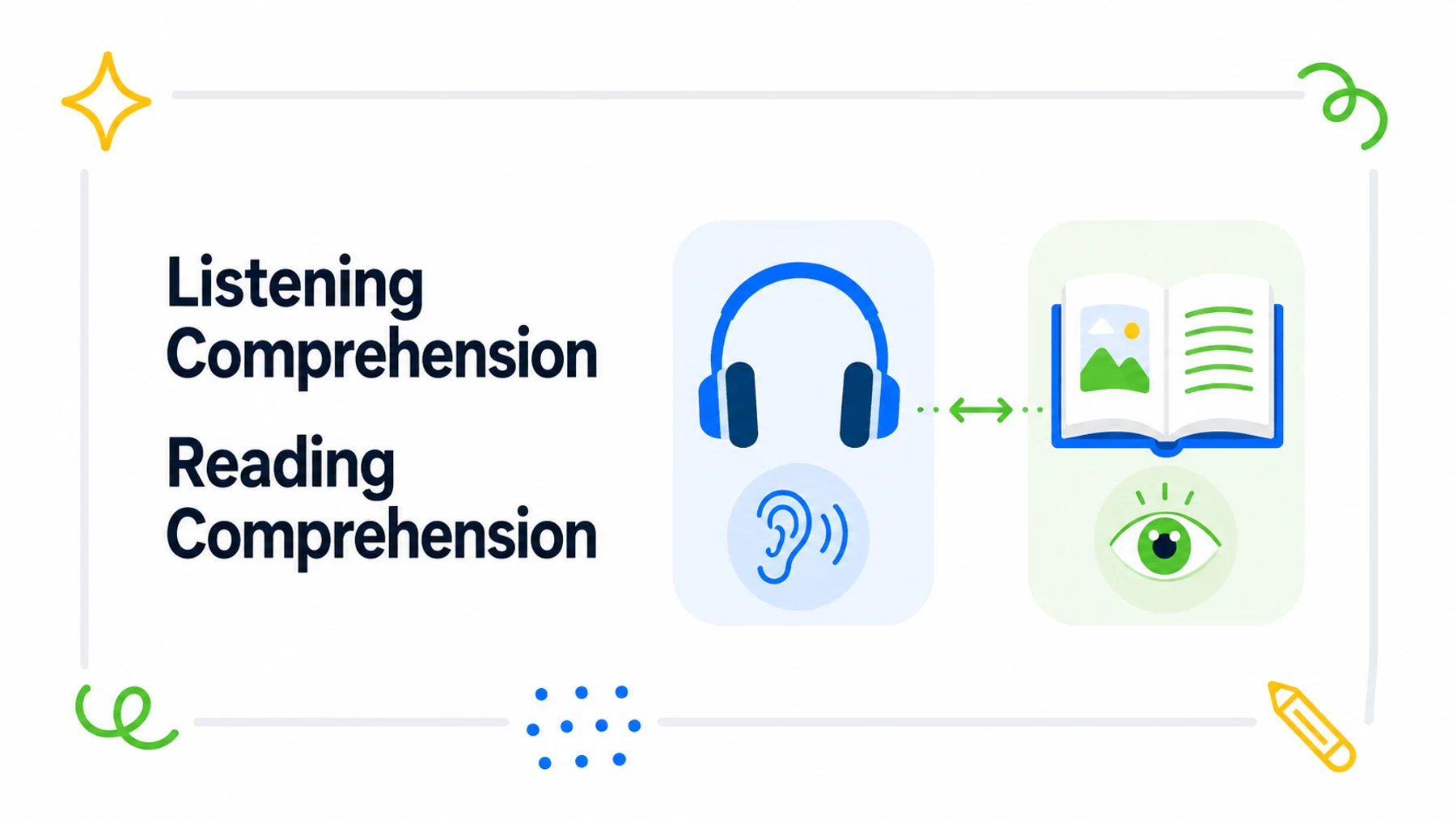
Some students understand a story clearly when they hear it read aloud, but struggle to understand the same text when reading independently.
Others can read every word correctly and still have difficulty explaining what the passage means.
That is because listening comprehension and reading comprehension are connected, but they are not exactly the same skill.
Listening comprehension focuses on understanding spoken language.
Reading comprehension requires students to understand language while also decoding written words.
That difference can help teachers and parents make better decisions about reading support, read-aloud routines, text difficulty, and comprehension practice.
What is listening comprehension?
Listening comprehension is the ability to understand spoken language.
A student uses listening comprehension when they follow a story read aloud, listen to an audiobook, understand spoken instructions, answer questions after hearing a passage, or join a discussion about something they heard.
In this situation, the student is focusing on meaning without having to decode every written word independently.
For example, a student may listen to a passage about space and explain the main idea, describe the planets, and answer questions about the text. The same student may struggle to read the printed version independently because the decoding demands are much higher.
The ideas may not be too hard.
The printed words may be the barrier.
What is reading comprehension?
Reading comprehension is the ability to understand written text.
It includes understanding vocabulary, following sentences, connecting ideas, making inferences, remembering details, and thinking about the meaning of the passage.
But reading comprehension also requires decoding.
That means students need to read the printed words while also thinking about what those words mean.
For some readers, especially developing readers or struggling readers, that combination can feel overwhelming. A student may know what the words mean when hearing them aloud, but struggle to process the same words during independent reading because so much attention is going into decoding.
Reading comprehension is not only word reading. It is word reading and meaning working together.
What is the difference between listening comprehension and reading comprehension?
The main difference is decoding. Listening comprehension asks: Can the student understand the language when they hear it?
Reading comprehension asks: Can the student understand the language while reading it in print?
Both skills involve vocabulary, sentence meaning, background knowledge, memory, inference, and understanding. But reading comprehension adds the extra demand of decoding written words.
That is why some students seem much stronger during read-aloud activities than during independent reading.
When the text is read aloud, the student can focus more fully on meaning. When the student reads independently, they must manage decoding and comprehension at the same time.
This difference is especially important when choosing supports.
If a student understands the passage when listening but not when reading, the problem may not be comprehension alone. The decoding load may be interfering with comprehension.
How are listening and reading comprehension connected?
Listening comprehension and reading comprehension are closely connected because both depend on language understanding.
In both cases, students need to understand vocabulary, follow ideas across sentences, connect details, and think about meaning.
A student with strong listening comprehension often has a useful foundation for reading comprehension. They may understand stories, ideas, explanations, and vocabulary when they hear them. As decoding becomes stronger, those language skills can support reading growth.
But the connection is not automatic.
A student can have strong listening comprehension and still struggle with reading if decoding is weak. Another student can decode accurately and still struggle with comprehension if vocabulary, background knowledge, or inference skills are limited.
That is why listening and reading should both give information.
Together, they help teachers and parents see what kind of support a student may need.
Why can a student understand more when listening?
Some students understand more when listening because decoding takes a large amount of mental effort.
A student may read slowly, lose their place, struggle with long words, or become exhausted after only a few paragraphs. By the time they finish decoding the sentence, the meaning may already be gone.
But when the same text is read aloud, the student suddenly has more mental space available for comprehension.
The ideas become easier to follow. Vocabulary sounds more familiar. The student can focus on the story, topic, or information instead of spending all their energy trying to unlock each word.
This often happens with students who have dyslexia, fluency difficulties, weak decoding skills, or low reading stamina.
The language itself may not be too difficult. The access to the language may be too hard.
Why can a student read the words but still not understand?
The opposite can happen too.
Some students can read the words accurately but still struggle with comprehension.
They may sound fluent while reading aloud, but have difficulty explaining the main idea, making inferences, remembering important details, or connecting ideas across the passage.
This can happen when students focus heavily on word reading without actively thinking about meaning. It can also happen when vocabulary knowledge is weak, background knowledge is limited, or the passage requires more inference than the student is ready for.
That is why reading instruction cannot stop at accurate word reading. Students also need opportunities to discuss texts, answer questions, explain ideas, build vocabulary, and think deeply about meaning.
Reading is not only saying the words correctly. Reading is understanding the message behind the words.

What does this mean for struggling readers?
For struggling readers, listening comprehension can provide important clues.
If a student understands much more when listening than when reading independently, decoding may be interfering with comprehension.
That does not mean reading instruction should stop. Students still need support with decoding, fluency, word recognition, and independent reading practice.
But listening support can help students continue building vocabulary, accessing grade-level ideas, and participating in classroom discussions while those reading skills develop.
This is one reason read-aloud support, audiobooks, and text-to-speech tools can be helpful for some students.
The support allows students to access meaning without removing reading instruction entirely.
For more practical support ideas, see Read Aloud for Struggling Readers.
What does this mean for dyslexia support?
Students with dyslexia often understand more than they can comfortably read independently.
They may understand complex stories, ideas, and discussions when hearing them aloud, but struggle to decode the same text in print.
Listening support can help reduce frustration and increase access to content.
For example, a student may listen to a passage while following along visually, reread one short section independently, and then answer comprehension questions afterward.
This keeps comprehension active while still supporting reading growth.
Listening support should not replace structured reading instruction. Students with dyslexia still need explicit support with decoding, word recognition, fluency, and independent reading.
But read-aloud support can help them stay connected to meaningful reading experiences while those skills continue to develop.
For more specific guidance, see Read Aloud Support for Dyslexia.
When should students listen, read, or do both?
The best choice depends on the goal.
If the goal is listening comprehension, students may listen without seeing the text first. This helps them practice understanding spoken language, remembering details, and responding to what they heard.
If the goal is independent decoding, students may need to read without audio first. This helps teachers or parents see what the student can do independently.
If the goal is fluency, comprehension, vocabulary, or confidence, students may benefit from listening while following along or listening before rereading.
A useful way to think about it is this:
| Goal | Useful approach |
|---|---|
| Listening comprehension | Listen first, then retell or answer questions |
| Independent decoding | Read first without audio |
| Fluency | Listen, read, reread |
| Comprehension support | Listen while following along |
| Confidence | Listen first, then reread a short section |
The support should match the reading goal.
For more help choosing the order, see Should Students Read First or Listen First?
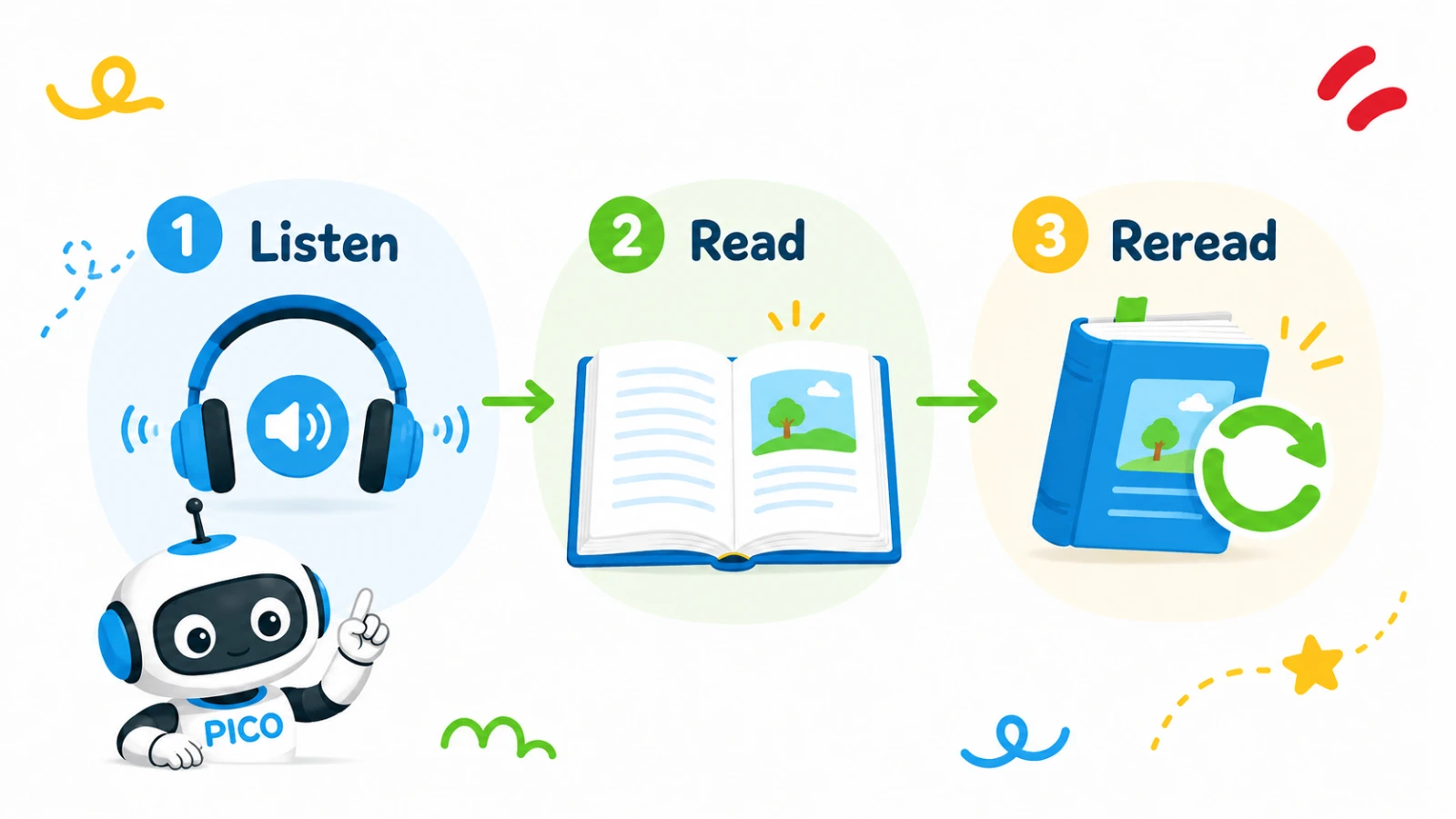
How to use both in reading practice
Listening comprehension and reading comprehension work best when they support each other.
A balanced routine may include listening, following along, rereading, comprehension questions, discussion, and independent reading practice.
One useful routine is:
- Listen to the passage once.
- Follow along with the written text.
- Reread the passage independently or with a partner.
- Answer a few comprehension questions.
- Discuss one important idea from the text.
This works especially well with short reading passages because students can reread them without becoming overwhelmed.
The routine supports fluency, vocabulary, comprehension, and confidence at the same time.
It also helps teachers and parents notice what kind of support is actually needed.
Did the student understand better after listening? Did rereading improve fluency? Did the questions show a vocabulary gap? Those answers can guide the next step.
Can PicoBuddy help with listening and reading comprehension?
PicoBuddy helps teachers, parents, homeschool families, and intervention teams create reading passages that match the student’s level, topic, and learning goal.
This matters because not every student needs the same type of support.
Some students may need shorter passages. Others may need simpler vocabulary, more fluency practice, listening support, or passages that work well with a read-aloud routine.
With PicoBuddy, you can create passages by grade, topic, text type, and reading level. You can also create shorter or easier versions when students need additional support.
For example, you might create a short nonfiction passage for fluency practice, a simplified science passage for intervention, or an ESL-friendly passage with manageable vocabulary and comprehension questions.
Need a passage for listening or reading comprehension practice? Browse PicoBuddy’s free reading passages or create a custom passage by grade, topic, and reading level.
Final thoughts
Listening comprehension and reading comprehension are closely connected, but they are not identical.
Listening comprehension focuses on understanding spoken language.
Reading comprehension requires students to decode written words and understand meaning at the same time.
That difference matters.
A student who struggles with reading may still have strong language comprehension. Another student may read fluently but still struggle to understand the text deeply.
Understanding the difference helps teachers and parents choose better support. The goal is not to make the task easier for no reason. The goal is to choose the support that helps students access meaning and continue growing as readers.

Frequently Asked Questions
Related Articles
Helping kids read better, together.
Like this article? Join 500+ educators using PicoBuddy to generate high-quality reading materials in seconds.