
World Space Week 2026 Activities: A Rocket Revolution Reading Plan for Grades 3–8
Use one shared rocket question across grades 3–8. Start from PicoBuddy’s live Rockets & Spacecraft collection, adapt the reading level when needed, and choose one response format that matches each group’s goal.
World Space Week runs from October 4 through 10 each year. For 2026, the international theme is Rocket Revolution, a look at how launch technology and access to space are changing.
That sounds like a perfect excuse for a huge folder of rocket crafts, videos, worksheets, and experiments. It can also become too much very quickly. A simpler plan is often stronger: give every learner the same big question, provide a reading at an appropriate level, and choose one follow-up that matches the skill you want to practice.
For grades 3–8, try this shared question:
How is the way humans reach space changing?
Students do not need identical texts or identical assignments to investigate it together.
What “Rocket Revolution” means in 2026
World Space Week is a global celebration of space science and technology. Its 2026 theme focuses on changes in space launch. Launches were once concentrated in a relatively small number of government programs. Today, the picture also includes commercial providers, university teams, startups, reusable launch systems, new infrastructure, and more countries participating in space activity.
Reusable rockets are an engaging example because students can picture a vehicle returning for another flight. They are not the whole story. The theme can also lead to questions about who builds rockets, how launch sites operate, what safety requires, why different organizations want access to orbit, and what tradeoffs come with faster growth.
Keep this introduction brief. Students need enough context to understand the question, not a lecture on the entire launch industry.
Start with one shared question
A shared question keeps a mixed-level lesson coherent. While reading, every student looks for evidence connected to the same idea. Afterward, groups can compare what they learned even when their texts and response tasks were different.
You might use:
- How is the way humans reach space changing?
- What jobs and systems make a modern launch possible?
- How can a new rocket design change what people are able to do in space?
- Who participates in space exploration now, and what responsibilities come with that access?
Choose one question, not all four. Write it where students can see it before they begin reading. Ask them to return to it at the end.
Choose one anchor from the Rockets & Spacecraft collection
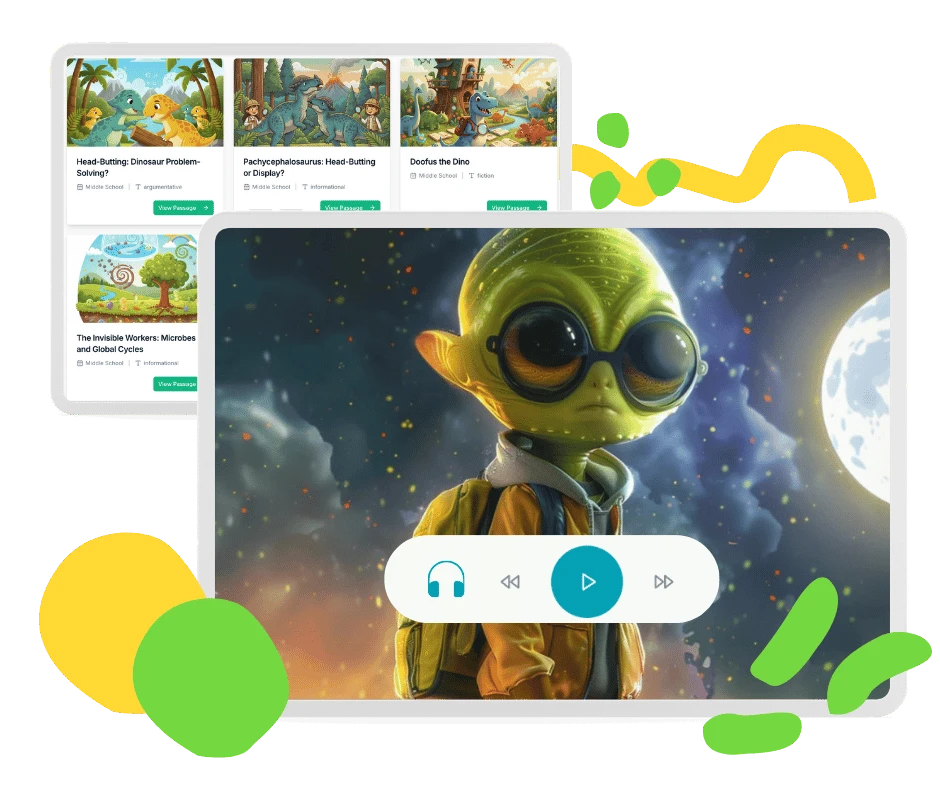
PicoBuddy’s Rockets & Spacecraft reading collection currently brings together 28 readings across elementary and middle school. It includes informational texts, biographies, fiction, and opinion pieces, so the right anchor depends on your goal.
For a lesson about technology, engineering, and the changing space industry, Florida’s Space Coast Careers is a useful middle school starting point. It describes the work of engineers and technicians and mentions reusable rockets and advanced propulsion systems.
Another passage may be a better fit if your class is studying launch centers, famous space figures, missions, debate, or the challenges of space travel. The collection saves you from starting with a blank search. It does not mean that every passage belongs in one lesson.
Before assigning an anchor, check three things:
- Does the passage contain evidence students can use to answer the shared question?
- Is its conceptual load appropriate for this group, even if the words are readable?
- Does the passage support the skill you want to assess?
Adapt the reading, not the topic
Differentiation does not have to mean preparing three unrelated lessons. Keep the topic and shared question stable, then adjust the reading level or the support around it.
If one group needs the same passage at another level, use Remix from the passage page. Review the adapted version before assigning it. A text can use simpler sentences and still contain difficult scientific ideas. Check that important terms remain accurate, that the central explanation still makes sense, and that examples are current.
Then set an age-appropriate evidence task.
Grades 3–4: identify what rockets and launch teams do
Ask younger readers to find the main idea and two key details. They might sequence three steps, match a few words to meanings, or complete a sentence such as:
One way people reach space is changing because...
Keep vocabulary purposeful. Words such as launch, engineer, orbit, and reusable may be enough for one lesson.
Grades 5–6: trace cause and effect
Ask students to explain how one change in technology or organization could affect another part of spaceflight. Depending on the evidence in the selected text, they might examine testing, turnaround time, launch frequency, jobs, or cost.
A useful frame is:
The text explains that ____. This could change ____ because ____.
Students should not fill the last blank with a guess that the passage cannot support. If they want to extend beyond the text, label that idea as a question for further research.
Grades 7–8: evaluate change and tradeoffs
Middle school students can compare benefits, limits, and competing priorities. They might ask whether greater access also creates new safety, environmental, regulatory, or coordination questions.
Require evidence before opinion. A strong response identifies a specific change, cites what the text says, and explains one implication without pretending the reading settles every debate.
Choose one follow-up that matches the goal
The best follow-up is not the one with the most pages. It is the one that shows whether students reached the lesson goal.
Comprehension questions or an online quiz
Use these when you need a focused check of main ideas, details, vocabulary, sequence, or cause and effect. A quiz can provide quick feedback, while selected written questions give students more room to explain.
A printable worksheet
Choose a printable format when students need paper-based evidence, independent work, annotation space, or a work sample. Do not add it automatically if the discussion already gives you the evidence you need.
Read-aloud support
Listening first can help a learner access the topic, build fluency, or hear technical vocabulary in context. Keep the text visible when possible so the student can connect spoken and written language.
Discussion or short writing
Use discussion when the goal is comparison across groups. Use short writing when each student needs to make an individual claim with evidence. The shared question makes both formats easier because everyone has investigated the same central idea.
One group might give a one-sentence answer, another might explain cause and effect, and a third might evaluate a tradeoff. Those are different levels of thinking about one topic, not three separate space lessons.
Use the Space theme as an optional extension
The Space theme includes passages, word games, worksheets, coloring pages, and other space resources. Add one only when it serves a clear purpose.
For example:
- choose a word game when students need more practice with the vocabulary;
- use a printable activity when it provides useful independent application;
- add another passage when students need a contrasting example;
- use a workbook when the class is building a longer unit rather than a 30-minute lesson.
World Space Week does not require every space activity at once. A focused reading lesson is already a complete contribution.
A simple 30-minute World Space Week lesson
5 minutes: frame the question
Introduce World Space Week, the October 4–10 dates, and the Rocket Revolution theme. Explain the shared question and invite one prediction.
12 minutes: read at the appropriate level
Assign the anchor passage or a reviewed remixed version. Give students one clear evidence target before they start.
8 minutes: complete one focused response
Choose a quiz, selected questions, a short worksheet task, discussion preparation, or a brief written response. Do not stack several formats unless each has a separate purpose.
5 minutes: compare answers
Return to the shared question. Invite each group to contribute one piece of evidence. Record similarities and differences without expecting every group to use the same vocabulary or produce the same depth of explanation.
Close with one question the class would investigate next. That question can guide a later science lesson, research task, or second reading, but it does not have to become homework.
Keep the revolution grounded in evidence
Rocket Revolution is an invitation to examine change, not to declare that all launches are now reusable, private, cheap, or routine. Help students notice precise language. Which technologies does the source actually discuss? Who is participating? What has changed, and what remains difficult?
That habit matters beyond space science. Students learn to separate an exciting theme from an unsupported claim.
For your World Space Week plan, begin with the Rockets & Spacecraft collection. Choose one anchor that answers your class question, use Remix only when another reading level is needed, and select one response format that fits the learning goal.
One topic. Several entry points. One discussion everyone can join.
Frequently Asked Questions
Related Articles
Helping kids read better, together.
Like this article? Join 500+ educators using PicoBuddy to generate high-quality reading materials in seconds.