
fix the sentence
Sentences from the passage with the capitals and punctuation removed — rewrite each one correctly.
Web preview · Open larger preview (opens in a new tab)
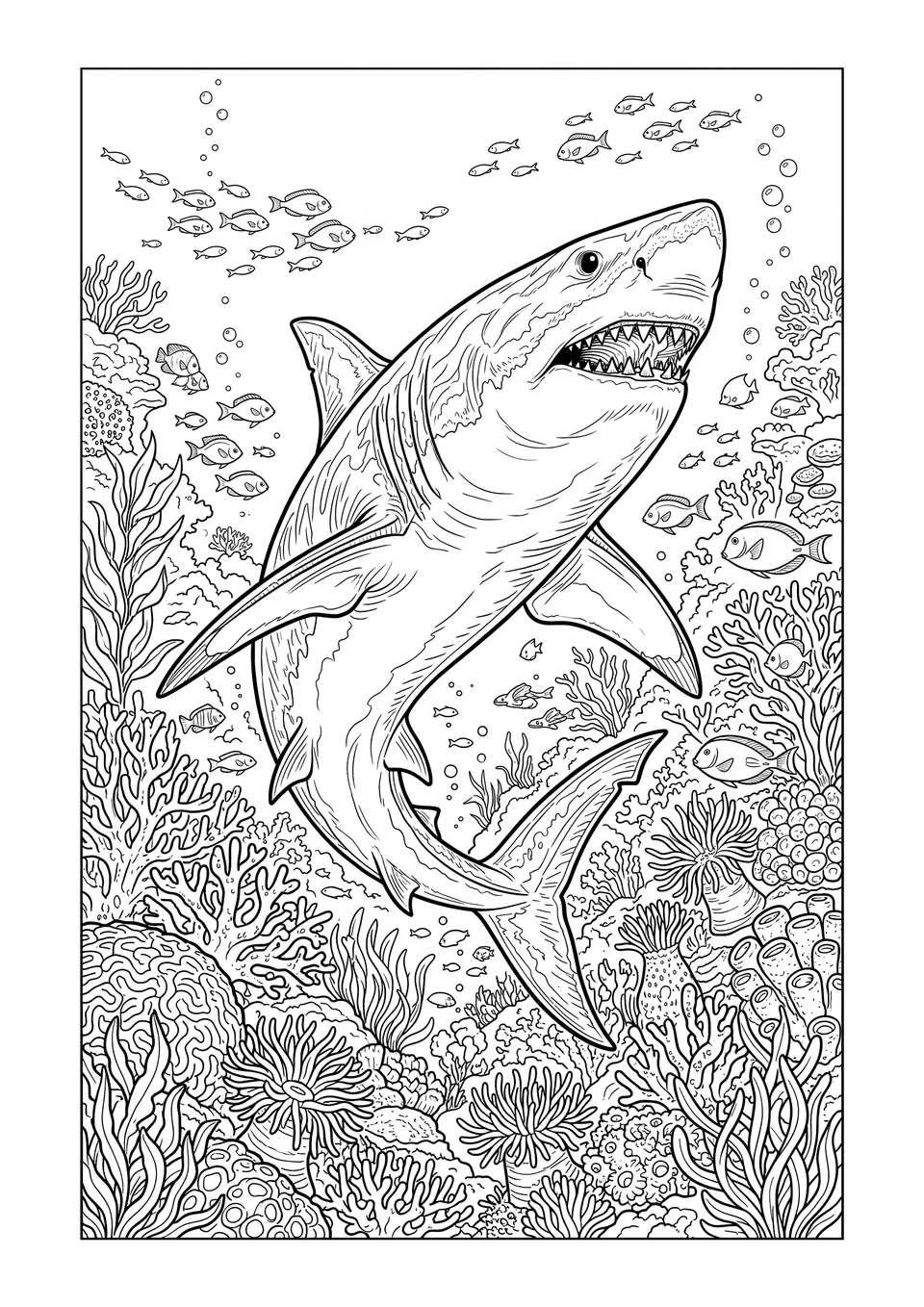
Dive into the deep blue sea with this detailed Great White Shark coloring page and informative reading passage. Perfect for older kids, this activity combines artistic creativity with fascinating facts about the ocean's apex predator.
PDF · Your plan’s download limits apply
The great white shark is one of the most famous and fascinating creatures in the ocean. Found in cool, coastal waters all around the world, these massive fish have earned a reputation as the ocean’s top predators. While many people are afraid of them because of movies, scientists have discovered that great whites are much more than just 'monsters' of the deep. They are highly intelligent and essential to the health of the marine environment.
Great white sharks are built for speed and power. They can grow up to 20 feet long and weigh more than 5,000 pounds. Unlike humans, sharks do not have bones. Instead, their skeletons are made of cartilage, the same flexible material found in your nose and ears. This makes them lighter and more agile in the water. One of their most famous features is their teeth. A great white can have up to 300 serrated, triangular teeth arranged in several rows. When a shark loses a tooth, a new one simply slides forward to take its place.
To find their prey, great whites use a set of 'super senses.' While they have excellent eyesight and a sharp sense of smell, they also have a special ability called electroreception. Small pores on their snouts allow them to feel the tiny electrical pulses made by the muscles of other living animals. This helps them find fish or seals even in dark or murky water. When they hunt, they often use a technique called breaching, where they swim upward with so much speed that they launch their entire bodies out of the water.
Even though they are at the top of the food chain, great white sharks face many challenges. They grow slowly and do not have many babies, which makes their population vulnerable to overfishing and habitat loss. As apex predators, they play a vital role in the ocean by keeping other animal populations in balance. By protecting these magnificent sharks, we help keep the entire ocean ecosystem healthy and strong.
Where in the ocean can great white sharks usually be found?
What material makes up a shark's skeleton instead of bone?
How many teeth can a great white shark have at one time, and how are they arranged?
What happens when a great white shark loses one of its teeth?
How big can a great white shark grow in terms of length and weight?
What is 'electroreception' and how does it help a shark hunt?
Describe the hunting technique known as breaching.
Why are great white shark populations considered vulnerable to overfishing?
What important role do great white sharks play as apex predators in the ocean?
According to the passage, how does cartilage benefit a shark's movement?
More ways to practice with this story — every sheet is built from the text itself, answer key included where it counts.
One PDF with a cover, a contents page and every answer key at the back — color the page in, then keep going on paper.
Sentences from the passage with the capitals and punctuation removed — rewrite each one correctly.
Match the passage words to their meanings, then fill the missing words back into real sentences.
Two writing tasks that build on the passage, with plenty of lines to write on.
Enhance your science curriculum with our free printable Great White Shark coloring page and reading passage. Designed specifically for upper elementary students, this complex coloring sheet provides a rich artistic challenge while the accompanying text, 'The Great White Shark: King of the Deep,' offers deep insights into shark biology, super senses, and marine conservation. This resource is perfect for classroom lessons on ocean ecosystems or as an engaging at-home educational project.
Our coloring pages are created with high-quality line art that is easy to download and print. By pairing the coloring activity with the informative passage, children can practice reading comprehension, learn new glossary terms, and explore the anatomy of these incredible fish. It is a comprehensive way to make learning about the natural world both fun and memorable.
Whether you are a teacher looking for supplemental material or a parent seeking a screen-free learning activity, this shark coloring page is an excellent choice. The detailed scene encourages focus and fine motor skills, while the scientific facts help dispel myths about sharks being 'monsters,' showing them instead as vital parts of a healthy ocean environment.