
fix the sentence
Sentences from the passage with the capitals and punctuation removed — rewrite each one correctly.
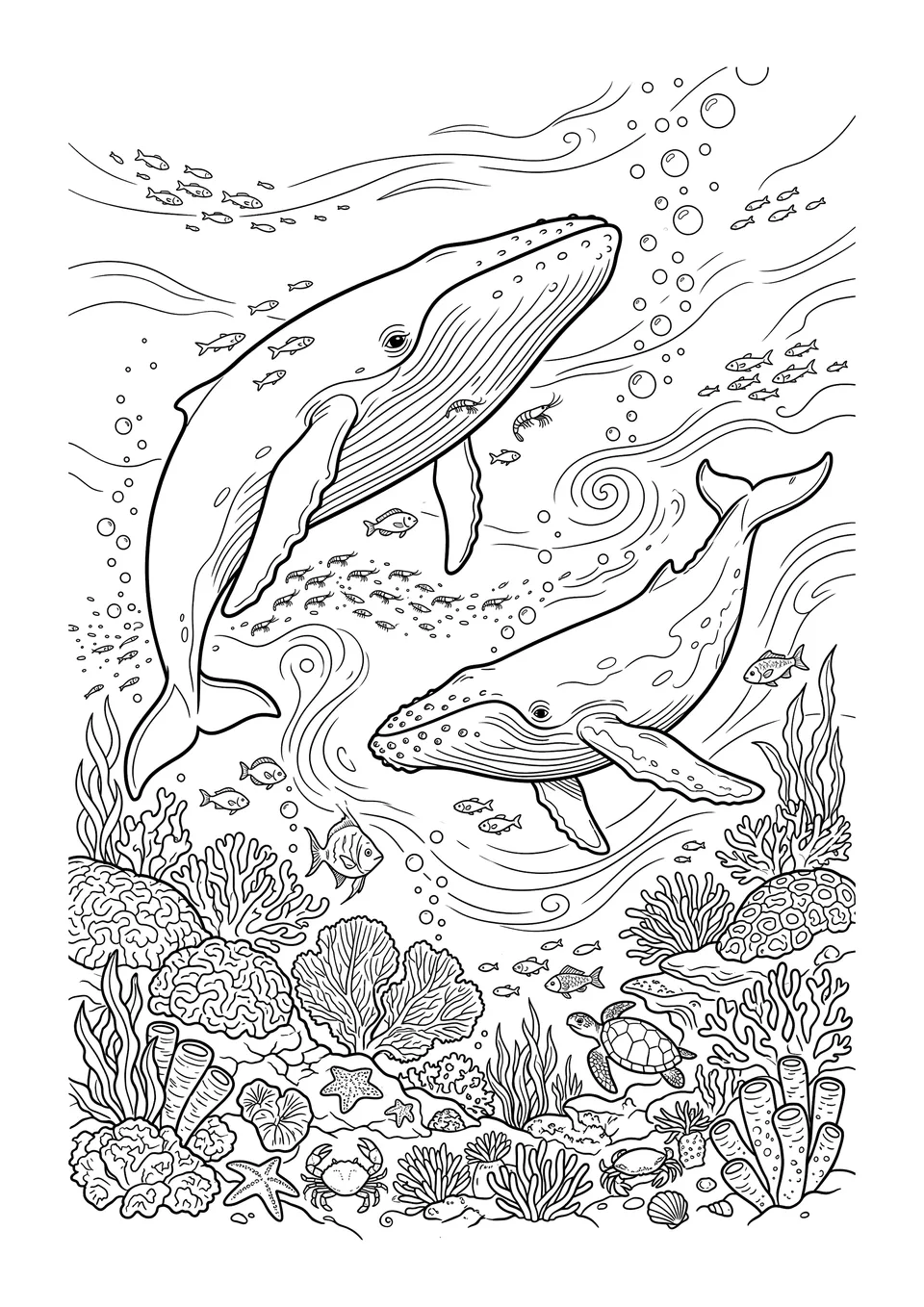
Web preview · Open larger preview (opens in a new tab)
Dive into the deep blue with our detailed whale coloring page and learn amazing facts about these massive marine mammals. This activity is perfect for students who love ocean life and science.
PDF · Your plan’s download limits apply
Imagine a creature so large that its tongue weighs as much as an elephant and its heart is the size of a bumper car. This is the blue whale, the largest animal ever known to live on Earth. Even though they live in the ocean, whales are not fish. They are mammals, which means they are warm-blooded, breathe air through lungs, and nurse their young with milk.
Scientists divide whales into two main groups: baleen whales and toothed whales. Baleen whales, like the humpback and the blue whale, do not have teeth. Instead, they have fringed plates called baleen that act like a giant sieve. They gulp huge mouthfuls of water and push it out through the baleen, trapping tiny shrimp-like creatures called krill to eat. On the other hand, toothed whales, such as orcas and sperm whales, have teeth to catch larger prey like fish and squid.
Life in the freezing ocean requires special adaptations. Whales have a thick layer of fat called blubber under their skin to keep them warm. To breathe, they must swim to the surface and exhale through blowholes on the top of their heads. This creates a misty spray that can be seen from far away. Many whales are also famous for their long-distance travels, known as migrations. They often spend summers in cold waters to feed and winters in warm waters to give birth to their calves.
Whales are very social and communicate with one another using a variety of sounds. Some species, like the humpback whale, are known for their complex songs that can last for twenty minutes and travel for miles underwater. Toothed whales use a special skill called echolocation. They send out sound waves that bounce off objects, helping them "see" their surroundings and find food in the dark depths of the sea. These magnificent giants continue to fascinate people as we learn more about their mysterious lives beneath the waves.
According to the passage, what are two physical comparisons used to describe the size of a blue whale?
What are three reasons why whales are classified as mammals instead of fish?
How does the baleen in a whale's mouth function to help it eat?
What kind of prey do toothed whales usually hunt?
Why is blubber essential for a whale's survival in the ocean?
What happens when a whale swims to the surface to breathe?
Why do many whales participate in migrations during the year?
What is unique about the communication of humpback whales?
How does echolocation work for toothed whales?
Where do whales typically go to give birth to their calves?
More ways to practice with this story — every sheet is built from the text itself, answer key included where it counts.
One PDF with a cover, a contents page and every answer key at the back — color the page in, then keep going on paper.
Sentences from the passage with the capitals and punctuation removed — rewrite each one correctly.
Two writing tasks that build on the passage, with plenty of lines to write on.
This printable whale coloring page is designed specifically for upper elementary students, combining creative art with a fascinating reading passage titled 'Giants of the Deep: The Amazing World of Whales'. It is an excellent resource for teachers and parents looking to integrate science and literacy through a hands-on activity.
The accompanying text covers essential topics like baleen versus toothed whales, adaptations like blubber, and the mystery of echolocation. Use the download to provide a comprehensive lesson that includes a coloring sheet, comprehension questions, and a vocabulary glossary. It is ideal for science units on marine biology or as a quiet-time enrichment task.
Our high-quality resolution line art ensures a crisp print every time. Whether you are at home or in the classroom, these free ocean animal coloring pages offer a fun way to explore the wonders of the sea while building reading comprehension skills.