

fix the sentence
Sentences from the passage with the capitals and punctuation removed — rewrite each one correctly.
Web preview · Open larger preview (opens in a new tab)
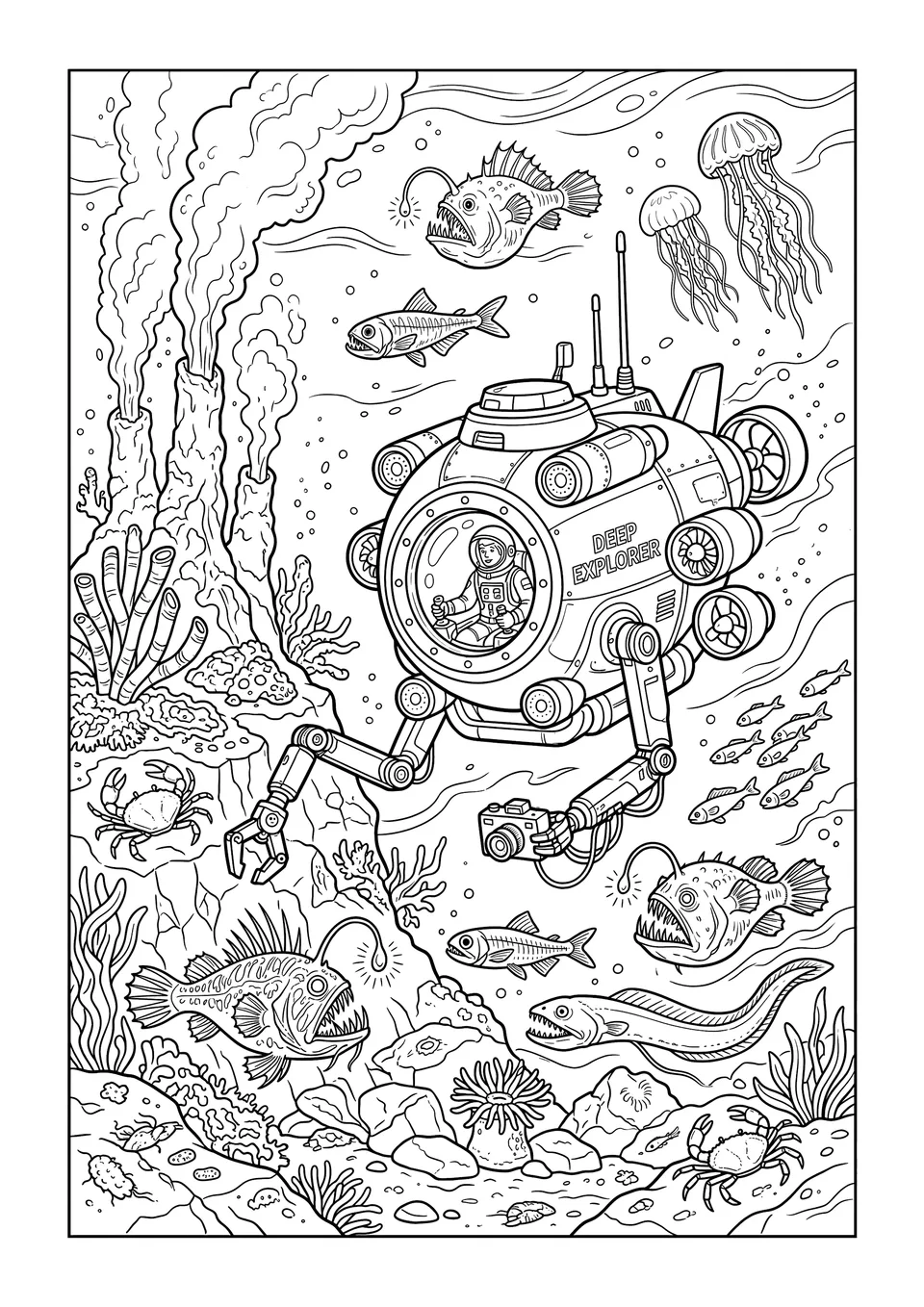
Join the ranks of deep-sea scientists as you color this intricate underwater scene featuring a high-tech submersible and the mysterious creatures of the midnight zone.
PDF · Your plan’s download limits apply
Imagine diving deep into the blue water, where the sunlight begins to fade. As an ocean explorer, your job is to uncover the mysteries hidden beneath the waves. Most of our planet is covered by water, yet we have explored less than five percent of the deep ocean. It is often called the "final frontier" on Earth because there is still so much left to discover.
To reach the deepest parts of the sea, explorers use special machines called submersibles. These are like small, underwater spaceships. They are built with very thick walls to protect the scientists inside from the crushing pressure of the deep water. Some submersibles have robot arms to collect rocks or plants, while others have high-definition cameras to film rare sea creatures that have never been seen before.
In the deepest parts of the ocean, known as the "Midnight Zone," it is pitch black. Because no sunlight reaches this far down, many animals have developed an amazing ability called bioluminescence. This means they can make their own light through chemical reactions in their bodies! Some fish have glowing spots on their bellies to hide from predators, while others use a glowing lure on their heads to catch food. Seeing these creatures for the first time is one of the most exciting parts of being an explorer.
Ocean exploration is not just about finding strange fish, though. Scientists also study the ocean to understand how to keep our planet healthy. By learning about underwater volcanoes, coral reefs, and deep-sea currents, we can better protect the environment. Every time an explorer returns from a mission, they bring back new knowledge that helps us appreciate the beautiful, watery world we call home.
Why is the deep ocean often referred to as the 'final frontier'?
What are submersibles compared to in the passage?
What is the specific purpose of the thick walls on a submersible?
Name two tasks that submersibles can perform using their specialized equipment.
Why is the Midnight Zone pitch black?
How do animals with bioluminescence create their own light?
What are two different ways deep-sea fish use their glowing abilities?
What are some underwater features scientists study besides sea creatures?
How much of the deep ocean have humans actually explored so far?
According to the passage, how does ocean exploration benefit our planet?
More ways to practice with this story — every sheet is built from the text itself, answer key included where it counts.
One PDF with a cover, a contents page and every answer key at the back — color the page in, then keep going on paper.
Sentences from the passage with the capitals and punctuation removed — rewrite each one correctly.
Match the passage words to their meanings, then fill the missing words back into real sentences.
Two writing tasks that build on the passage, with plenty of lines to write on.
Enhance your science curriculum with this free printable coloring page and reading passage. This activity is designed for upper elementary students to explore the "final frontier" of our planet while practicing their reading comprehension. The detailed scene offers a creative way to visualize how submersibles navigate the deep ocean to study bioluminescent life and volcanic formations.
Our ocean explorer coloring sheet is perfect for classroom use, homeschooling, or as an educational weekend project. It comes paired with an informative passage about the tools and discoveries of deep-sea scientists, including a focus on key terms like "submersible" and "bioluminescence." Students can enjoy a multi-sensory learning experience that reinforces marine biology concepts.
Download this high-resolution coloring page today and give your students a hands-on way to learn about environmental science. This printable resource combines artistic expression with factual learning, making it a great addition to any lesson on the world's oceans and the technology used to explore them.