
fix the sentence
Sentences from the passage with the capitals and punctuation removed — rewrite each one correctly.
Web preview · Open larger preview (opens in a new tab)
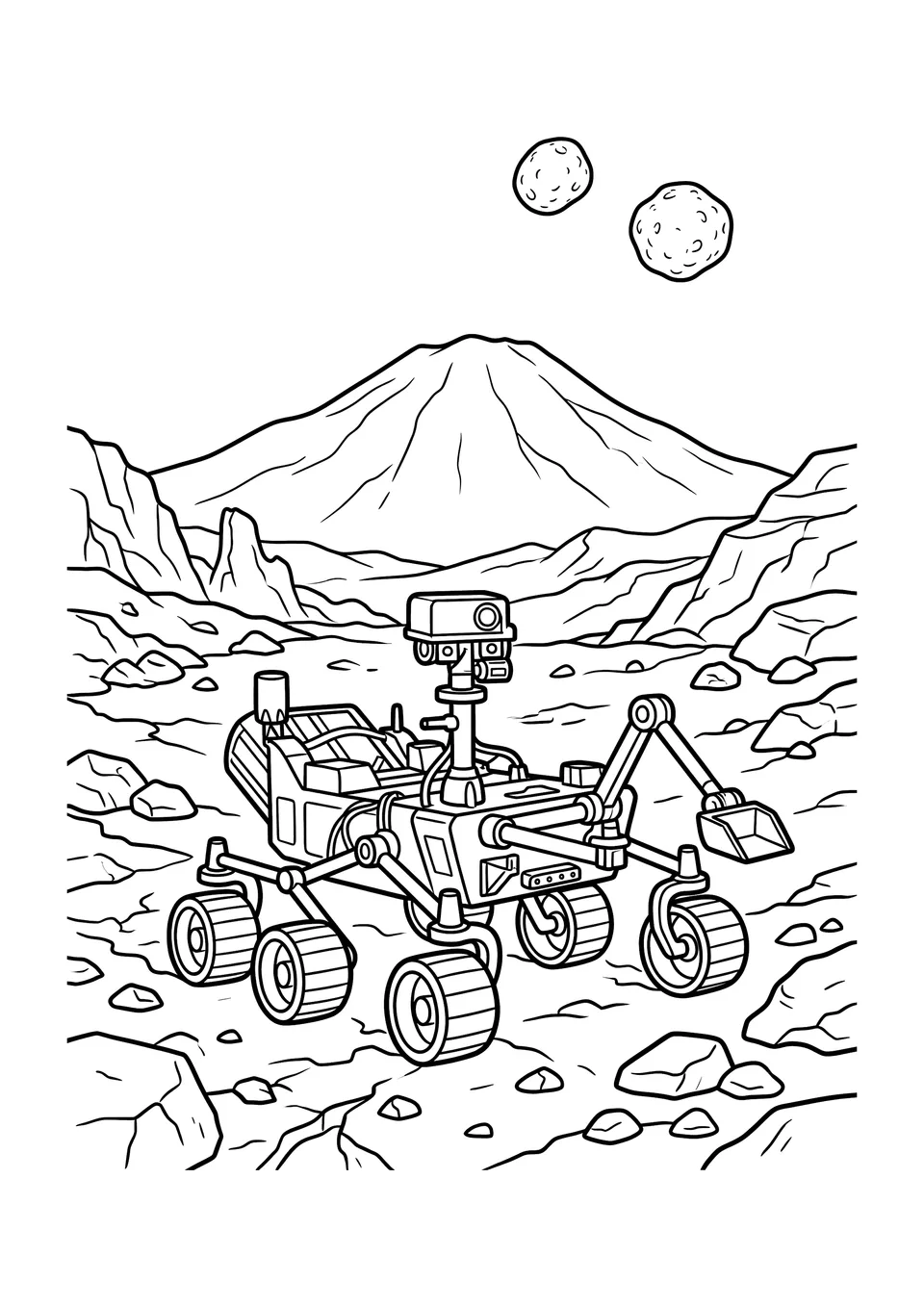
Discover the wonders of our solar system with this Mars coloring page and 'The Red Planet' reading activity. It is perfect for young explorers to learn about our neighbor planet while they get creative.
PDF · Your plan’s download limits apply
Mars is a very cool place in our solar system. It is the fourth planet from the Sun.
Mars is right next to Earth. It is much smaller than our home planet.
Many people call it the Red Planet. This is because the ground is covered in red dust.
The dust looks like rust on an old bike. It makes the whole world look bright orange.
The air on Mars is very thin. You could not breathe there like you do here.
It is also very cold on Mars. You would need a very thick coat to stay warm.
Mars has very big mountains. One mountain is the biggest in our whole solar system.
It also has deep valleys. These valleys are much longer than the ones on Earth.
There is no liquid water on the surface now. But long ago, there might have been lakes.
Scientists think there was once water flowing there. This is very exciting to learn about.
Mars has two small moons. Their names are Phobos and Deimos.
They look like lumpy potatoes in the sky. They are much smaller than our Moon.
People have not visited Mars yet. It is too far away for a quick trip.
Instead, we send robots to explore. These robots are called rovers.
Rovers have wheels to drive over rocks. They take many pictures of the red ground.
The rovers send these pictures back to Earth. Scientists look at them to learn secrets.
Maybe one day, people will fly to Mars. They will wear special suits to stay safe.
They will explore the red dust and big mountains. For now, we watch the robots work.
Where is Mars located in our solar system?
How does the size of Mars compare to the size of Earth?
What gives Mars its red color?
Why would it be difficult for a person to breathe on Mars?
What is special about the mountains found on Mars?
How do the valleys on Mars compare to the ones on Earth?
What do scientists believe about the history of water on Mars?
What are the names of the two moons that orbit Mars?
What are the robots that explore Mars called?
How do scientists on Earth see what the surface of Mars looks like?
More ways to practice with this story — every sheet is built from the text itself, answer key included where it counts.
One PDF with a cover, a contents page and every answer key at the back — color the page in, then keep going on paper.
Sentences from the passage with the capitals and punctuation removed — rewrite each one correctly.
Two writing tasks that build on the passage, with plenty of lines to write on.
This printable Mars coloring page is designed specifically for lower elementary students to pair creativity with science. Children can color the rocky surface and the famous rovers while learning fascinating facts about the Red Planet's thin atmosphere, giant mountains, and lumpy moons. It is a fantastic way to engage kids with space science through a hands-on activity.
Our educational resources include a reading passage, comprehension questions, and a glossary to help build vocabulary. Whether you are a teacher looking for a classroom science worksheet or a parent seeking a fun at-home activity, this download is a great way to introduce the solar system. The simple, clear outlines make it easy for small hands to stay within the lines while they imagine life on another world.
By using this coloring page with reading passage, students improve their fine motor skills and reading fluency at the same time. Explore the red dust and robotic secrets of Mars today with this easy-to-download and print resource.