
fix the sentence
Sentences from the passage with the capitals and punctuation removed — rewrite each one correctly.
Web preview · Open larger preview (opens in a new tab)
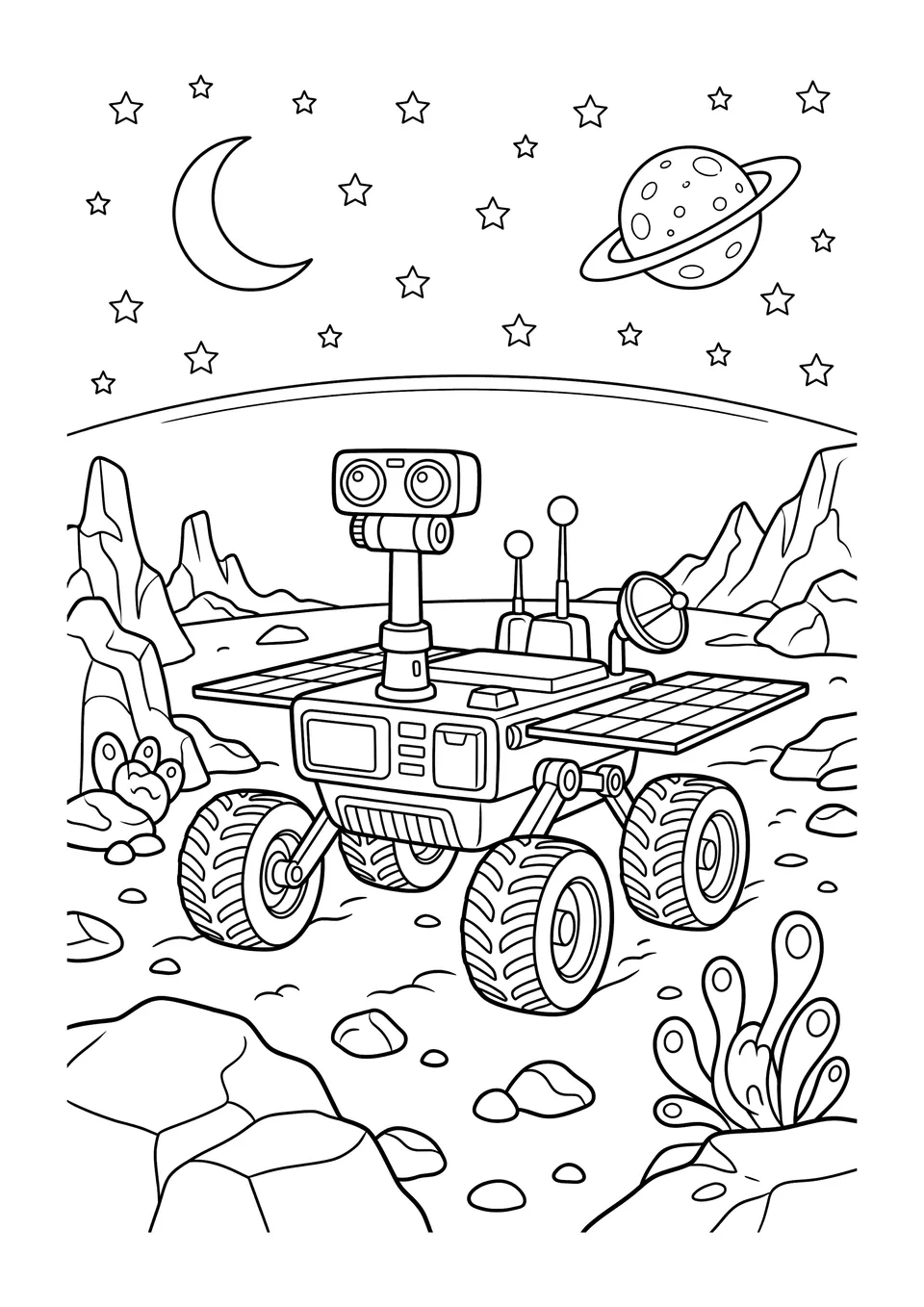
Meet the mechanical pioneers of the final frontier! This space robot coloring page comes with a reading passage about how rovers and orbiters help us explore the stars.
PDF · Your plan’s download limits apply
Explore the final frontier! While astronauts are famous, many of the bravest explorers in space are not human at all. They are sophisticated machines called space robots. These robotic explorers help scientists learn about planets, moons, and distant stars without ever leaving Earth. Because they can go where humans cannot, they are essential tools for modern science.
Space is a very dangerous place for people. It is filled with extreme temperatures, from freezing cold to scorching heat, and harmful radiation. It also takes a long time to travel to other planets. A robot does not need food, water, or oxygen to survive. It can travel for years through the cold darkness of space and still do its job perfectly. Because they are built to be tough, robots can land on harsh surfaces that would be impossible for a human to visit safely.
One of the most famous types of space robots is the rover. A rover is like a high-tech car that can drive over rocky ground and climb steep hills. NASA has sent several rovers to Mars, including famous ones named Curiosity and Perseverance. These rovers use sturdy wheels to move around and have long robotic arms to pick up soil and rocks. Other robots are called orbiters. Instead of landing, they fly around a planet or moon, taking thousands of detailed pictures from high above.
Space robots are packed with amazing technology. They have powerful cameras that act as eyes and special sensors that can "smell" or "taste" the ground to look for signs of water or ancient life. Even though they are millions of miles away, scientists on Earth can send them instructions using radio waves. However, because it takes time for signals to travel across space, these robots often use artificial intelligence to make their own decisions, such as avoiding a deep crater or steering around a sharp rock.
As technology improves, space robots will become even smarter and more capable. They are our eyes and ears in the universe, helping us solve the many mysteries of outer space. One day, these mechanical pioneers might even help prepare a base for the first humans to live on another planet.
Why are robotic explorers considered essential for modern science?
What are some of the extreme conditions in space that are dangerous for humans?
How does the survival needs of a robot differ from those of a human astronaut?
In what way is a rover similar to a vehicle found on Earth?
What specific tasks do rovers use their robotic arms for?
How do orbiters gather information about a planet or moon?
How do scientists send instructions to robots that are millions of miles away?
Why is artificial intelligence important for space robots?
What are space robots looking for when they use sensors to 'smell' or 'taste' the ground?
What role might robots play in future human missions to other planets?
More ways to practice with this story — every sheet is built from the text itself, answer key included where it counts.
One PDF with a cover, a contents page and every answer key at the back — color the page in, then keep going on paper.
Sentences from the passage with the capitals and punctuation removed — rewrite each one correctly.
Two writing tasks that build on the passage, with plenty of lines to write on.
Bring science to life with our free printable space robot coloring page. Designed specifically for upper elementary students, this activity combines creative coloring with an informative reading passage about robotic technology. Children can learn how rovers navigate the harsh environments of distant planets while they color their own mechanical explorer.
This resource is ideal for both classroom settings and at-home learning. It features a high-quality layout that is easy to download and print. The accompanying text includes key concepts about artificial intelligence and space technology, making it a great tool for building reading comprehension skills alongside art.
Whether you are planning a lesson on the solar system or looking for an engaging STEM activity, this coloring page provides a fun way to explore the universe. Use it as a quiet time activity, a supplement to a science unit, or a rainy day project for young space enthusiasts.