

fix the sentence
Sentences from the passage with the capitals and punctuation removed — rewrite each one correctly.
Web preview · Open larger preview (opens in a new tab)
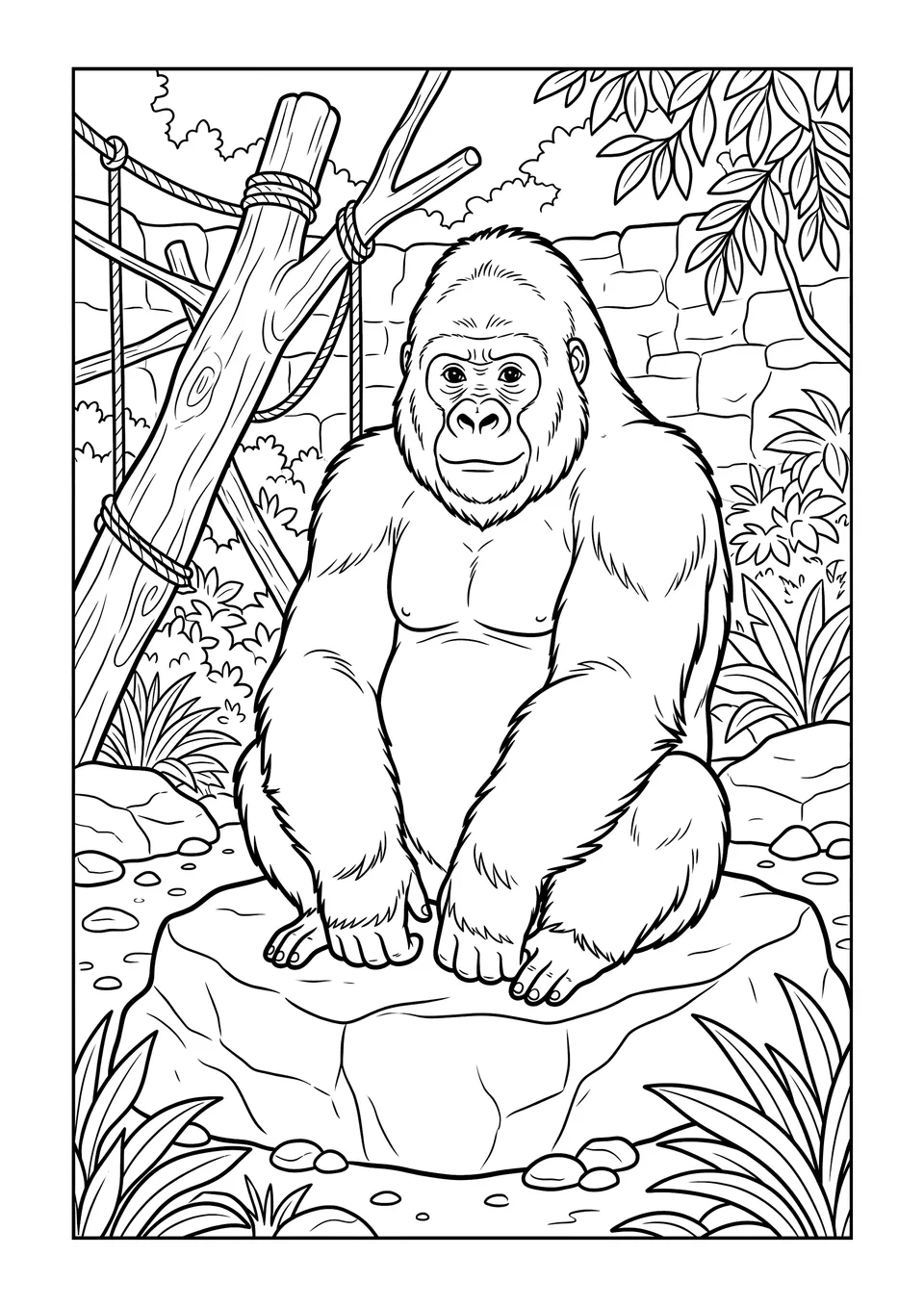
Explore the world of great apes with this printable gorilla coloring page and educational passage. It's a perfect way for upper elementary students to learn about these intelligent creatures while they color.
PDF · Your plan’s download limits apply
Gorillas are the largest primates in the world, and they are famous for their incredible strength and intelligence. While their natural homes are the dense rainforests of central Africa, many people have the chance to see these amazing creatures in modern zoos. Observing a gorilla up close can be a powerful experience because they share many traits with humans, such as their expressive faces and their strong family bonds.
In a zoo, zookeepers work hard to create a habitat that mimics the wild. These enclosures are carefully designed with tall climbing structures, thick vegetation, and large rocks to explore. Because gorillas are social animals, they live in groups called troops. A troop is typically led by a dominant male known as a silverback, named for the distinctive patch of gray hair on his back. This leader is responsible for protecting the group and deciding where the troop will eat and sleep each day.
Feeding time is a major part of a zoo gorilla's day. Gorillas are primarily herbivores, which means they eat plants. Zookeepers provide them with a variety of leafy greens, fruits, and vegetables like celery and peppers. To keep the gorillas mentally active, keepers use a technique called enrichment. They might hide food inside a hollow log or place treats in a puzzle box. This encourages the gorillas to use their problem-solving skills to find their meal, just as they would search for food in a jungle.
Beyond just being a place for the public to visit, zoos play a critical role in conservation. Many species of gorillas are endangered in the wild due to habitat loss and other threats. Zoos around the world participate in special breeding programs to help keep the gorilla population healthy and diverse. By visiting these gentle giants at the zoo, people can learn more about how to protect the natural world and ensure that gorillas thrive for years to come.
Where are gorillas' natural habitats located in the wild?
Why can looking at a gorilla feel like a powerful experience for people?
What is the name for a group of gorillas that live together?
What physical feature gives the 'silverback' its name?
What are the two main responsibilities of a troop leader?
What does the term 'herbivore' mean in relation to a gorilla's diet?
List three types of food that zookeepers might provide for gorillas.
How does the technique called 'enrichment' help zoo gorillas?
What is one primary reason that many gorilla species are endangered in the wild?
What is the purpose of the special breeding programs mentioned in the passage?
More ways to practice with this story — every sheet is built from the text itself, answer key included where it counts.
One PDF with a cover, a contents page and every answer key at the back — color the page in, then keep going on paper.
Sentences from the passage with the capitals and punctuation removed — rewrite each one correctly.
Two writing tasks that build on the passage, with plenty of lines to write on.
This printable gorilla coloring page is paired with an engaging reading passage titled "Life of the Gentle Giants: Gorillas in the Zoo." It provides a wonderful opportunity for upper elementary students to develop their literacy skills while learning about animal behavior, troop dynamics, and the role of zoos in conservation. The activity is designed for easy download and is perfect for science lessons or quiet time at home.
In addition to the coloring sheet, the included text covers fascinating facts about the silverback leader and the importance of environmental enrichment. Using a coloring page with a reading passage helps reinforce new vocabulary and concepts, making it an effective educational tool for teachers and parents alike.
Whether you are building a unit on zoo animals or looking for a high-quality creative outlet, this resource is a great choice for your classroom or homeschool curriculum. Simply download, print, and start your journey into the world of these intelligent primates.