

fix the sentence
Sentences from the passage with the capitals and punctuation removed — rewrite each one correctly.
Web preview · Open larger preview (opens in a new tab)
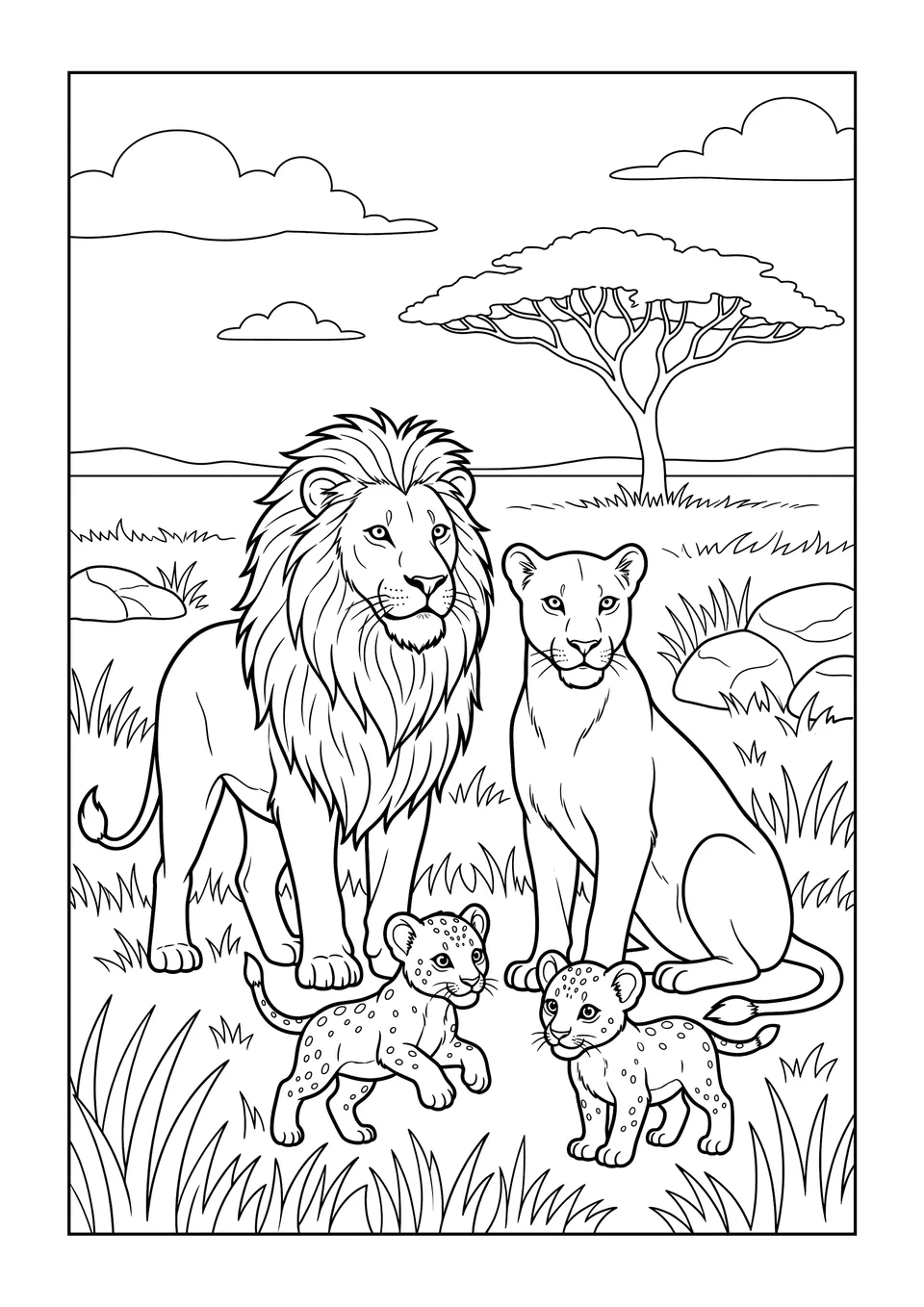
Learn about the social lives of the kings of the jungle with this free coloring page and reading passage. Discover how lions, lionesses, and cubs work together as a family pride on the savanna.
PDF · Your plan’s download limits apply
Lions are often called the kings of the jungle, but they actually spend most of their time on the wide, grassy savannas of Africa. These majestic cats are unique because they are the only felines that live in large social groups called prides. A pride is like a big family, usually consisting of related females, their young cubs, and a few adult males.
The adult male lion is easy to recognize because of his thick, impressive mane. This circle of long hair around his head and neck does more than just look grand; it protects him during fights and makes him look larger and more intimidating to rivals. While the males are famous for their loud roars that can be heard up to five miles away, their primary job is to guard the pride’s territory. They patrol the area to keep other lions and predators away, ensuring the safety of their family.
Unlike the males, lionesses do not have manes. This lack of long hair helps them blend into the tall, golden grass when they are out hunting. Lionesses are the primary hunters for the pride. They are smaller, faster, and more agile than the males. They use incredible teamwork to catch prey like zebras or wildebeests. While one group of lionesses might flush the prey toward a specific spot, others wait in hiding to pounce. After a successful hunt, the entire pride shares the meal.
The youngest members of the pride are the cubs. When they are born, they are very small and have dark spots on their fur that help them stay camouflaged. For the first few weeks, a mother lioness keeps her cubs hidden in dense brush to protect them from danger. As they grow, the cubs are introduced to the rest of the pride. Growing up in a pride is helpful because the other lionesses help look after and even nurse the cubs. Through play, such as wrestling and pouncing on their siblings' tails, the cubs learn the vital skills they will need to become expert hunters and protectors one day.
Where do lions spend most of their time instead of the jungle?
What is the unique social group called that lions live in?
What are two reasons the male lion has a thick mane?
What is the primary responsibility of the adult male lions in a pride?
Why is it beneficial for lionesses to lack the long manes that males have?
How do lionesses work together to catch their prey?
What feature do young cubs have that helps them stay hidden?
How do other members of the pride help a mother lioness with her cubs?
In what ways does playing help lion cubs prepare for adulthood?
How far can the sound of a lion's roar travel?
More ways to practice with this story — every sheet is built from the text itself, answer key included where it counts.
One PDF with a cover, a contents page and every answer key at the back — color the page in, then keep going on paper.
Sentences from the passage with the capitals and punctuation removed — rewrite each one correctly.
Match the passage words to their meanings, then fill the missing words back into real sentences.
Two writing tasks that build on the passage, with plenty of lines to write on.
This printable coloring page is perfect for upper elementary students learning about animal social structures and the African savanna. By combining a detailed illustration of a male lion, a lioness, and their cubs with an informative reading passage, children can explore the unique roles each family member plays within a pride. This activity is designed to support biology lessons, zoo field trips, or at-home science exploration.
Our lion-themed coloring sheet offers a high-quality line art experience that encourages focus and creativity. It is easy to download and print, making it an excellent resource for classroom teachers looking for reading comprehension worksheets or parents seeking educational screen-free activities. Students can read the passage 'Life in the Pride' to understand why males have manes and how lionesses hunt as a team.
In addition to the coloring sheet, the included text provides vocabulary and context that can be used for further study or comprehension questions. Whether you are building a unit on zoo animals or exploring the wildlife of Africa, this free resource provides a comprehensive look at the fascinating world of the king of beasts.