
The Ancient Olympic Games

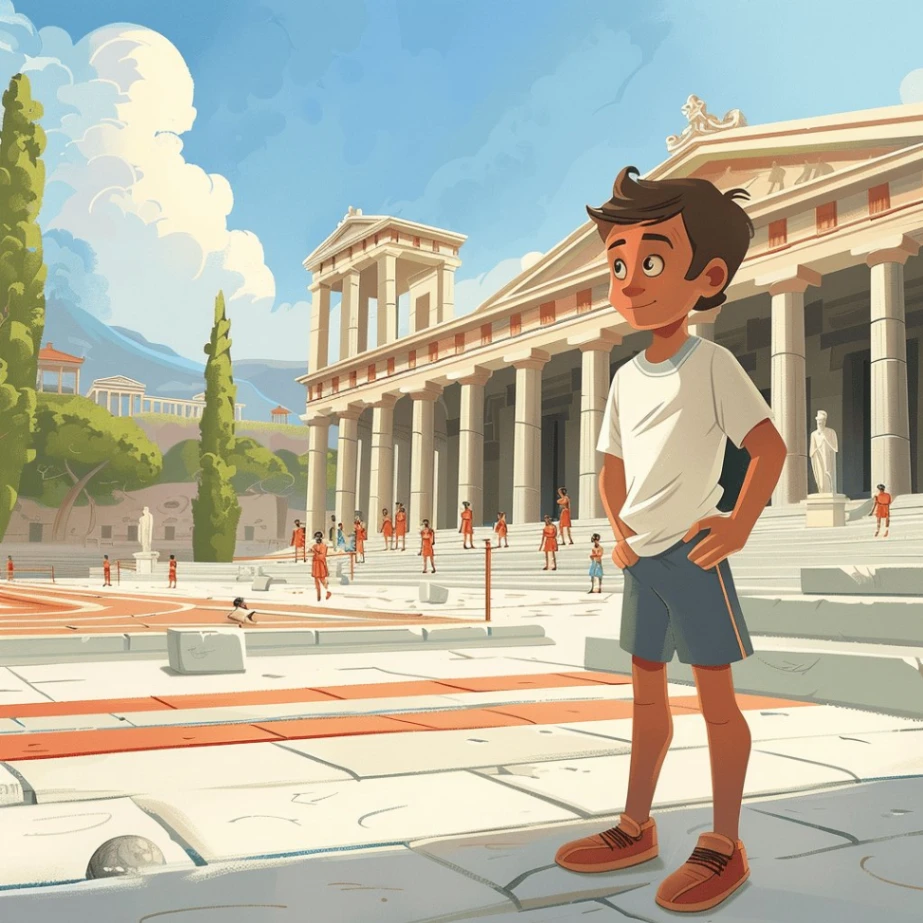
The Ancient Olympic Games
Have you ever watched the Olympic Games and wondered where they came from? The Olympics have a very long and interesting history, starting way back in ancient Greece! Let's take a trip back in time to learn about the first Olympic Games.
Where Did the Games Begin?
The very first Olympic Games were held in Olympia, Greece, in 776 BC. That's more than 2,700 years ago! They were part of a religious festival to honor Zeus, the king of the gods in Greek mythology. Only men were allowed to participate, and they competed without wearing any clothes!
What Were the First Events?
At the beginning, there was just one event: a foot race. It was about 200 meters long. Over time, more events were added, like wrestling, boxing, chariot racing, and throwing the discus and javelin. These events were very different from the ones we see today, but they were all about showing strength and skill.
How Long Did the Games Last?
The ancient Olympic Games were held every four years. This period was called an Olympiad. During the Games, there was a truce, or peace, declared so athletes and spectators could travel safely to Olympia. The Games lasted for five days, filled with competitions and religious ceremonies.
- Zeus:
- The king of the gods in Greek mythology.
- Olympiad:
- The four-year period between each Olympic Games.
- Truce:
- An agreement to stop fighting for a certain period of time.
- mythology:
- A collection of traditional stories about gods, heroes, and magic that explain history or nature.
- spectators:
- People who gather to watch a game, show, or other event.
- revive:
- To bring something back into use, activity, or popularity after it has stopped.
One passage, many ways to practice
Reading-skill questions, word work and writing prompts — all built from this text.
Main Idea
Identify the central idea and explain how important details develop it.
Summarize
Select, organize, and restate the most important information without adding opinion.
Structure
Analyze how sections and organizational choices build the text's ideas or effects.
Vocabulary
Practice words from the passage with a printable worksheet.
Writing Prompts
Use the passage as a springboard for short written responses, from personal reflection to evidence-based arguments.
Fix the Sentence
Practice editing sentences drawn from this passage with a printable worksheet.

Ready to use this passage in class?
Start free with the Mixed worksheet and 3 PDF downloads each week. Focused skill sets depend on plan.
Preview questions from this passageShowHide
- 1Where were the first Olympic Games held?
- 2Why were the Olympic Games held in ancient Greece?
Where this passage belongs
You Might Also Like


About this informational passage for Upper Elementary
“The Ancient Olympic Games” is a informational reading passage about Ancient History, written for Upper Elementary. It takes about 2 minutes to read (335 words) and comes with an interactive quiz and a printable worksheet with comprehension questions and an answer key.