
Creative Reading Response Activities: 5 Ways to Use Art Without Losing the Reading Goal
Creative reading responses work best when the art still shows what the student understood. Start with the reading goal, then choose drawing, comics, visual vocabulary or another response that makes that thinking visible.
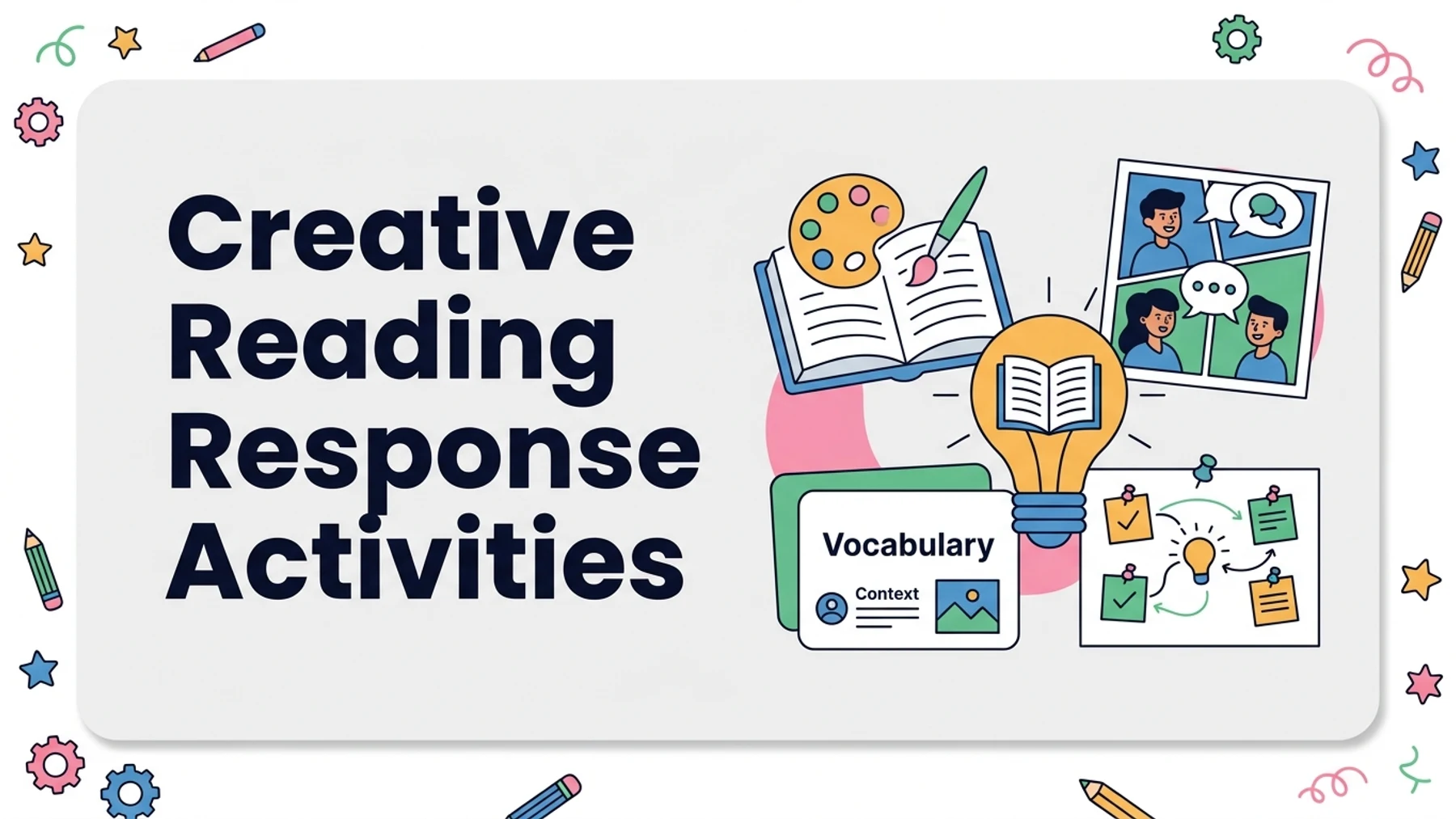
National Arts in Education Week runs September 13–19, 2026, which makes this a useful week to bring drawing, comics, visual thinking, and art into reading lessons. The important part is keeping the reading goal visible.
A creative reading response should help you see what a student understood. Start with the skill you want to check, then choose the response format that makes that thinking easiest to notice.
That might be a drawing. It might also be a focused question, a quiz, a worksheet, a written response, or a discussion. The best format is the one that matches the learning goal.
Start With the Reading Goal, Not the Art Supply
Before students pick up markers or open a drawing app, name the reading target.
Are students working on:
- main idea and supporting details
- sequence
- cause and effect
- vocabulary in context
- inference
- summarizing
- text evidence
Then decide what students need to produce so you can actually see that skill.
For example, a colorful drawing of a story scene may show engagement, but it does not automatically show whether a student identified the main idea. Add two evidence labels tied to the text, and the same drawing becomes much more useful as a reading response.
The question to ask is simple: What will this response reveal about the student's reading?
5 Creative Reading Response Activities That Still Show Comprehension
1. Draw the Main Idea and Label the Evidence
Ask students to create one image that represents what the text is mostly about.
Then require two short labels that point back to supporting details.
For a nonfiction text, the labels might identify two facts that support the main idea. For fiction, students might label two events or character choices that support the central idea of the scene.
A simple prompt is:
Draw the main idea. Add two labels that show which details from the text helped you choose it.
This works well for grades 3–5 because the visual gives students a concrete way to organize meaning while the labels keep the task connected to evidence.
For older students, increase the explanation requirement. Ask them to add one or two sentences explaining why their chosen image represents the text better than another possible image.
2. Turn Sequence or Cause and Effect Into a Comic Strip
A comic strip is especially useful when order matters.
Students can divide a text into three to six panels and show:
- the sequence of events in a narrative
- the steps in a process
- the causes and effects in an informational text
- the stages of a historical event or scientific process
The key is to require captions.
Without captions, students can accidentally create a new story that only loosely resembles the text. Captions make them preserve the order or causal relationship from the reading.
For sequence, ask students to use words such as first, next, then, and finally where appropriate.
For cause and effect, require language such as because, therefore, or as a result.
A comic becomes a reading response when the panels make the text structure visible.
3. Build a Visual Vocabulary Card From Context
Vocabulary art works best when students use the text to build meaning instead of decorating a word they already know.
Give each student one important word from the passage and ask for four parts:
- The word
- The context clue from the sentence or paragraph
- A student-friendly meaning
- A visual representation of the meaning
For example, if a passage uses the word contrast, the student might identify the clue that two paintings are described as very different, write a short meaning such as "showing how things are different," and draw two clearly different objects side by side.
This response is useful because you can see both the student's interpretation of the word and the clue that supported it.
If your actual goal is a fast check of whether students can identify a meaning correctly, a vocabulary question or short quiz may be more efficient. Use the visual card when the goal includes processing, explaining, or applying the word.
4. Illustrate an Inference and Name the Clue
Inference activities can drift into imagination unless students separate what the text says from what they conclude.
Use a two-part response:
What I infer: Students draw or describe the idea they inferred.
My clue: Students identify the detail from the text that supports the inference.
Suppose a character keeps checking the clock, packs quickly, and leaves without finishing breakfast. A student might draw the character rushing out the door and infer that the character is worried about being late.
The important part is the clue. Students should be able to point to the behavior in the text that led to the inference.
This makes the difference between a creative interpretation and an unsupported guess visible.
5. Create a One-Panel Symbol and Defend It With Text Evidence
This is a stronger option for upper elementary and middle school students.
Ask students to choose one symbol for:
- a character
- a theme
- an important idea
- a historical figure
- a scientific concept
- the central message of a text
They create one visual panel, then write a short defense of their choice using a specific detail from the reading.
For example, a student reading an artist biography might choose a bridge as a symbol for an artist who connected two traditions. The explanation matters more than the artistic quality of the bridge.
A useful sentence frame is:
I chose ___ as a symbol because the text shows ___.
For grades 6–8, remove the sentence frame and require students to compare two possible symbols before defending the stronger one.
Match the Response Format to the Skill
Creative responses are useful when the reading goal involves visualization, sequence, synthesis, inference, symbolism, or making connections across ideas.
They are not automatically the best choice for every lesson.
Use a focused question when you need a quick check of one detail or one reading skill.
Use a quiz when students need independent practice or you want an efficient check across several items.
Use a worksheet or printable when students need structured practice, a paper-based task, or a work sample you can review later.
Use a written response when explanation, organization, or evidence-based writing is part of the goal.
Use a creative response when the visual or artistic format helps students organize, represent, or defend what they understood.
The useful distinction is not creative versus traditional. It is matched versus mismatched practice.
If the creative layer makes the evidence of learning harder to see, choose a clearer format.
Add Visual Thinking When the Reading Is About Art
When students read about a painter, artwork, artistic movement, or design choice, you can connect the text to close observation.
One simple routine is See, Think, Wonder:
- See: What do you notice without interpreting it yet?
- Think: What do you think is happening or important here?
- Wonder: What questions does the artwork raise?
The routine is strongest when students then return to the reading.
Ask questions such as:
- Which detail from the artist biography helps explain something you noticed?
- Does the text change your interpretation of the artwork?
- Which observation can you support with information from the passage?
- What new question would you ask after reading the text?
That keeps the artwork and the reading connected instead of turning them into two separate activities.
Differentiate Without Preparing Three Different Lessons
You can keep the same creative response structure and change the amount of evidence students must provide.
Grades 3–5
Keep the response concrete.
For example:
- one main-idea drawing
- two labeled text details
- a three-panel sequence comic
- one inference plus one clue
- one vocabulary card using a clear context clue
Oral explanation can be useful when writing would hide what the student understood about the reading.
Grades 6–8
Increase the reasoning requirement rather than simply adding more art.
Students might:
- defend why one visual represents the main idea
- compare two possible symbols
- explain how a comic preserves a cause-and-effect relationship
- cite or paraphrase stronger evidence
- compare their interpretation with a classmate's and explain which evidence supports each view
The core task stays the same. The depth of the explanation changes.
A 20-Minute National Arts in Education Week Routine
You do not need a full art project to use creative reading responses.
Try this short routine:
7 minutes: Read
Use a short passage that fits the grade level and topic.
3 minutes: Mark
Students underline or note the detail, word, sequence, clue, or idea that matters most for the target skill.
7 minutes: Create
Students complete one response from the five options above.
3 minutes: Explain
Students explain the evidence behind the response to a partner, in writing, or during a quick share-out.
The timing is flexible. The important sequence is read first, identify the evidence, create, then explain.
Start With PicoBuddy's Art & Music Theme
If you want a ready-made text for this routine, start with PicoBuddy's Art & Music theme. Choose a passage that fits the reading level and topic, then name the skill you want students to show before choosing the follow-up format.
If an artist biography or art-history text fits the lesson, the Famous Painters collection gives you another focused starting point.
The same passage can lead to discussion, focused questions, an online quiz, a printable worksheet, writing, or a creative response. Choose the response that gives you the clearest evidence for today's goal.
Next step: open the Art & Music theme, choose one passage, name one reading skill, and assign one creative response that makes that skill visible.
Creative reading responses work best when the art is doing instructional work. Start with the reading goal, keep the evidence visible, and let creativity become one way students show what they understood.
Frequently Asked Questions
Related Articles
Helping kids read better, together.
Like this article? Join 500+ educators using PicoBuddy to generate high-quality reading materials in seconds.