
Should Students Read First or Listen First?
Learn when students should read first, listen first, or use a listen, read, reread routine for comprehension, fluency, confidence, and reading support.
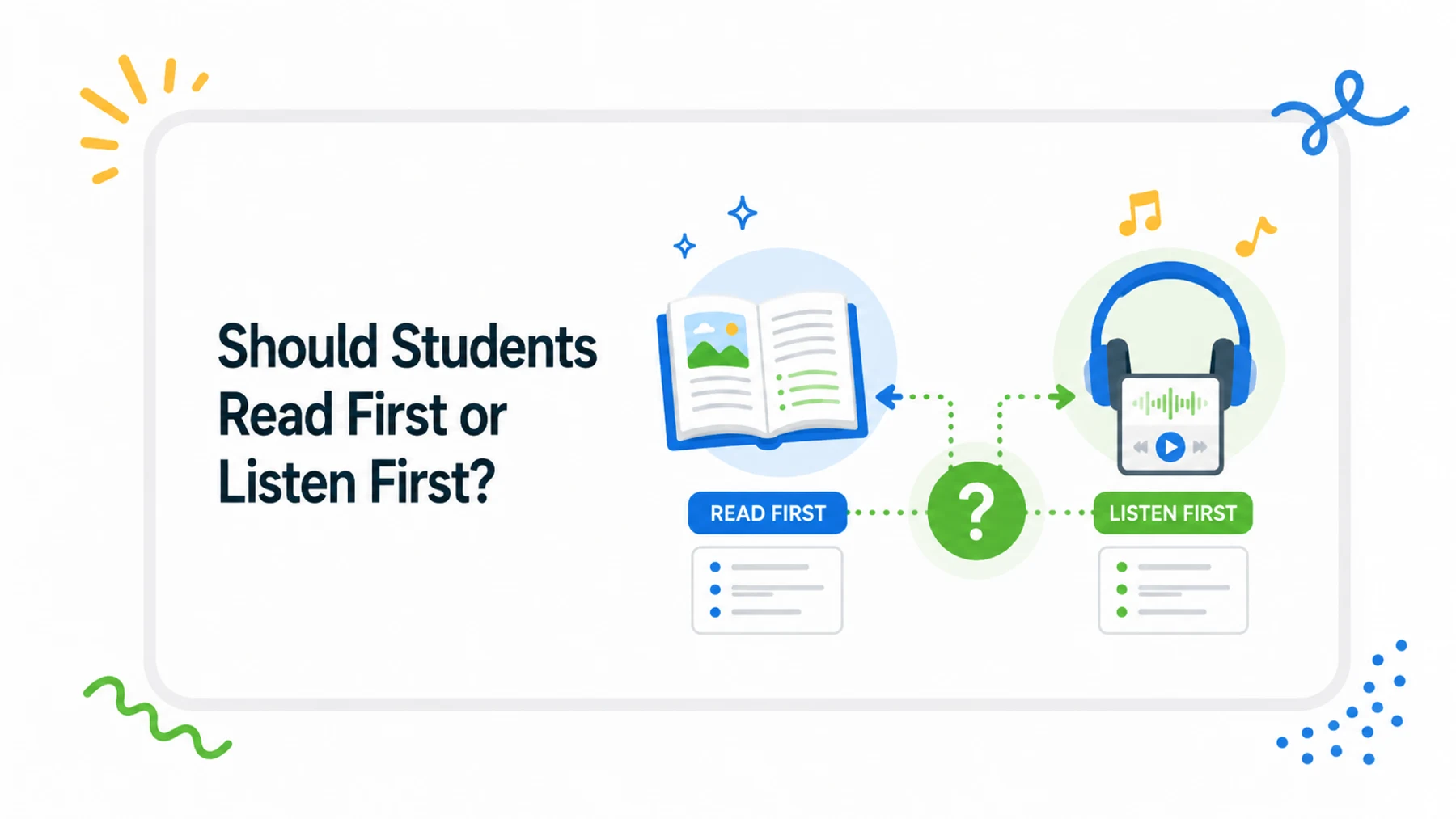
Should students read a passage first, or should they listen to it first? The best answer depends on the goal.
If the goal is independent decoding, students may need to try reading first. If the goal is comprehension, confidence, fluency, or access to a difficult topic, listening first can be helpful.
There is no single order that works for every student or every lesson.
The key is knowing why you are using read aloud support.
Sometimes students need to read first. Sometimes they need to hear the passage first. Sometimes the best routine is listen, read, reread.
Should students read first or listen first?
Students can read first or listen first.
Both approaches can be useful. A simple way to decide is to ask: What is the main goal of this reading task?
If the goal is decoding, word recognition, or independent reading stamina, reading first may be the better choice.
If the goal is comprehension, confidence, fluency, vocabulary, or access to a difficult topic, listening first may be the better choice.
| Reading goal | Best order |
|---|---|
| Build confidence | Listen first, then read |
| Practice decoding | Read first, then listen if needed |
| Build fluency | Listen, read, reread |
| Support comprehension | Listen while following along |
| Encourage independence | Read first, then use audio as support |
| Support struggling readers | Listen first or listen while reading |
| Support ESL and ELL students | Preview, listen, then reread |
The order should match the purpose.
When should students listen first?
Students may benefit from listening first when the passage is difficult, unfamiliar, or likely to cause frustration.
This can happen when the topic is new, the vocabulary is unfamiliar, or the passage is slightly above the student’s independent reading level. It can also help when students often lose the meaning while decoding or need to hear a fluent model before trying the text themselves.
Listening first gives students a way into the passage.
For example, a student may listen to a short nonfiction passage about volcanoes before reading it. After hearing the passage once, words like crater, lava, pressure, and erupt may feel more familiar.
That can make the second reading more successful. Listening first does not remove the reading work. It prepares students for it.
When should students read first?
Students may benefit from reading first when the main goal is independent reading practice.
If the passage is at the student’s independent level, reading first gives the student a chance to try the text without support. This can help build stamina, decoding confidence, and independence.
Reading first is also useful when a teacher or parent wants to see what the student can do alone.
In this case, listening comes after the first attempt.
The student reads independently, then listens to check phrasing, pronunciation, pacing, or missed words. This keeps audio support helpful without making it the only path into the text.
Reading first works best when the passage is manageable.
If the passage is too hard, reading first may create frustration instead of useful practice.
When should students listen while reading?
Listening while reading can be helpful when students need to connect spoken language to printed text.
In this routine, students hear the passage while following along with the words. This can support pronunciation, vocabulary, fluency, confidence, and comprehension.
It is especially useful for students who can understand spoken language better than printed text. It can also help English learners hear how English sounds while seeing the sentence structure on the page.
Listening while reading works well when the goal is not only to hear the passage, but to stay visually connected to the text.
The student hears it. The student sees it. Then the student can reread it.
When should students listen after reading?
Listening after reading can also be useful.
This works well when students read first and then use audio as feedback. They can compare their own reading to a fluent model and notice where they paused, rushed, missed punctuation, or misunderstood a word.
Listening after reading is especially helpful for fluency practice.
For example, a student might read a short passage aloud, listen to the passage, then reread one paragraph with better pacing and expression.
This approach supports independence because the student still tries the passage first.
The audio becomes a tool for reflection.
How listening first can support comprehension
Listening first can reduce the mental load of reading.
Some students spend so much effort decoding that they lose track of the meaning. They may reach the end of a paragraph and not remember what it was about.
When students listen first, they can focus on the topic, vocabulary, main idea, sequence, character actions, or key details before trying the passage again.
This can make comprehension questions easier to answer because the student is not meeting every word and idea for the first time.
Listening first can be especially helpful for science passages, social studies passages, texts with unfamiliar names or places, and passages with new vocabulary.
The goal is not to make the task easier in a shallow way. The goal is to help students understand enough to engage with the text.
How reading first can support independence
Reading first helps students build independence.
If students always listen before reading, they may become too dependent on audio support. That is why it helps to use reading first when the passage is at a manageable level.
Reading first gives students a chance to try decoding, notice where they get stuck, use strategies, and build stamina before support is added.
After the first reading, audio can still be useful.
Students can listen to check understanding, hear fluent reading, notice words they missed, or prepare for a second reading.
This keeps listening connected to growth. It becomes support, not avoidance.
A simple listen, read, reread routine
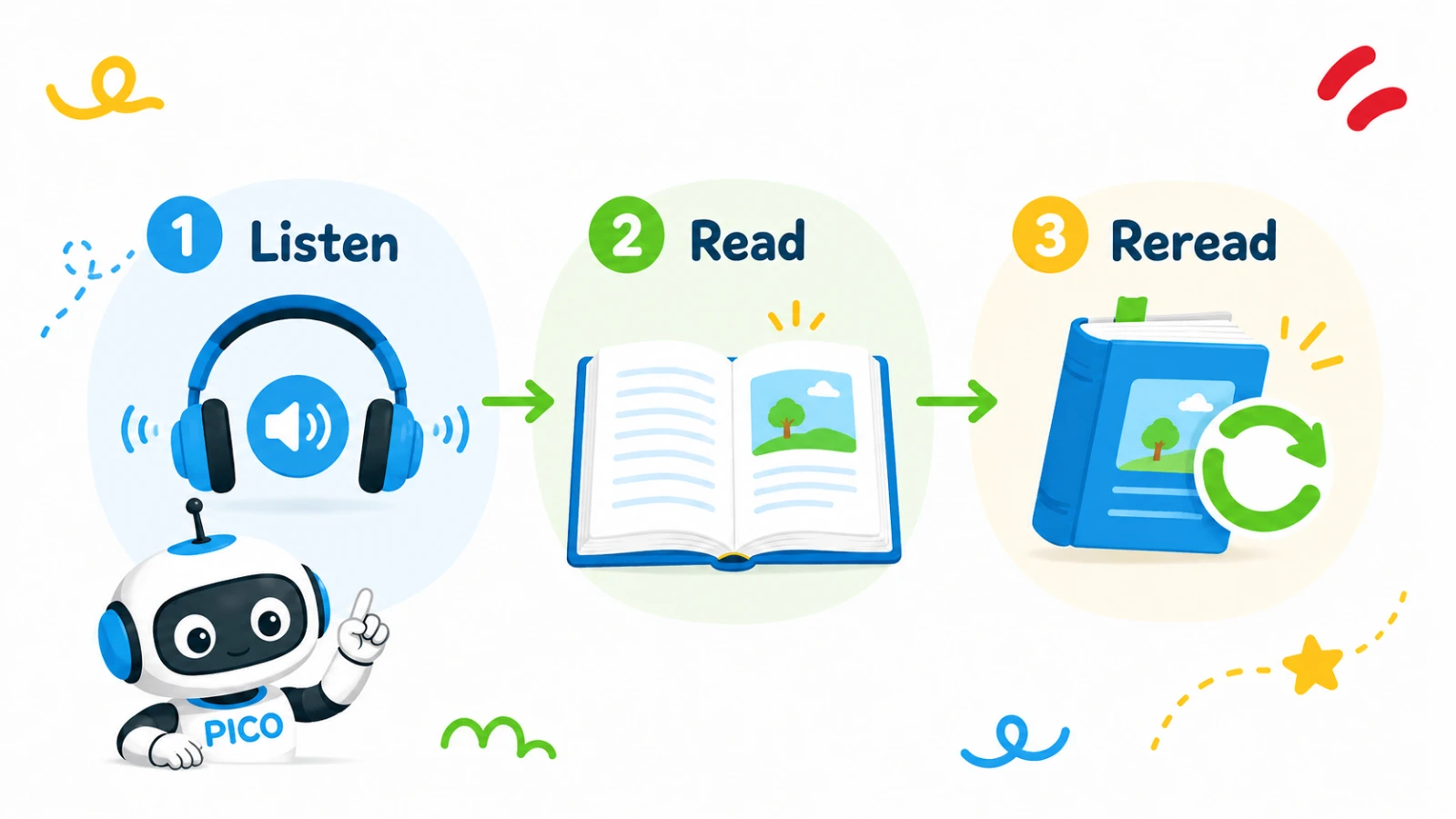
One of the strongest routines is: Listen, read, reread. This routine works well because it combines support with practice.
- Listen: The student hears the passage while following along.
- Read: The student reads the passage independently or with a partner.
- Reread: The student reads again for fluency, confidence, or accuracy.
- Answer: The student answers a few comprehension questions.
- Discuss: The teacher, parent, or group talks about one important idea.
This routine works especially well with short passages.
Short passages are easier to revisit. Students can listen, read, reread, and respond without becoming too tired.
For a deeper fluency routine, see Read Aloud Fluency Practice.
What about students with dyslexia?
Students with dyslexia may benefit from listening first or listening while following along.
For many students with dyslexia, decoding takes a lot of effort. Listening support can help them access the meaning of the passage while they continue building reading skills.
A helpful routine is to preview the topic and a few key words, listen to the passage while following the text, reread a short section aloud, and then answer comprehension questions.
This keeps comprehension active while still including reading practice.
Listening support should not replace structured reading instruction. But it can help students access content, vocabulary, and ideas that may otherwise feel out of reach.
For more specific guidance, see Read Aloud Support for Dyslexia.
What about struggling readers?
For struggling readers, the best order depends on how difficult the passage is.
If the passage is too hard, listening first may prevent frustration. If the passage is manageable, reading first may build confidence and independence.
A useful question is: Can the student read this passage with effort, but not overwhelm? If yes, try reading first. If no, listen first or listen while following along.
Struggling readers often need success before they can build stamina. A short, supported reading routine can help them experience that success more often.
For more support ideas, see Read Aloud for Struggling Readers.
What about ESL and ELL students?
ESL and ELL students may benefit from listening before reading because it helps them hear the rhythm, pronunciation, and structure of English.
Listening first can support vocabulary, pronunciation, sentence patterns, background knowledge, confidence, speaking, and discussion.
A simple routine could start with a quick topic preview and two or three important words. Then students listen to the passage, read it again, answer a few simple comprehension questions, and discuss one personal connection.
This gives students multiple ways to process the text. They hear it. They see it. They read it. They talk about it.
Common mistakes to avoid
Read aloud support works best when it is used with a clear purpose.
Common mistakes include using the same routine every time, always listening first even when students can read independently, always reading first even when the passage is too difficult, or using audio without asking students to interact with the text.
It also helps to avoid passages that are too long, too difficult, or overloaded with unfamiliar vocabulary.
Another common mistake is skipping rereading. If students listen once and move on, they may not get the full benefit of read aloud support.
The goal is not to choose one method forever. The goal is to choose the right method for the student, passage, and purpose.
Can PicoBuddy help with read aloud reading passages?
PicoBuddy helps teachers, parents, homeschool families, and intervention teams create reading passages that match the student’s level, topic, and goal.
This is useful because different routines need different passages.
A short passage can work well for listen, read, reread. An easier version may help when the goal is confidence. The same topic at different levels can support small groups. Comprehension questions can help students show what they understood after listening or reading.
For example, you might create a short animal passage for fluency practice, a simplified science passage for support, or an ESL friendly passage with clear vocabulary and questions.
Need a passage for read aloud practice? Browse PicoBuddy’s free reading passages or create a custom passage by grade, topic, and reading goal.
Final thoughts
Students do not always need to read first. They do not always need to listen first either. The best order depends on the reading goal. If the goal is comprehension, confidence, fluency, or access, listening first can help.
If the goal is independence, decoding, or stamina, reading first may be better. And for many students, the best routine is simple:
Listen. Read. Reread.
When the support matches the goal, students get more than help with one passage. They get a better way to grow as readers.

Frequently Asked Questions
Related Articles
Helping kids read better, together.
Like this article? Join 500+ educators using PicoBuddy to generate high-quality reading materials in seconds.