
How Read Aloud Support Helps Students With Dyslexia
Learn how read aloud support can help students with dyslexia access meaning, build confidence, practice fluency, and stay connected to reading.
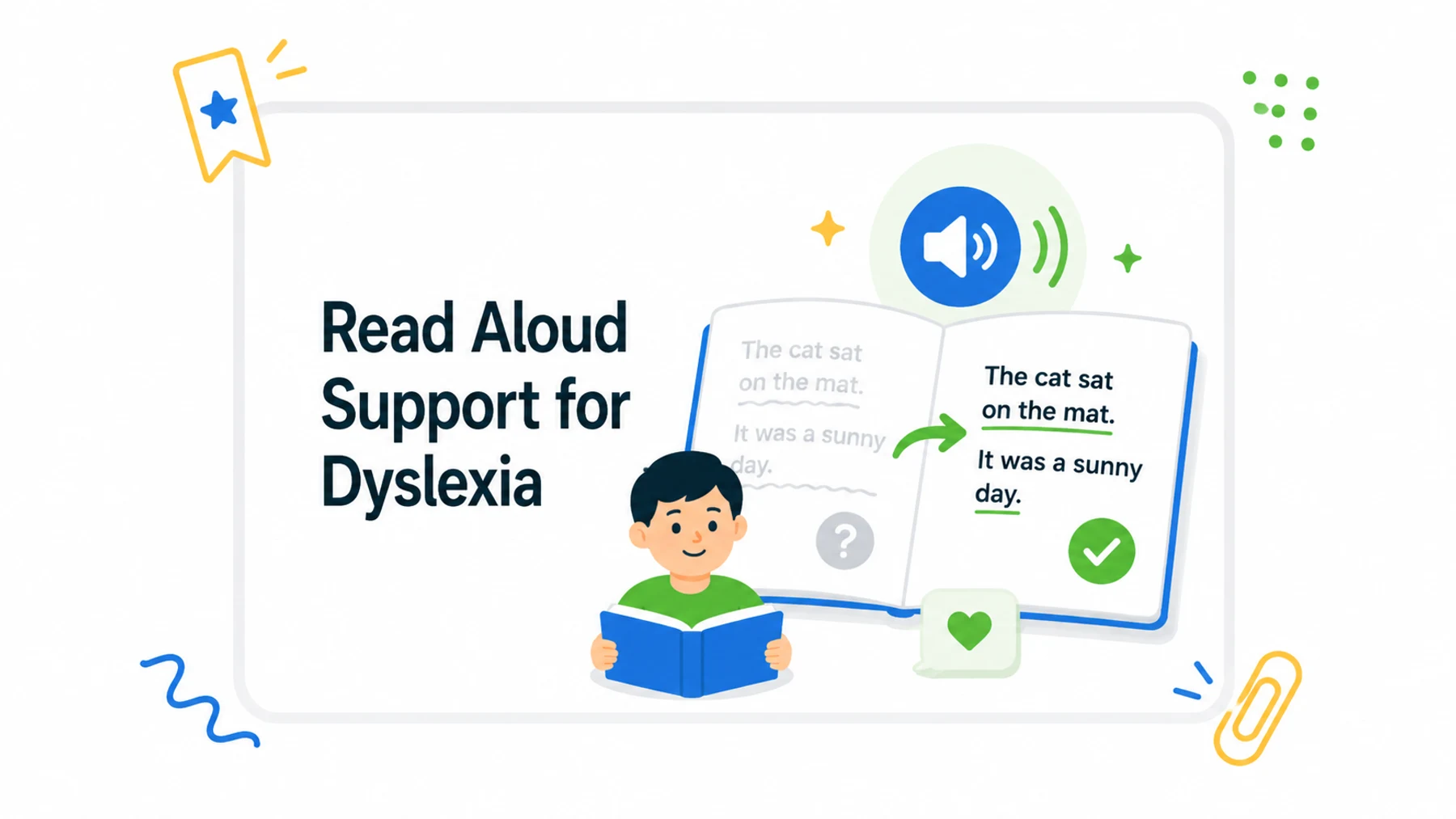
Many students with dyslexia understand much more than they can comfortably read independently.
A student may follow a discussion, explain a story clearly, or answer thoughtful questions after hearing a passage read aloud, but struggle to access the same ideas through printed text alone.
That difference matters.
For many students with dyslexia, decoding takes so much mental energy that comprehension becomes harder during independent reading. Read aloud support can help reduce that pressure and make reading more accessible.
The goal is not to avoid reading.
The goal is to help students access meaning while reading skills continue to develop.
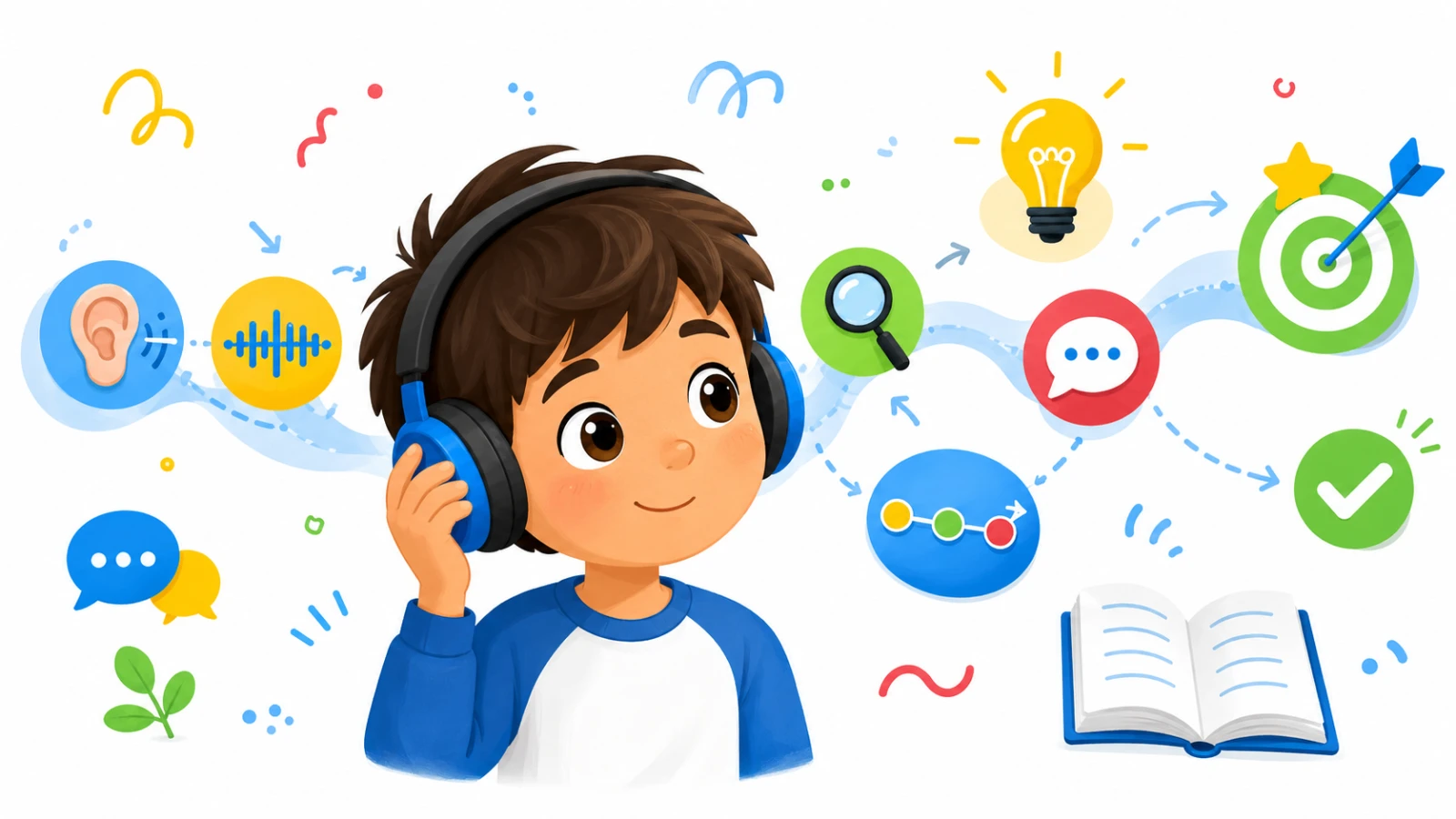
What is read aloud support for dyslexia?
Read aloud support means a student hears the text while staying connected to the reading task.
The passage may be read by a teacher, parent, audiobook, text to speech tool, or online reading platform. Some students listen before reading independently. Others listen while following along with the written text. Some students listen once, then reread a shorter section on their own.
The important part is that listening has a purpose.
For students with dyslexia, read aloud support can make a passage feel less overwhelming. Instead of using all their energy to decode each word, students can focus more on the topic, vocabulary, ideas, and questions.
This does not mean the student is doing less learning.
It means the student has another way into the text.
Why students with dyslexia may benefit from listening support
Students with dyslexia often work extremely hard during reading.
Decoding may feel slow, inconsistent, or tiring. A student may spend so much attention trying to read the words correctly that there is very little energy left for comprehension.
That does not mean the student cannot understand the ideas.
In many cases, the opposite is true.
A student with dyslexia may have strong thinking skills, strong oral language, rich vocabulary knowledge, and good comprehension during discussion. But independent reading may make it harder to show those strengths.
Listening support can reduce the decoding load so students can focus more on meaning. This can help students stay engaged with reading instead of becoming frustrated, discouraged, or avoidant.
How read aloud support helps comprehension
Read aloud support can help students with dyslexia because it separates access to meaning from the full decoding demand.
When students hear the passage aloud, they can focus more fully on the topic, vocabulary, story structure, cause and effect, inference, and comprehension questions.
For example, a student may struggle to independently read a nonfiction passage about tornadoes, but explain the topic clearly after hearing it read aloud.
The ideas were not too difficult.
The decoding process was creating the barrier.
This is one reason listening support can help students stay connected to grade level topics, classroom discussions, and content area reading while reading skills continue developing.
For more on the difference between listening and reading comprehension, see Listening Comprehension vs Reading Comprehension.
How read aloud support can reduce frustration
Reading frustration can build quickly when every passage feels difficult.
Some students begin avoiding reading because it becomes associated with stress, correction, or failure. Others lose confidence because they compare themselves to classmates who seem to read more easily.
Read aloud support can help create more successful reading experiences.
When students understand the passage, answer questions successfully, or participate in discussion, reading begins to feel more possible.
That confidence matters.
Students are more likely to keep practicing when they feel capable of success. Listening support does not remove challenge completely, but it can lower the level of overwhelm enough for students to stay engaged.
For many students with dyslexia, that first successful access point can make a big difference.
Does read aloud support replace reading instruction?
Students with dyslexia still need structured reading instruction, decoding practice, fluency work, word recognition support, and opportunities to build independent reading skills.
Read aloud support is not a replacement for reading instruction.
It is a support that helps students access comprehension while those reading skills continue developing.
A balanced routine may include structured literacy instruction, independent reading practice, fluency practice, listening support, rereading, and comprehension discussion.
The goal is not to make students dependent on listening forever.
The goal is to give students access to meaningful reading experiences while building stronger reading skills over time.
When should students with dyslexia use read aloud support?
Read aloud support can be helpful when the goal is comprehension, vocabulary, fluency, confidence, or access to a difficult topic.
It may be useful when a passage includes unfamiliar vocabulary, longer sentences, science or social studies content, or ideas the student can understand better through listening than through print alone.
It can also be helpful when a student is tired or frustrated. Reading with dyslexia can take a lot of effort, and a short listening routine may help the student stay connected to the task.
A useful question is: Would listening help this student understand, discuss, or reread the passage more successfully?
When the answer is yes, read aloud support may be a good choice.
When should students read without audio?
Students with dyslexia should also have opportunities to read without audio.
Read aloud support is helpful, but it should not remove every chance to practice independent reading.
Students may need to read without audio when the goal is decoding practice, fluency assessment, reading stamina, or checking what they can read independently.
If the passage is at a comfortable level, the student may benefit from trying it without listening first.
Audio can also become less helpful if it becomes a way to avoid reading completely. In that case, listening can still be part of the routine, but it should lead into some reading work.
For example, a student might listen to the full passage first, then reread one paragraph independently.
The best support depends on the student, the passage, and the reading goal.
For more help choosing the order, see Should Students Read First or Listen First?
How to combine listening and reading practice
Read aloud support works best when students actively interact with the text.
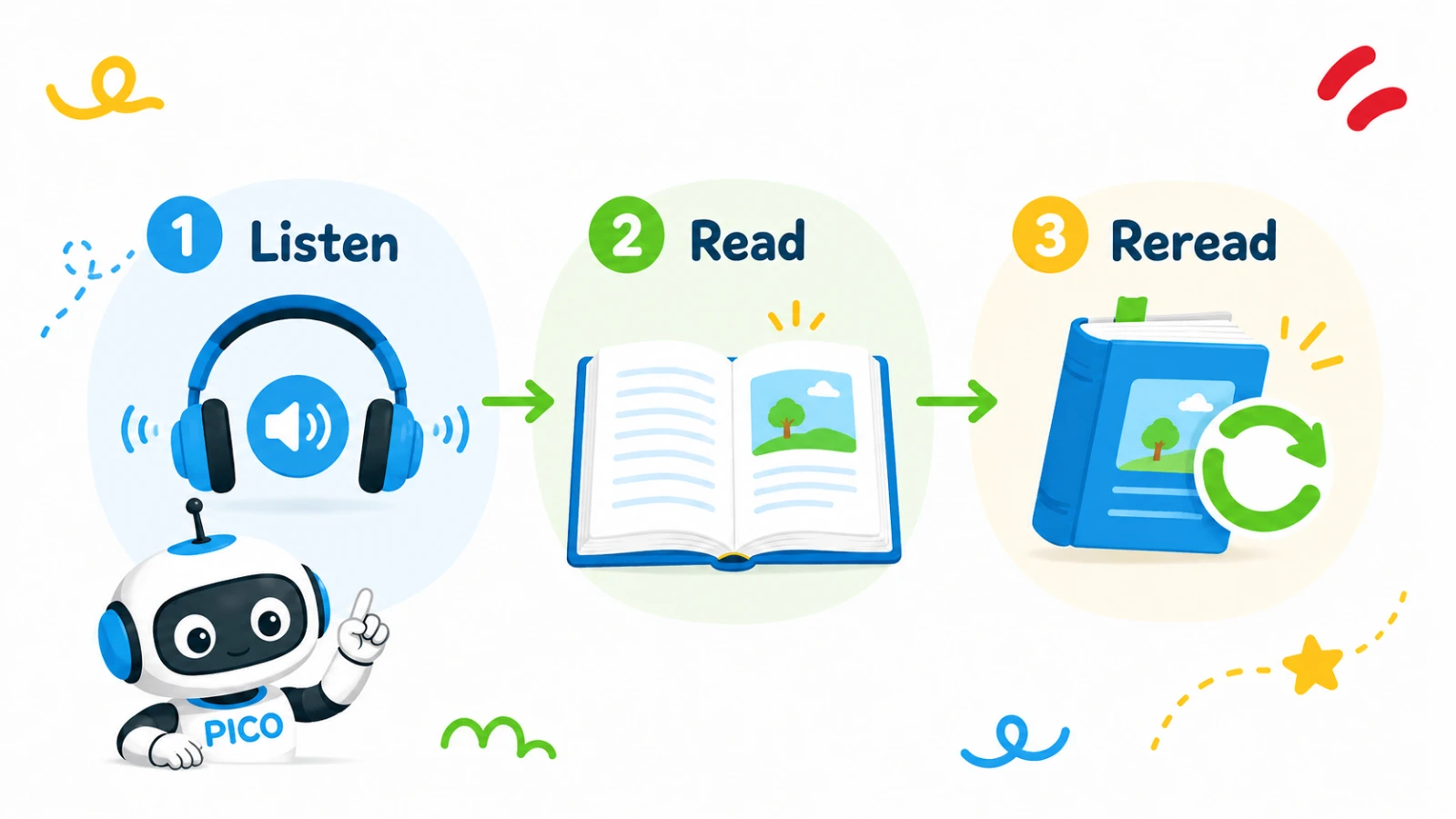
One simple routine is:
Listen, read, reread.
- Listen to the passage once.
- Follow along with the written text.
- Reread one short section independently or with support.
- Answer a few comprehension questions.
- Discuss one important idea from the text.
This helps students connect listening, fluency, comprehension, and independent reading.
Short passages often work especially well because students can reread them without becoming exhausted.
That rereading helps build familiarity, confidence, and smoother reading.
For a deeper fluency routine, see Read Aloud Fluency Practice.
Best passages for dyslexia support
The best passages for students with dyslexia are usually manageable, clear, and meaningful.
A very long passage can become tiring before the student has a chance to reread or discuss it. A passage with too much unfamiliar vocabulary may still feel overwhelming, even with listening support.
A strong passage for dyslexia support usually has a clear topic, manageable length, useful vocabulary, and a small number of comprehension questions.
Student interest also matters.
Students are often more engaged when the reading connects to topics they care about, such as sports, animals, science, mysteries, space, or real world topics.
A student who feels interested in the topic is often more willing to listen, reread, and stay connected to the passage.
The passage does not need to be overly simple.
It needs to be accessible enough for the student to work with successfully.
Read aloud support at home
Read aloud support at home does not need to become a long lesson.
For many families, 10 to 15 minutes is enough.
A parent might read the passage aloud first while the child follows along. Then the child rereads one section independently or together with the parent. The reading session can end with a few simple comprehension questions or a short conversation about the topic.
What matters most is consistency and a low pressure environment.
Reading practice is often more successful when the child feels supported instead of tested.
It can also help to choose topics your child actually enjoys. A short passage about animals, soccer, space, cooking, or inventions may feel much more inviting than a random worksheet.
For more parent focused support, see Read Aloud Reading Practice at Home.
Read aloud support in the classroom
In the classroom, read aloud support can help students with dyslexia stay connected to grade level learning.
Teachers may use teacher read alouds, partner reading, small group support, audiobooks, text to speech tools, or listen, read, reread routines.
This can help students participate more actively in reading lessons, science topics, social studies discussions, and comprehension activities.
Listening support can also make differentiation easier.
Students may work with the same topic while receiving different levels of support. One student may read independently. Another may listen while following along. Another may reread a shorter section after hearing the passage once.
The learning goal can stay shared.
The support can change.
Common mistakes to avoid
Read aloud support works best when it is used intentionally.
One common mistake is assuming listening support means a student no longer needs reading instruction. Students with dyslexia still need structured support for decoding, fluency, and independent reading.
Another mistake is choosing passages that are far too difficult. Even with listening support, students still need texts that are manageable and meaningful.
It also helps not to turn every reading session into a test. Constant correction or pressure can increase frustration and reduce confidence.
A final mistake is treating listening as cheating.
Listening can be a valid support when it helps students access meaning, participate in comprehension work, and stay engaged with reading.
The goal is support, not perfection.
For more on this concern, see Is Listening to a Reading Passage Cheating?
Can PicoBuddy help with dyslexia reading support?
Yes. PicoBuddy helps teachers, parents, homeschool families, and intervention teams create reading passages that match the student’s reading level, interests, and learning goals.
This can make read aloud support more effective because the passage itself can be adjusted to fit the student.
With PicoBuddy, you can create shorter passages for fluency practice, easier versions of a passage for support, topic based passages students actually want to read, and comprehension question sets that keep listening connected to meaning.
For example, you might create a short science passage for listen, read, reread practice or a simplified nonfiction passage with manageable vocabulary and comprehension questions.
Need a passage for dyslexia reading support? Browse PicoBuddy’s free reading passages or create a custom passage by grade, topic, and reading level.
Final thoughts
Read aloud support can be a powerful tool for students with dyslexia.
For many students, listening support reduces decoding pressure and makes it easier to focus on comprehension, vocabulary, and meaning.
Students with dyslexia still need structured reading instruction and opportunities to build independent reading skills.
But they also need access to successful reading experiences. Sometimes students should listen first. Sometimes they should read independently. Sometimes they need both. The best choice depends on the student, the passage, and the reading goal.
Sometimes students do not need simpler ideas. They need better access to those ideas.

Frequently Asked Questions
Related Articles

Helping kids read better, together.
Like this article? Join 500+ educators using PicoBuddy to generate high-quality reading materials in seconds.