
What Does a Reading Tutor Do?
A reading tutor does more than supervise reading. The tutor identifies a useful skill target, teaches it explicitly, gives supported practice, watches how the student responds, and adjusts the next session.
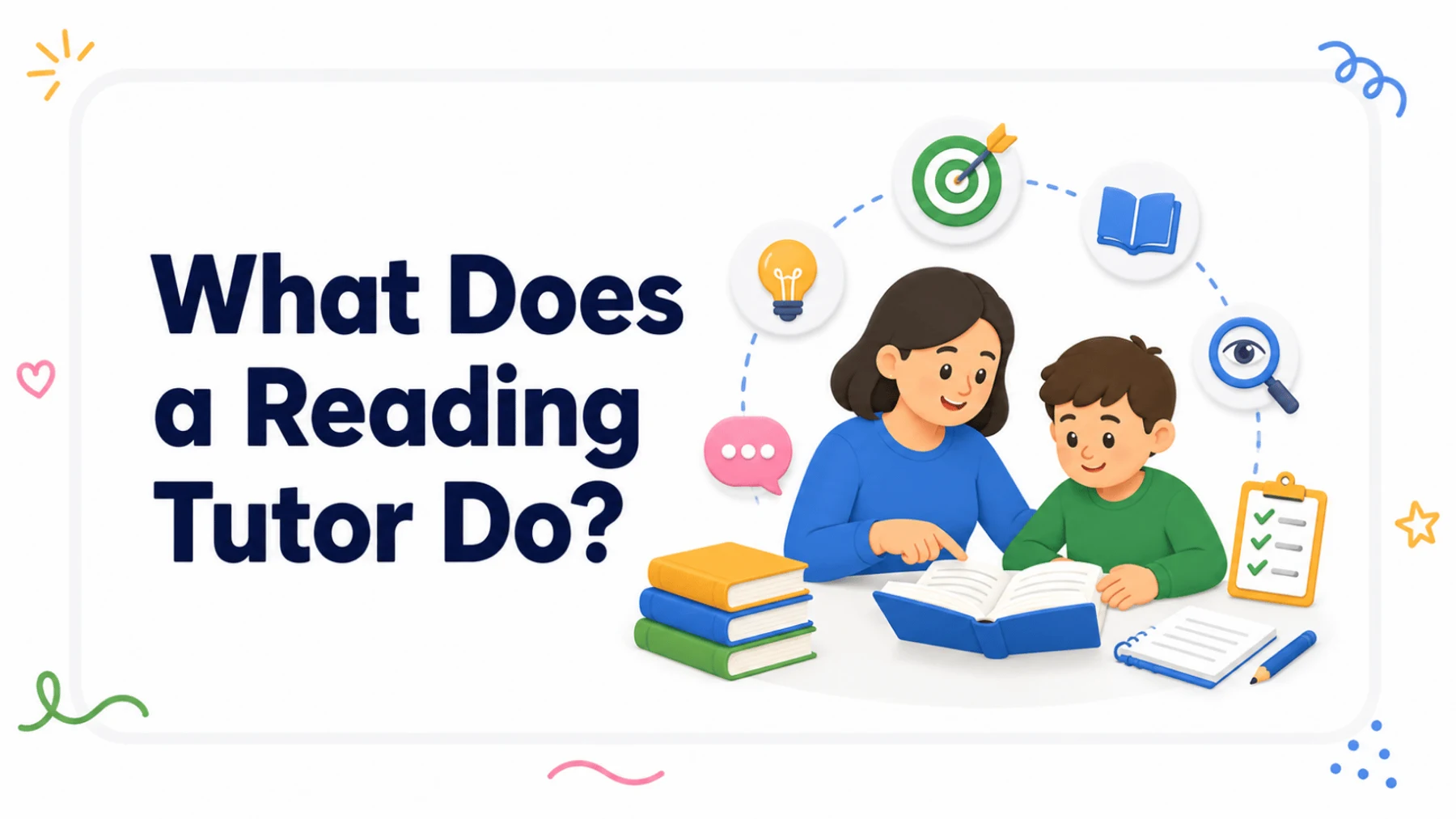
A reading tutor helps a student make progress on a specific reading need. The job is more than listening to a child read or helping finish homework. A strong tutor identifies a useful target, teaches it clearly, gives supported practice, watches how the student responds, and uses that evidence to decide what should happen next.
A simple way to think about the role is:
Target → Teach → Practice → Observe → Adjust
That cycle can look different from student to student, but it gives tutoring a clear purpose.
A Reading Tutor Starts With a Specific Target
The first job is not to choose a worksheet, game, or passage. It is to decide what the student needs to practice.
That target might involve:
- decoding unfamiliar words
- reading connected text more smoothly
- building vocabulary
- identifying the main idea
- making an inference
- using evidence from the text
- explaining ideas more independently
A tutor may use school information, previous work, conversation with the family, and what happens during tutoring to narrow the focus.
The target should be observable. “Get better at reading” is too broad. “Explain the main idea of a short informational text with less prompting” gives the tutor something concrete to teach and watch.

A Reading Tutor Teaches, Not Just Monitors
Tutoring should include actual instruction when the student needs it.
That can mean the tutor:
- models how to approach a word or passage
- thinks aloud through a comprehension move
- explains a vocabulary strategy
- demonstrates how to return to the text for evidence
- gives a prompt, then gradually removes it
The student should not spend the whole session completing tasks while the tutor waits for mistakes.
At the same time, the tutor does not need to explain every step forever. The point of support is to help the student do more of the reading work independently over time.
A Reading Tutor Chooses Practice That Matches the Goal
Practice should follow the target.
If the goal is fluency, the student may need connected reading, rereading, and feedback. If the goal is vocabulary, the tutor may use a short text with a few meaningful words. If the goal is comprehension, the tutor may choose a passage that gives the student a real chance to explain, infer, compare, or use evidence.
This is where materials matter, but the material is not the lesson by itself.
For tutors working with students who need level-matched texts and targeted follow-up practice, PicoBuddy's reading intervention resources can provide passages, vocabulary, grammar, read-aloud support, and online practice. The useful question is still the same: which part of that material supports today's target?
A Reading Tutor Observes How Much Help the Student Needs
A correct answer does not always tell the whole story.
Two students may both answer a question correctly, but one needed several prompts while the other worked independently. That difference matters.
A tutor can notice things such as:
- whether the student rereads without being told
- whether they can explain an answer
- how much prompting they need
- whether the same skill works in a new text
- whether word reading is taking so much effort that meaning gets lost
- whether vocabulary is blocking understanding
These observations help the tutor decide whether to keep the same target, change the support, or move on.
They are instructional observations, not a diagnosis.
A Reading Tutor Adjusts the Next Session
Good tutoring is responsive.
If a student needed heavy support with inference today, the next session may use a similar skill with a slightly more accessible text. If a student handled the target independently, the tutor might increase complexity or ask for stronger evidence.
The next step does not have to be dramatic.
A short note can be enough:
Main idea was independent. Inference needed two prompts. Next session: one new passage with inference + evidence.
That creates continuity from one session to the next.
A Reading Tutor Communicates What Is Changing
Families usually need a clearer update than “We worked on reading today.”
A useful update can be short:
- what the student practiced
- what improved
- what still needed support
- what the tutor plans to work on next
For example:
We practiced finding the main idea in informational text. Maya identified the main idea independently in the second passage, but she still needed a prompt to choose the strongest supporting detail. Next session I will keep the main-idea work brief and focus more on evidence.
That tells the family what tutoring is doing without promising a fixed outcome.
A Reading Tutor Is Not the Same as a Homework Helper or Reading Specialist
These roles can overlap, but they are not identical.
| Role | Main job |
|---|---|
| Homework helper | Helps a student complete assigned work and understand directions |
| Reading tutor | Teaches and practices specific reading skills, observes response, and adjusts support |
| Reading specialist or other qualified professional | May provide specialized assessment, intervention, or expertise depending on training and role |
A tutor can notice a repeated pattern and document it. A tutor should not claim a diagnosis or expertise they do not have.
If a student continues to struggle with foundational reading despite well-matched instruction, or the difficulty appears to need specialized assessment, the responsible next step may be to discuss additional support with the family or school team.
What Should a Family Expect From Reading Tutoring?
A useful tutoring relationship should make the work increasingly clear.
Over time, a family should be able to answer questions such as:
- What is the tutor currently working on?
- Why was that target chosen?
- What kind of practice is being used?
- What is the student doing with less help than before?
- What still needs support?
- What will the tutor try next?
That does not mean every session needs a formal report or score. It means the tutoring has a reason, and the next session grows from what happened in the last one.
The Core Job: Make the Next Reading Step More Useful
A reading tutor does five connected things: choose a target, teach it, give focused practice, observe the student's response, and adjust what comes next.
Before planning the next session, write the target in one sentence. Then ask what evidence would show that the student is becoming more independent with it.
That one decision keeps tutoring focused without turning every session into the same lesson.
Frequently Asked Questions
Related Articles



Helping kids read better, together.
Like this article? Join 500+ educators using PicoBuddy to generate high-quality reading materials in seconds.