
What Is a Reading Passage? A Guide for Teachers and Parents
A reading passage is a short text students read to practice fluency, vocabulary, and comprehension. Learn what reading passages are, how they are used, and see examples by grade level.
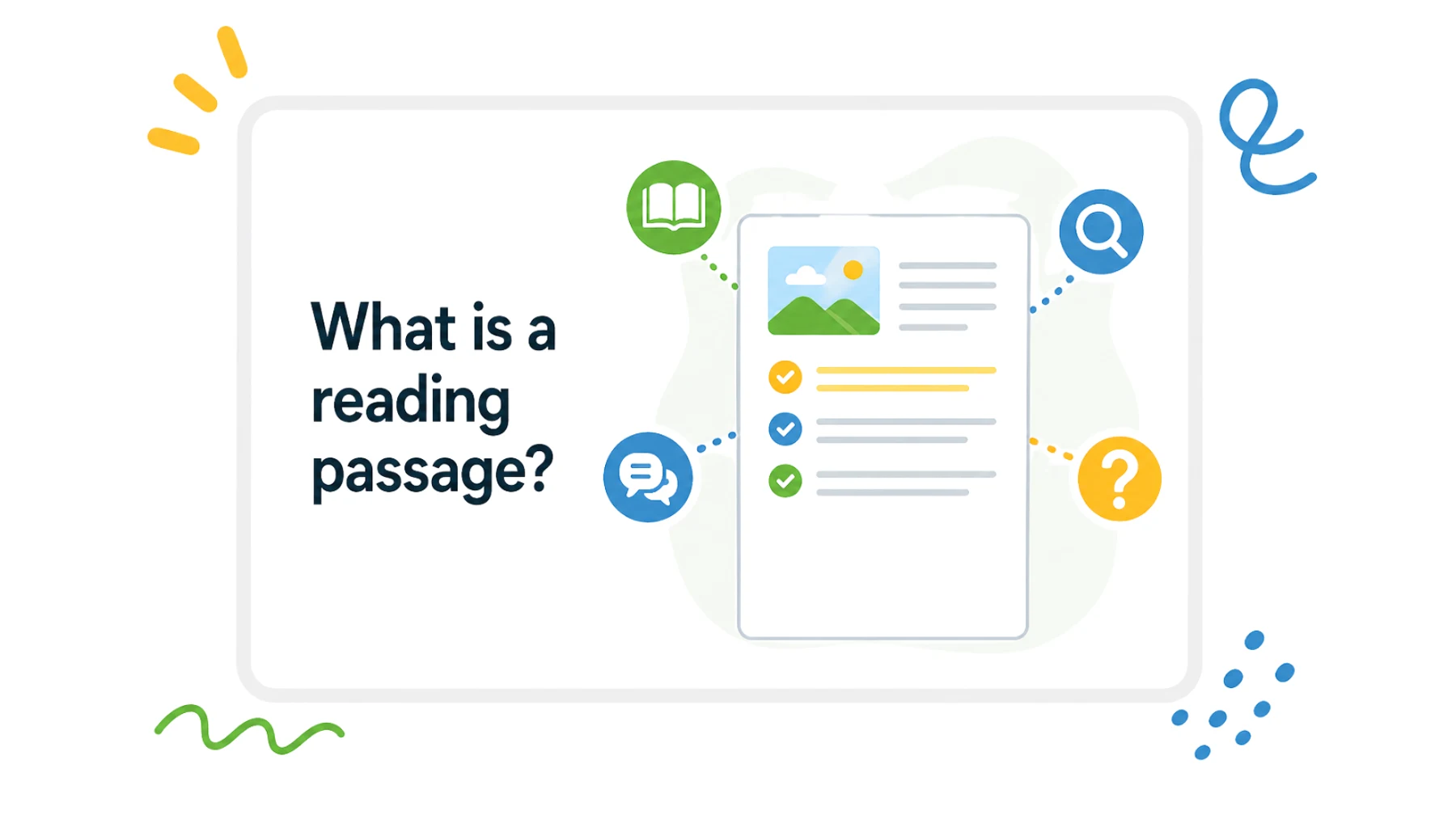
A reading passage is a short piece of text that students read to practice reading skills. It can be a story, an informational text, a biography, a poem, or another type of text. In schools and at home, reading passages are often used with questions to help students understand, discuss, and think about what they read.
Teachers, parents, tutors, and homeschool families use reading passages for many different reasons. Some use them to practice reading comprehension. Others use them to build vocabulary, improve fluency, introduce a new topic, or prepare students for tests.
In simple terms: a reading passage gives students something focused to read, think about, and respond to.
To build a lesson around that text, see our guide to teaching reading comprehension in elementary school, from choosing a reading goal to discussing answers.
What is the purpose of a reading passage?
The main purpose of a reading passage is to help students practice reading in a focused way.
Instead of reading an entire book, students read a shorter text that is matched to a specific grade level, topic, or reading skill. This makes it easier for teachers and parents to guide practice.
A reading passage can help students practice skills such as:
- Finding the main idea
- Remembering key details
- Making inferences
- Understanding vocabulary
- Reading with fluency
- Comparing information
- Answering comprehension questions
- Using evidence from the text
- Discussing characters, events, or facts
- Building confidence as readers
For example, a 2nd grade student might read a short fiction passage about a lost puppy and answer questions about the characters and events. A 5th grade student might read an informational passage about volcanoes and answer questions about cause and effect.
The passage gives the student a clear reading task, while the questions or activities help check understanding.
What does a reading passage look like?
Most reading passages have a simple structure. They usually include a title, a short text, and sometimes a set of questions.
A typical reading passage may include:
- A title
- A fiction or nonfiction text
- Vocabulary words
- Comprehension questions
- An answer key
- A writing prompt
- A discussion activity
Types of reading passages
Reading passages can come in many different forms. The best type depends on the student’s grade level, reading goal, and interests.
A fiction reading passage is a made-up story. It may include characters, a setting, a problem, and a solution. Fiction passages are useful for teaching plot, character traits, theme, and story structure.
An informational reading passage teaches facts about a topic. It might be about animals, space, history, science, sports, or everyday life. Informational passages are useful for teaching main idea, details, vocabulary, and text structure.
A biography reading passage is about a real person. Students may learn about a scientist, athlete, artist, inventor, historical figure, or community leader. Biography passages are helpful for practicing sequence, cause and effect, and fact-based comprehension.
A poetry passage is a poem used for reading practice. Poetry can help students notice rhythm, word choice, imagery, and deeper meaning.
A functional text passage is based on real-world reading. This could be a recipe, sign, schedule, instruction sheet, menu, letter, or advertisement. Functional texts help students practice reading information they may see in daily life.
An argumentative passage presents an opinion, claim, or point of view. These passages are useful for older elementary and middle school students because they help students identify reasons, evidence, and persuasive language.

Reading passage vs reading comprehension passage
A reading passage and a reading comprehension passage are closely related, but they are not always exactly the same.
A reading passage is the text itself. It is the story, article, poem, biography, or other piece of writing that the student reads.
A reading comprehension passage usually includes the text plus questions that check understanding.
For example:
A short story about a dog is a reading passage.
That same short story with questions about the characters, events, vocabulary, and main idea is a reading comprehension passage.
In practice, many people use these terms in a similar way.
How are reading passages used in school?
Reading passages are used in many different classroom situations. Because they are short and focused, they are easy to use during lessons, small groups, homework, or independent practice.
Teachers often use reading passages for:
- Whole-class reading lessons
- Small group instruction
- Reading centers
- Morning work
- Homework
- Test preparation
- Fluency practice
- Vocabulary lessons
- ESL and ELL support
- Quick comprehension checks
For example, a teacher might choose a 4th grade informational passage about ocean animals for a science-related reading lesson. Students read the passage, answer questions, and discuss what they learned.
Another teacher might use the same topic at different reading levels for a mixed-ability classroom. One group reads a simpler version, while another group reads a more advanced version.
That is one reason reading passages are so useful: they can be adapted to different students, goals, and lesson plans.
How are reading passages used at home?
Parents and homeschool families can also use reading passages at home. A short passage is often easier to fit into a daily routine than a full chapter or long book.
At home, reading passages can help children:
- Practice reading for 10 to 15 minutes
- Build confidence with shorter texts
- Read about topics they enjoy
- Answer questions after reading
- Improve vocabulary
- Prepare for school assignments
- Practice English as an additional language
For parents, reading passages are useful because they give structure. Instead of wondering what to read or what questions to ask, the parent can use a passage with ready-made questions.
A child who loves soccer might enjoy a sports passage. A child who loves animals might prefer a nonfiction passage about dolphins or tigers. When students care about the topic, reading often feels less like a chore.
What makes a good reading passage?
A good reading passage should fit the student and the reading goal. A passage that is too easy may not challenge the student. A passage that is too difficult may cause frustration.
A strong reading passage is usually:
- Clear and well-structured
- Appropriate for the student’s grade level
- Interesting enough to keep attention
- Connected to a useful reading skill
- Long enough for practice, but not too long for the lesson
- Supported by good questions
- Suitable for the student’s reading ability
For younger students, a good passage may use simple sentences, familiar topics, and clear story events. For older students, a good passage may include more complex vocabulary, deeper ideas, and questions that require evidence from the text.
The best reading passage is not always the longest or most difficult one. The best passage is the one that matches what the student needs to practice.

Reading passage examples by grade level
Reading passages usually become longer and more complex as students move through the grades.
In Grade 1, passages often use simple sentences, familiar words, and basic story events. Students may answer questions about who, what, and where.
In Grade 2, passages may include short stories, simple nonfiction, and questions about sequence, characters, setting, and details.
In Grade 3, students often work on main idea, supporting details, vocabulary, and basic inference. Passages may be longer and include both fiction and informational text.
In Grade 4, reading passages often include more complex nonfiction, deeper vocabulary, and questions that ask students to use text evidence.
In Grade 5, students may read passages that focus on theme, author’s purpose, compare and contrast, cause and effect, and more advanced vocabulary.
In Grades 6 to 8, passages often require deeper analysis. Students may read argumentative texts, biographies, historical texts, science passages, and more complex fiction.
Can you create your own reading passage?
Yes. Teachers, parents, and homeschool families can use ready-made reading passages, but sometimes they need something more specific.
You might need a reading passage about a certain topic, for a certain grade level, or for a specific reading skill. You may also need a fiction passage, an informational passage, or an easier version for an English language learner.
For example, you might want:
- A 3rd grade fiction passage about friendship
- A 4th grade nonfiction passage about Texas
- A 5th grade sports passage with inference questions
- A beginner ESL passage about food
- A short fluency passage for daily reading practice
With PicoBuddy, you can browse free reading passages or create your own custom passage by choosing a grade level, topic, and text type.

Final thoughts
A reading passage is a short text that helps students practice reading. It can be fiction, nonfiction, biography, poetry, functional text, or another type of writing. Reading passages are often used with questions to build comprehension, fluency, vocabulary, and confidence.
For teachers, reading passages make lessons easier to plan. For parents, they make reading practice more structured. For students, they offer a clear and focused way to become stronger readers.
The most important thing is to choose a passage that fits the student’s level, interests, and reading goal.
Need a passage for a specific grade, topic, or skill? Browse PicoBuddy’s free reading passages or create your own custom reading passage in minutes.

Frequently Asked Questions
Related Articles
Helping kids read better, together.
Like this article? Join 500+ educators using PicoBuddy to generate high-quality reading materials in seconds.