
fix the sentence
Sentences from the passage with the capitals and punctuation removed — rewrite each one correctly.
Web preview · Open larger preview (opens in a new tab)
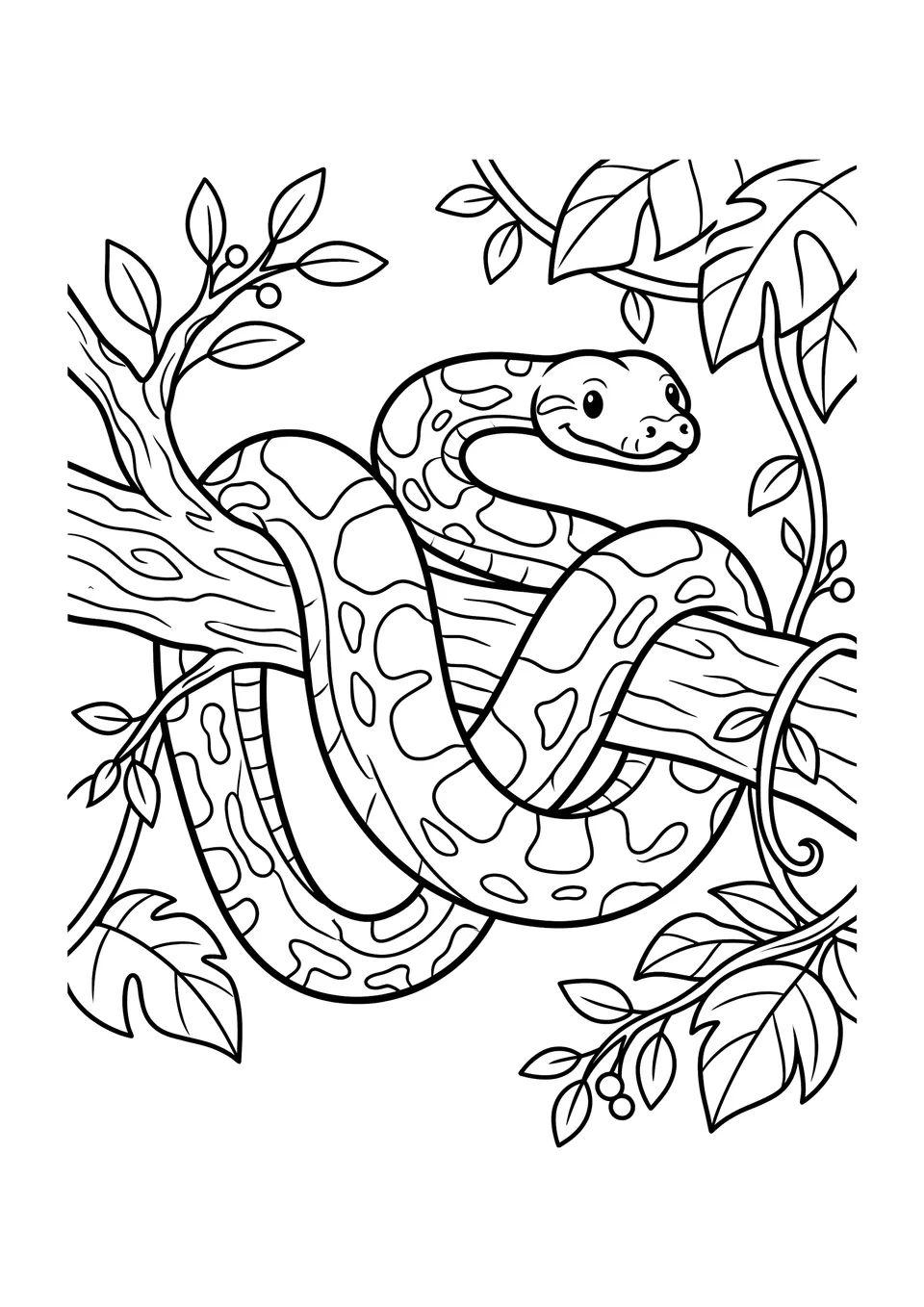
Color a boa constrictor and read a fun story about one of the world's most fascinating snakes. This printable coloring page helps kids build reading skills while learning about reptiles and rainforest wildlife.
PDF · Your plan’s download limits apply
The boa constrictor is one of the most famous snakes in the world. Found throughout Central and South America, these impressive reptiles are known for their size and their unique way of hunting. While many people are afraid of large snakes, boa constrictors are actually quite fascinating creatures that play an important role in their ecosystems.
Boa constrictors are large snakes, but they are not the biggest in the world. On average, they grow to be between 6 and 10 feet long, though some can reach up to 13 feet. Their skin is covered in beautiful patterns of brown, gray, and cream-colored scales. These patterns look like saddles and provide excellent camouflage. When a boa constrictor sits still on a forest floor or among tree branches, it blends in perfectly with the shadows and dried leaves, making it nearly invisible to both its prey and its enemies.
As their name suggests, these snakes are constrictors. This means they do not use venom to hunt. Instead, they are patient ambush predators. A boa will wait quietly for a meal to walk by, such as a large rodent, a bird, or even a lizard. When the timing is right, the snake strikes quickly and wraps its muscular body around the animal. By squeezing tightly, the boa stops the prey's blood flow and breathing. Afterward, the snake swallows its meal whole. Because their jaws are connected by flexible ligaments, they can stretch their mouths wide enough to swallow animals much larger than their own heads.
One interesting fact about boa constrictors is that they are ovoviviparous. This is a big word that means the mother snake carries eggs inside her body until they are ready to hatch. Instead of laying eggs in a nest like many other reptiles, the mother gives birth to live baby snakes. A single litter can have as many as 60 babies! These young snakes are independent from the moment they are born and must learn to hunt and hide on their own right away.
Whether they are swimming in a river or climbing through the canopy of a rainforest, boa constrictors are highly adaptable. They are mostly nocturnal, meaning they are active at night. By keeping rodent populations in check, these powerful snakes help maintain a healthy balance in the wild.
In which parts of the world can boa constrictors be found?
What is the average length of a boa constrictor, and how long can some grow?
What specific patterns on their scales help boa constrictors blend into their environment?
Why are boa constrictors called 'ambush predators'?
How does a boa constrictor use its body to catch and kill its prey?
What allows a boa constrictor to swallow prey that is larger than its own head?
What does the term 'ovoviviparous' mean in relation to boa constrictors?
How many baby snakes can be born in a single litter?
At what time of day are boa constrictors most active, and what is the term for this?
In what way do boa constrictors help keep their ecosystem healthy?
More ways to practice with this story — every sheet is built from the text itself, answer key included where it counts.
One PDF with a cover, a contents page and every answer key at the back — color the page in, then keep going on paper.
Sentences from the passage with the capitals and punctuation removed — rewrite each one correctly.
Match the passage words to their meanings, then fill the missing words back into real sentences.
Two writing tasks that build on the passage, with plenty of lines to write on.
This free printable boa constrictor coloring page gives children a fun way to combine creativity and reading. The page is paired with a reading passage, so kids can color, read and discover interesting facts about one of the world's most impressive snakes.
Boa constrictor coloring pages are a great choice for children who love reptiles, rainforest animals and wildlife-themed activities. This printable PDF can be used at home, in the classroom or during homeschool lessons as a creative and educational activity.
Children can color before or after reading, making the experience both fun and meaningful. PicoBuddy combines coloring pages with reading practice to help children build vocabulary, comprehension and confidence while having fun.
Boa constrictors are large snakes found in forests, grasslands and tropical regions of Central and South America. Unlike venomous snakes, they catch prey by wrapping their strong bodies around it. Learning about boa constrictors helps children explore animal adaptations, habitats and the diversity of the natural world.
After coloring, children can continue the fun by reading more wildlife stories, practicing reptile vocabulary or creating their own rainforest adventure.