
fix the sentence
Sentences from the passage with the capitals and punctuation removed — rewrite each one correctly.
Web preview · Open larger preview (opens in a new tab)
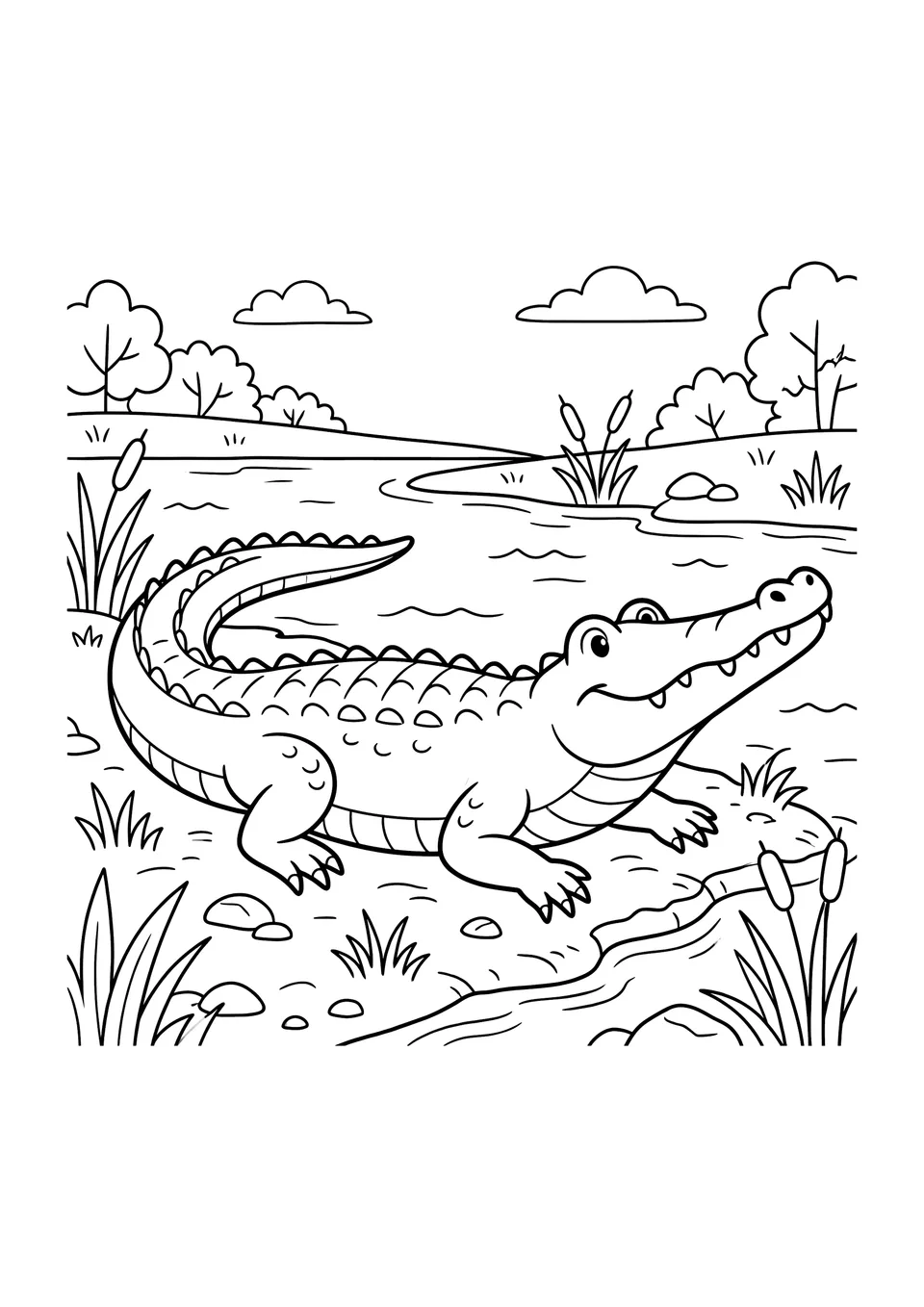
Bring science to life with this free printable crocodile coloring page! Perfect for elementary students, this activity combines a detailed coloring sheet with an engaging reading passage about one of nature's oldest survivors.
PDF · Your plan’s download limits apply
Crocodiles are some of the most fascinating and ancient creatures on Earth. Often called "living fossils," they have existed for millions of years, even outlasting the dinosaurs. These massive reptiles are perfectly designed for life in both water and on land, making them top predators in their environments. Found in tropical regions of Africa, Asia, the Americas, and Australia, they are masters of survival.
One of the most striking things about a crocodile is its tough, scaly skin. This skin acts like a suit of armor, protecting the animal from injuries. Crocodiles are cold-blooded, which means they cannot control their own body temperature internally. To stay warm, they spend hours basking in the sun on muddy riverbanks. When they get too hot, they slip into the cool water or open their mouths wide to let heat escape, which often looks like they are smiling.
Crocodiles are masters of the "ambush" when it comes to hunting. They can stay almost completely submerged in water, with only their eyes and nostrils poking above the surface. This allows them to sneak up on unsuspecting prey that comes to the water’s edge for a drink. With a sudden burst of speed from their powerful tails and a snap of their incredibly strong jaws, they can grab their meal in the blink of an eye.
People often confuse crocodiles with their cousins, the alligators. One way to tell them apart is by looking at their snouts. Crocodiles have long, V-shaped snouts, while alligators have wider, U-shaped snouts. Another clue is their teeth. When a crocodile closes its mouth, a large fourth tooth on the bottom jaw remains visible, pointing upward over the upper lip. In an alligator, the upper jaw is wider, so those bottom teeth are hidden when the mouth is shut.
Unlike many other reptiles that leave their eggs after laying them, mother crocodiles are very protective. They guard their nests from predators for weeks. Once the babies hatch and start making chirping sounds, the mother gently carries them in her mouth to the safety of the water. She will stay with her "hatchlings" for many months to protect them from birds and fish. These powerful reptiles play a vital role in nature, and they deserve our respect for being such resilient survivors.
Why are crocodiles often referred to as 'living fossils'?
How does a crocodile's skin help it survive in its environment?
What does it mean for a crocodile to be 'cold-blooded'?
How do crocodiles cool down if they get too hot?
Which parts of a crocodile remain above the water while it is hunting?
What are two physical differences between a crocodile and an alligator?
Where in the world can crocodiles be found?
What role does a crocodile's tail play during a hunt?
How does a mother crocodile react when she hears her babies chirping?
How long do mother crocodiles stay with their hatchlings?
More ways to practice with this story — every sheet is built from the text itself, answer key included where it counts.
One PDF with a cover, a contents page and every answer key at the back — color the page in, then keep going on paper.
Sentences from the passage with the capitals and punctuation removed — rewrite each one correctly.
Match the passage words to their meanings, then fill the missing words back into real sentences.
Two writing tasks that build on the passage, with plenty of lines to write on.
This printable crocodile coloring page is designed to engage upper elementary students in a meaningful way. By combining art with an informative reading passage, children can learn about the 'living fossils' of the reptile world while they work on their fine motor skills. The passage covers essential topics like habitat, the ambush hunting style, and the physical differences between crocodiles and alligators.
Our free coloring page with reading passage is an excellent resource for both classroom and at-home use. Teachers can utilize the material to satisfy science and literacy standards, while parents can use it as a fun weekend learning project. The clear black outlines and open spaces make it easy for kids to focus on coloring while they digest the educational content.
Download this coloring page to help your students explore the fascinating life of these ancient predators. Along with the image, you'll find comprehension questions and a glossary that helps build vocabulary, making it a complete educational package for any young explorer.