
fix the sentence
Sentences from the passage with the capitals and punctuation removed — rewrite each one correctly.
Web preview · Open larger preview (opens in a new tab)
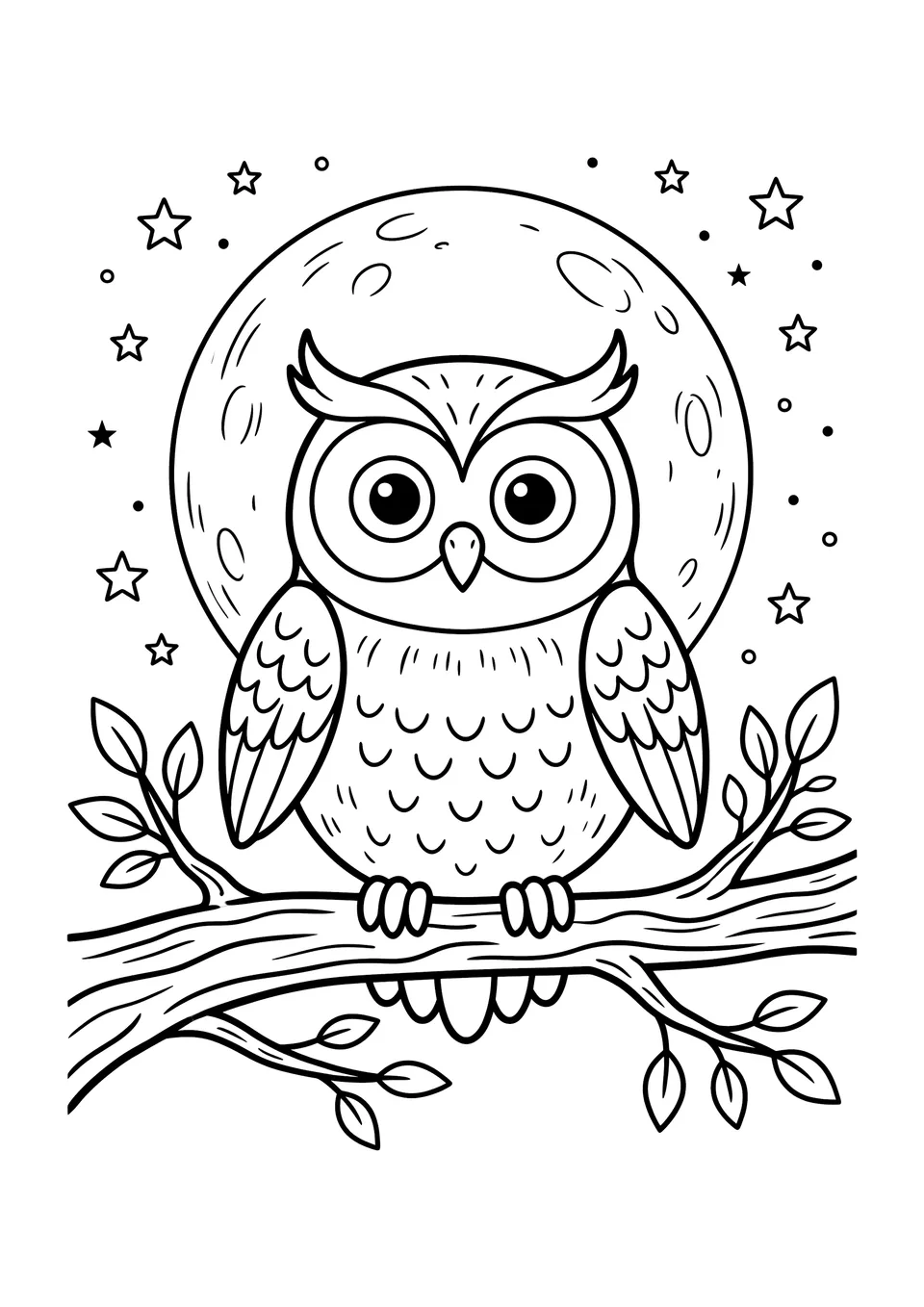
Bring the mysterious world of nocturnal hunters to life with this owl in the night coloring page and educational reading activity.
PDF · Your plan’s download limits apply
As the sun dips below the horizon and the world turns quiet, a different kind of life begins to stir. While most birds are tucking into their nests for a long sleep, the owl is just waking up. These fascinating creatures are nocturnal, which means they are primarily active during the night. Over thousands of years, they have developed incredible tools that make them the ultimate nighttime hunters.
One of the owl’s most impressive features is its eyesight. Unlike humans, owls have large, tube-shaped eyes that are fixed in place by bone. Because they cannot move their eyes within their sockets, they must turn their entire heads to look around. An owl can rotate its neck up to 270 degrees, which is more than halfway around! Their eyes are packed with light-sensitive cells that allow them to see clearly in near-total darkness, spotting a tiny movement from far away.
In addition to sight, an owl relies heavily on its hearing. Many species have ears that are asymmetrical, meaning one ear is higher on the head than the other. This unique arrangement helps the owl pinpoint the exact location of a sound. By comparing when a noise reaches each ear, the owl can calculate the distance and height of a mouse scurrying through dry leaves on the forest floor, even if the prey is hidden under snow or grass.
To catch their prey, owls must also be sneaky. Most birds make a flapping sound when they fly, but owls are famous for their silent flight. Their feathers have soft, fringed edges that break up the air and muffle the sound of their wings. This allows them to swoop down on unsuspecting animals without making a peep. With their sharp talons and powerful beaks, they are highly efficient predators that help keep the population of rodents in check. The next time you hear a mysterious hoot in the dark, you will know that a silent guardian is on the watch.
What does the term nocturnal mean in relation to an owl's lifestyle?
Why is an owl unable to move its eyes within their sockets?
How many degrees can an owl rotate its neck to look around?
What makes an owl's eyes specifically suited for hunting at night?
What does it mean for an owl's ears to be asymmetrical?
How does the placement of its ears help an owl find hidden prey?
What physical feature of an owl's feathers allows it to fly silently?
Why is silent flight an advantage for an owl during a hunt?
Which two body parts does an owl use to catch and handle its prey?
How do owls contribute to the balance of their ecosystem?
More ways to practice with this story — every sheet is built from the text itself, answer key included where it counts.
One PDF with a cover, a contents page and every answer key at the back — color the page in, then keep going on paper.
Sentences from the passage with the capitals and punctuation removed — rewrite each one correctly.
Match the passage words to their meanings, then fill the missing words back into real sentences.
Two writing tasks that build on the passage, with plenty of lines to write on.
This free printable coloring page is more than just an art activity; it is a gateway to learning about the incredible biology of owls. Designed for upper elementary students, the accompanying reading passage, "Silent Hunters of the Night," explains how these birds use their specialized eyesight and silent flight to thrive after dark. It is a perfect addition to any science lesson on nocturnal animals or forest ecosystems.
Our high-quality line art features a detailed owl perched under a starry sky, providing plenty of open space for kids to practice their coloring skills. This download is ideal for classroom use, homeschooling, or as a quiet weekend activity. Teachers can use the text to practice reading comprehension, identifying key adaptations like asymmetrical hearing and tube-shaped eyes.
Simply download and print this coloring sheet to combine creativity with literacy. With clear outlines and a white background, it is optimized for easy printing and works well with crayons, colored pencils, or markers. Explore our collection of free animal coloring pages to build a complete set of educational resources for your young learners.