
fix the sentence
Sentences from the passage with the capitals and punctuation removed — rewrite each one correctly.
Web preview · Open larger preview (opens in a new tab)
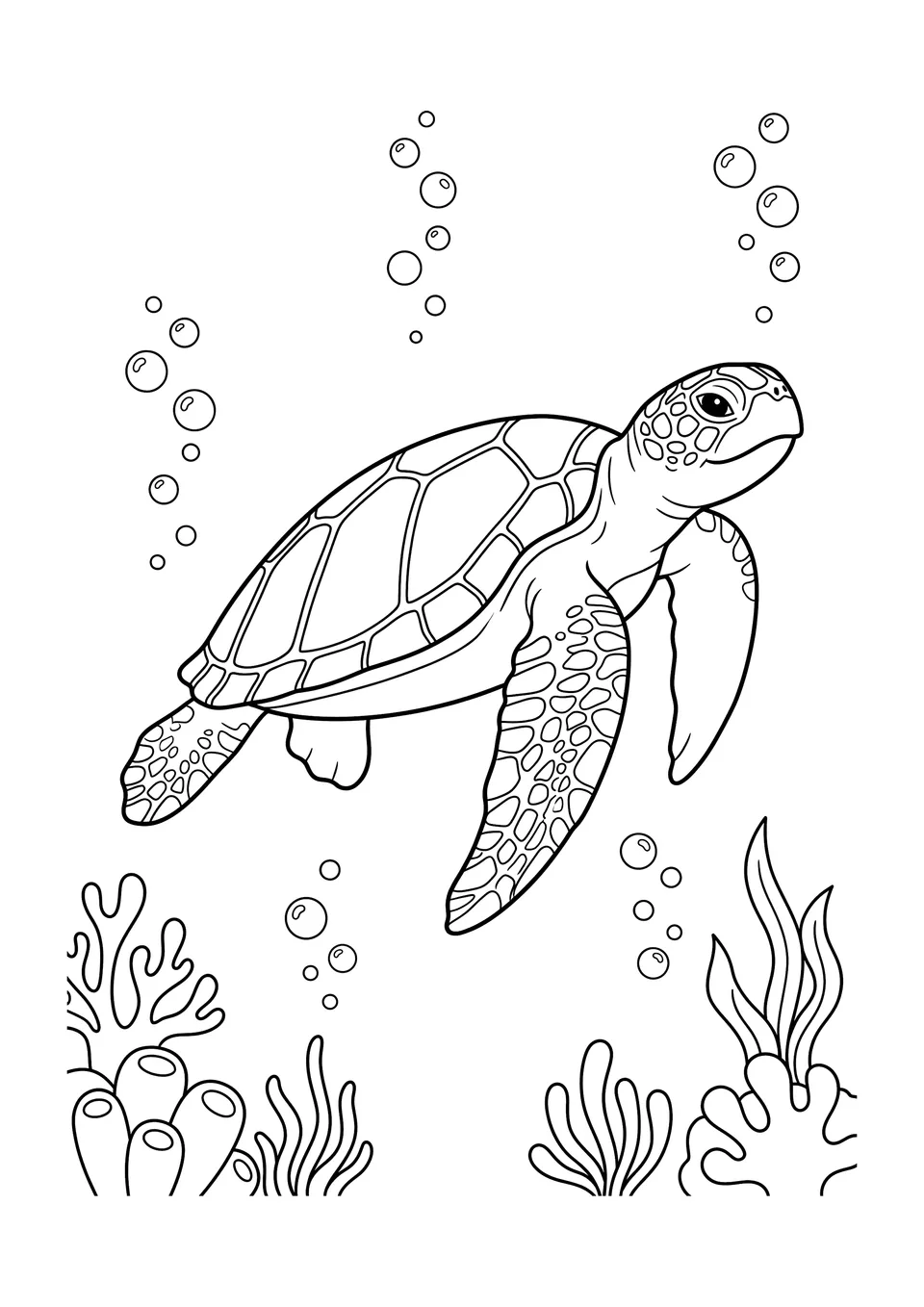
Dive into the deep blue with our sea turtle swimming coloring page! This printable activity helps kids learn about marine biology while they express their creativity with colors.
PDF · Your plan’s download limits apply
Sea turtles are some of the most graceful swimmers in the ocean. While they might look slow and heavy on land, they transform into agile underwater "flyers" once they hit the surf. This change is thanks to millions of years of evolution that have shaped their bodies for life in the deep blue.
The secret to a sea turtle’s swimming ability lies in its flippers. Unlike pond turtles, which have webbed feet with claws, sea turtles have long, paddle-like front flippers. They move these flippers in a powerful up-and-down motion, much like a bird flapping its wings. This provides the propulsion needed to move through the water. Their smaller back flippers act like rudders on a boat, helping the turtle steer and stay balanced as it navigates through coral reefs or open ocean currents.
Another important feature is the turtle's shell. A sea turtle has a flatter, more streamlined shell than its land-dwelling cousins. This shape reduces "drag," which is the resistance of the water pushing against the turtle. By being more hydrodynamic, the turtle can glide further with less effort. To help with floating, sea turtles have large lungs. They can take a deep breath and use the air to stay buoyant. When it is time to dive deep for a snack of seagrass or jellyfish, they can adjust how they hold that air to sink lower.
Sea turtles are also amazing long-distance travelers. Some species, like the Leatherback, can swim thousands of miles across entire oceans to reach their nesting beaches. They are built for endurance rather than just speed. Even though they must eventually come to the surface to breathe air, many sea turtles can hold their breath for several hours while they are resting or sleeping underwater. This incredible ability allows them to explore a world that few other reptiles can ever reach.
What do sea turtles resemble when they are swimming underwater compared to how they move on land?
How do the front flippers of a sea turtle differ from the feet of a pond turtle?
Which motion do sea turtles use with their front flippers to create propulsion?
What is the specific function of the smaller back flippers during swimming?
How does the shape of a sea turtle's shell compare to that of a land-dwelling turtle?
What does the term 'drag' mean in the context of a turtle swimming?
How do sea turtles use their lungs for more than just breathing?
Which sea turtle species is highlighted for its ability to swim across entire oceans?
For how long can a sea turtle hold its breath while it is resting or sleeping?
Why are sea turtles described as being built for endurance rather than speed?
More ways to practice with this story — every sheet is built from the text itself, answer key included where it counts.
One PDF with a cover, a contents page and every answer key at the back — color the page in, then keep going on paper.
Sentences from the passage with the capitals and punctuation removed — rewrite each one correctly.
Match the passage words to their meanings, then fill the missing words back into real sentences.
Two writing tasks that build on the passage, with plenty of lines to write on.
This free printable sea turtle coloring page is designed specifically for upper elementary students. It pairs a high-quality line art illustration of a swimming turtle with an informative reading passage titled 'Masters of the Deep: How Sea Turtles Swim.' This resource allows children to visualize the unique anatomy of sea creatures, such as their paddle-like flippers and streamlined shells, while they color.
Whether you are a teacher looking for classroom science materials or a parent seeking engaging at-home educational activities, this download is perfect for exploring marine biology and reptile adaptations. The accompanying passage includes facts about propulsion, buoyancy, and endurance, making it a great tool for building literacy skills and scientific knowledge. Simply download and print to combine reading comprehension with a fun art project.
Our coloring pages are designed with clear black outlines and open spaces, making them easy to use with crayons, markers, or colored pencils. This activity is an excellent addition to ocean-themed lesson plans, providing a hands-on way for students to connect with the natural world and learn about the amazing long-distance travels of sea turtles.