


fix the sentence
Sentences from the passage with the capitals and punctuation removed — rewrite each one correctly.
Web preview · Open larger preview (opens in a new tab)
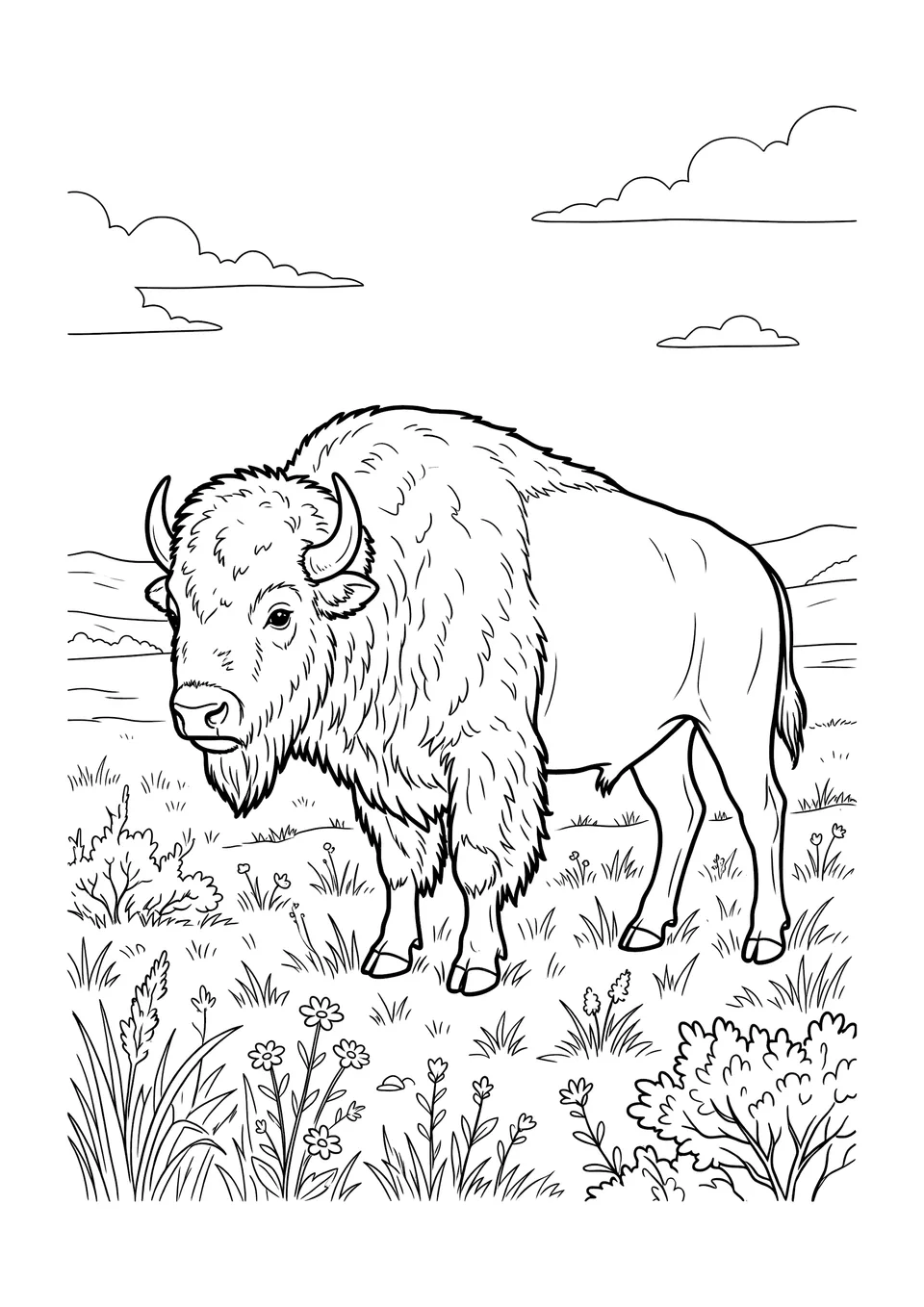
Color an American bison on the South Dakota prairie, then explore its grassland habitat with the reading passage A Prairie Built for Bison.
PDF · Your plan’s download limits apply
An American bison stands among waving grasses on a South Dakota prairie. Beyond it, low hills meet the sky. Its massive shoulders and shaggy brown coat make it easy to recognize, but these features also help it survive on the open grassland.
A bison’s shoulder hump is made mostly of muscle. Those powerful muscles support its large head, which it can swing from side to side to push snow away from grasses in winter. A thick coat helps keep the animal warm during cold, windy weather. In spring, pieces of the heavy winter coat shed as temperatures rise.
Bison spend much of their time grazing, or eating grasses and other low-growing plants. Their movement and feeding can shape the prairie. When they graze in one area and move on, plants get a chance to grow again. Bison also roll on the ground, creating shallow, dusty hollows called wallows. Rainwater can collect in these hollows, providing damp places for some plants and insects.
Long ago, millions of bison roamed across North America. They were important to many Indigenous peoples, who used bison for food, clothing, tools, and other needs. During the 1800s, widespread hunting and other pressures caused bison numbers to fall sharply. Today, conservation efforts have helped bison survive in parks, on tribal lands, and on private ranches.
Although a grazing bison may seem calm, it is a wild animal that can move surprisingly fast. People who visit places where bison live must give them plenty of space. From a safe distance, they can watch one of the prairie’s most remarkable animals at home.
What is the main idea of the passage? Give two details that support it.
How does a bison’s shoulder hump help it find food in winter?
Why is shedding its heavy coat useful to a bison in spring?
How can bison grazing and moving on help prairie plants?
How might a wallow help both plants and insects?
How were bison important to many Indigenous peoples?
What changed about bison numbers during the 1800s, and what caused the change?
How does the passage compare bison’s past with their situation today?
Why does the author warn readers to give bison plenty of space?
What does “conservation efforts” mean in the paragraph about bison numbers?
More ways to practice with this story — every sheet is built from the text itself, answer key included where it counts.
One PDF with a cover, a contents page and every answer key at the back — color the page in, then keep going on paper.
Sentences from the passage with the capitals and punctuation removed — rewrite each one correctly.
Match the passage words to their meanings, then fill the missing words back into real sentences.
Two writing tasks that build on the passage, with plenty of lines to write on.
Download this free coloring page to bring an American bison and its prairie habitat to life. Its bold outlines and open spaces make it a useful choice for upper elementary students.
Pair the printable coloring page with the informative reading passage, A Prairie Built for Bison. Comprehension questions and a glossary help students explore bison adaptations, prairie ecosystems, and conservation.
Use this coloring page with its reading passage for classroom lessons, independent practice, or at-home learning. It is a simple way to combine art with a closer look at an American grassland animal.