


fix the sentence
Sentences from the passage with the capitals and punctuation removed — rewrite each one correctly.
Web preview · Open larger preview (opens in a new tab)
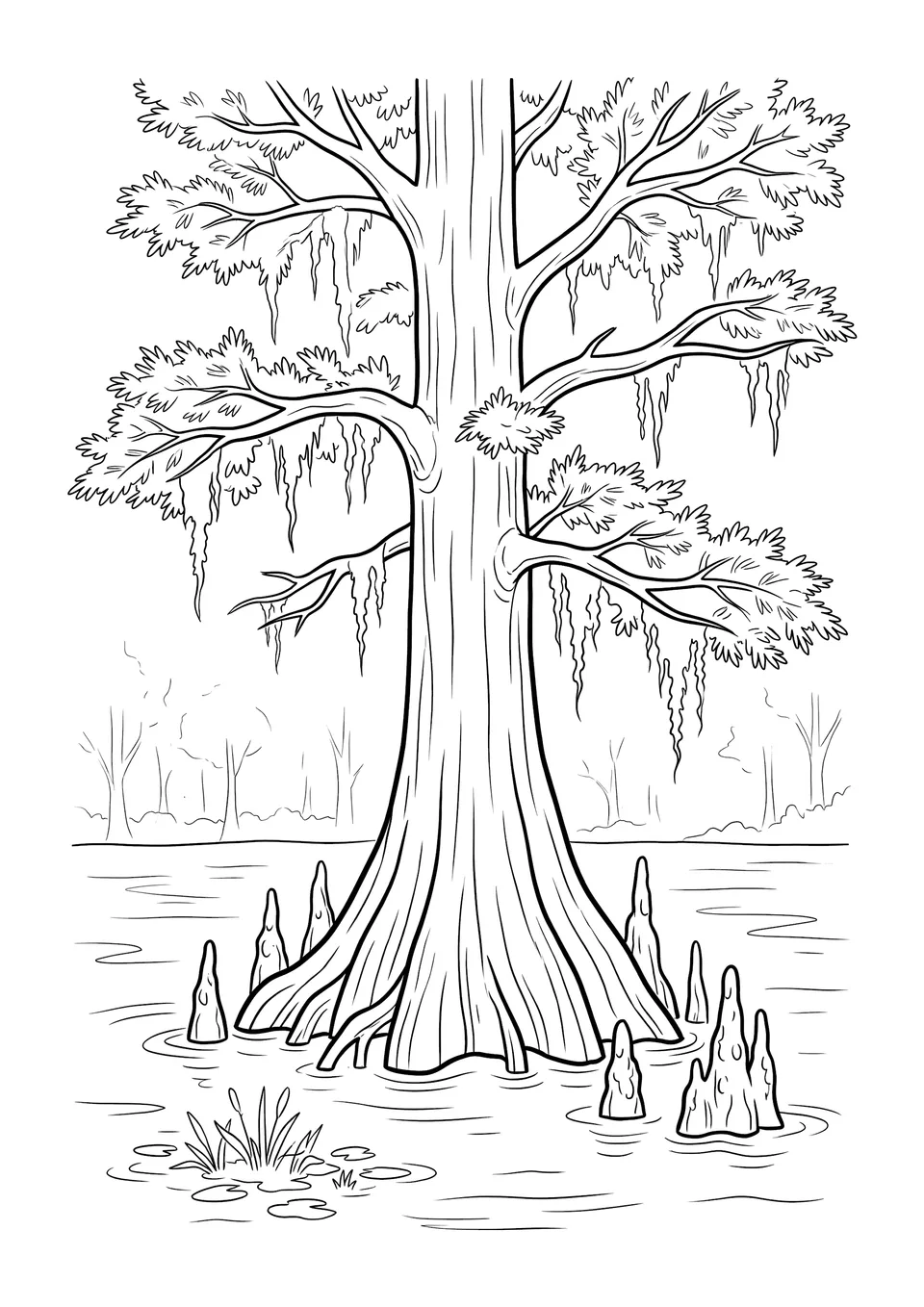
Color a bald cypress standing in the calm waters of Congaree National Park. Explore wetland trees with the informative reading passage, “A Cypress in the Floodplain.”
PDF · Your plan’s download limits apply
A bald cypress rises from calm water in Congaree National Park in South Carolina. Its wide trunk flares at the base, and parts of its roots stand above the water. Strands of Spanish moss hang from its branches. The still surface reflects the tree, but the forest around it is often changing.
Congaree protects a floodplain forest, a low-lying area beside a river that sometimes floods. After heavy rain, water from the Congaree River can spread across the forest floor. When the water recedes, or drains away, it leaves behind sediment: tiny bits of soil and other material. These deposits add nutrients to the forest soil.
Bald cypresses are well suited to wet places. Their roots can grow in flooded soil where many other trees struggle. Around some cypresses, woody growths called knees rise from the roots. Scientists are still studying exactly what these knees do. They may help support the trees in soft ground, but their full role is not settled.
Spanish moss is not actually a moss. It is a flowering plant that hangs from trees and takes in water and nutrients from the air and rain. It uses the cypress for support rather than stealing food from it.
The cypress also provides shelter for wildlife. Birds may nest among its branches, while animals such as frogs and fish use the surrounding water. In fall, the tree’s soft, needle-like leaves turn rusty brown and drop off. New leaves grow in spring. Through floods and changing seasons, the bald cypress remains part of a lively forest community.
What is the main idea of the passage? Give two details that support it.
How does flooding help add nutrients to the forest soil?
Which detail shows that bald cypresses are suited to wet places?
Why might cypress knees be useful, and why are scientists not certain about their role?
How does Spanish moss use the cypress differently from a plant that steals food from a tree?
How do the cypress and the surrounding water help different animals?
What does the word “reflects” mean when the passage describes the still water?
How does the passage show that the forest changes during the year?
Why does the author explain flooding before describing the cypress’s roots?
Summarize how the bald cypress is connected to other living things in the forest.
More ways to practice with this story — every sheet is built from the text itself, answer key included where it counts.
One PDF with a cover, a contents page and every answer key at the back — color the page in, then keep going on paper.
Sentences from the passage with the capitals and punctuation removed — rewrite each one correctly.
Match the passage words to their meanings, then fill the missing words back into real sentences.
Two writing tasks that build on the passage, with plenty of lines to write on.
This free coloring page features a bald cypress with visible roots and hanging Spanish moss. Download the coloring page to explore a remarkable tree that grows in wetlands.
Use this printable coloring page with the reading passage “A Cypress in the Floodplain” to learn about flooding, cypress knees, and Spanish moss. Comprehension questions and a glossary help upper elementary students build understanding and vocabulary.
Like other free printable coloring pages, this activity is easy to use in the classroom or at home as part of a nature or science lesson.