


fix the sentence
Sentences from the passage with the capitals and punctuation removed — rewrite each one correctly.
Web preview · Open larger preview (opens in a new tab)
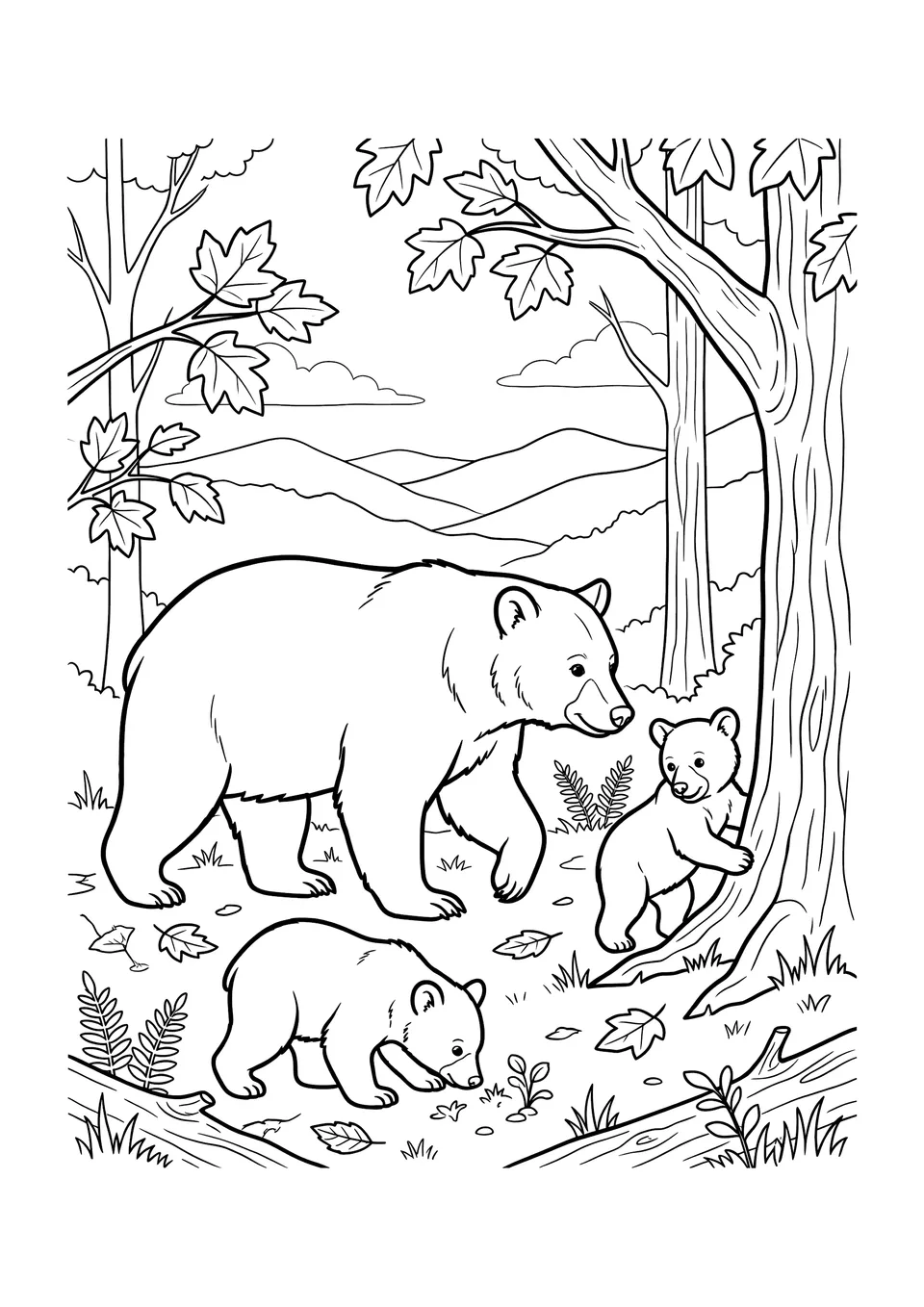
Meet a mother black bear and her two cubs in the Blue Ridge Mountains. Color their forest habitat while learning how cubs grow and survive.
PDF · Your plan’s download limits apply
In a North Carolina Blue Ridge forest, two bear cubs follow their mother beneath the trees. They may pause to sniff the ground or climb a trunk with their sharp claws. For young American black bears, the forest is both a playground and a place to learn how to survive.
Black bear cubs are usually born in winter while their mother rests in a den. They are tiny at birth, with closed eyes and very little fur. Their mother nurses them, and by spring they are strong enough to leave the den with her. A mother often has two or three cubs, though the number can vary.
As the cubs grow, they learn to find food. Black bears eat many kinds of plants, including grasses, berries, and nuts. They also eat insects and sometimes animals. Their strong sense of smell helps them locate food hidden under leaves or inside rotting logs. In the fall, acorns and other nuts can help bears build up fat before winter.
Trees offer the cubs a measure of safety. If they sense danger, they can scramble up a trunk while their mother remains nearby. The cubs stay with her through their first winter and usually separate from her during their second summer. By then, they have had many months to practice finding food and moving through their habitat.
People who live in or visit bear country can help keep bears wild. Securing trash and never feeding bears makes it less likely that the animals will connect people with food. If someone sees a mother bear with cubs, giving the family plenty of space protects both people and bears.
What is the main idea of the passage, and which two details support it?
How do the cubs change between birth and spring?
How does a bear's sense of smell help it find food?
Why can eating nuts in the fall help bears prepare for winter?
What do trees provide for cubs, and how do the cubs use them?
How is the cubs' first winter different from their second summer?
What does the word "habitat" mean in the passage?
Why might cubs need many months with their mother before separating from her? Use a detail from the passage.
How does the passage move from describing bears to explaining what people can do?
Why should people secure trash and give a mother bear with cubs plenty of space?
More ways to practice with this story — every sheet is built from the text itself, answer key included where it counts.
One PDF with a cover, a contents page and every answer key at the back — color the page in, then keep going on paper.
Sentences from the passage with the capitals and punctuation removed — rewrite each one correctly.
Match the passage words to their meanings, then fill the missing words back into real sentences.
Two writing tasks that build on the passage, with plenty of lines to write on.
Explore how black bear cubs grow, find food, and stay safe with their mother. This coloring page with a reading passage, “A Bear Family in the Blue Ridge,” is designed for upper elementary learners.
Download the coloring page for classroom or at-home use. Along with printable coloring pages, comprehension questions and a glossary can help students practice understanding the passage and its vocabulary.
Use this free coloring page as part of an animal habitat lesson or a quiet reading and art activity.