


fix the sentence
Sentences from the passage with the capitals and punctuation removed — rewrite each one correctly.
Web preview · Open larger preview (opens in a new tab)
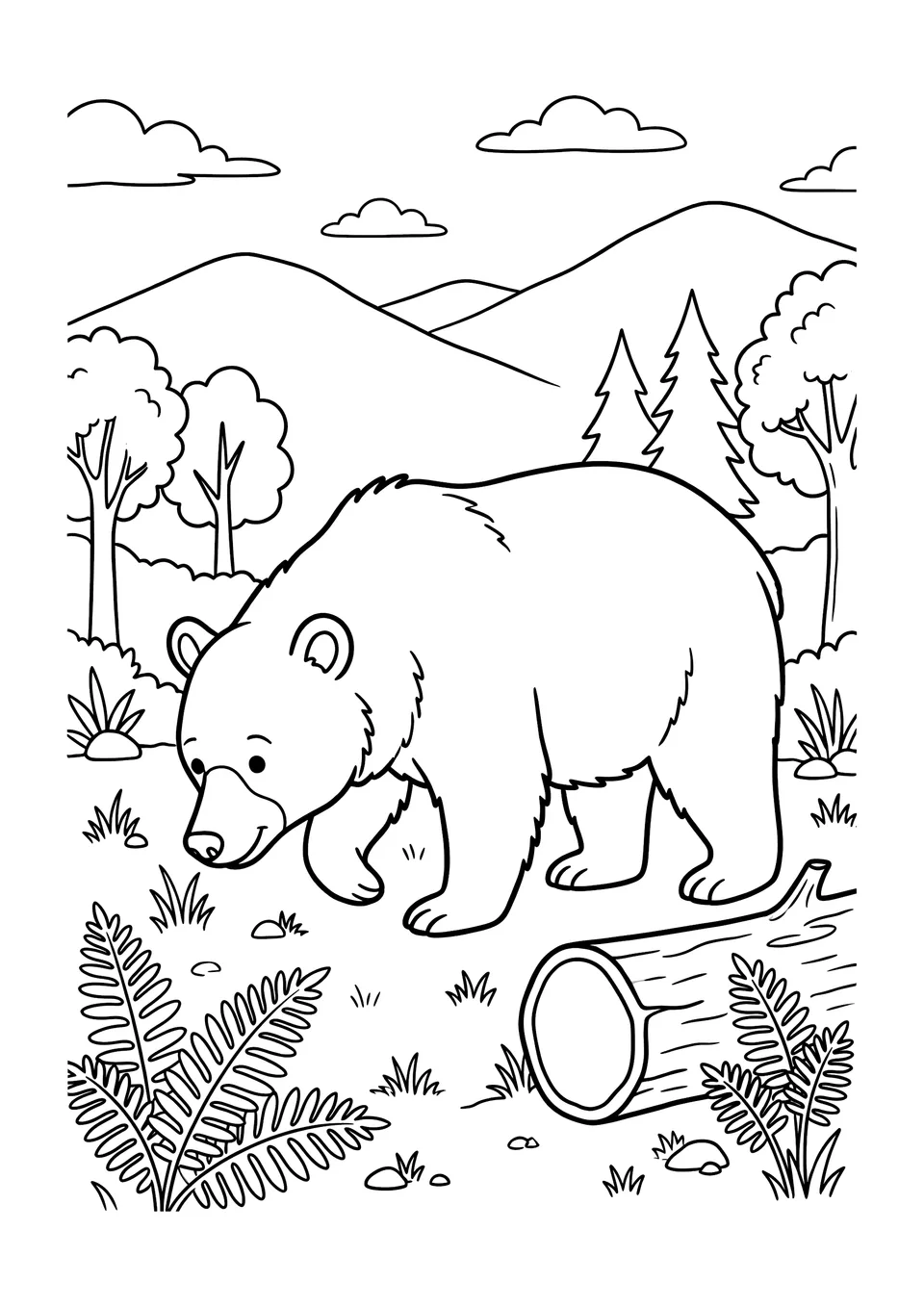
Color a black bear exploring a mountain forest beside a hollow log. Read about how bears find food and shelter in the wild.
PDF · Your plan’s download limits apply
What is that dark shape beside the log? It is a black bear in a West Virginia mountain forest.
The bear looks calm as it sniffs the ground. Green ferns grow beside the hollow log.
A black bear has thick fur, a long nose, and small, round ears. Its strong legs help it walk, run, and climb trees.
Black bears have a keen sense of smell. A bear can use its nose to find food in the forest.
The bear may sniff the old log for bugs. Ants and other small creatures can live in and under dead wood.
Black bears eat many kinds of food. They eat berries, nuts, roots, and insects.
They also eat meat when they find it. What a bear eats can change with the seasons.
In spring, fresh plants begin to grow. In summer, berries ripen on bushes.
In fall, bears eat lots of nuts and other food. The extra food helps them store fat for winter.
When cold weather comes, a bear may rest in a den. A den can be in a hollow tree, a rock space, or another sheltered spot.
Black bears may look friendly, but they are wild animals. People should watch them from far away and never feed them.
The forest gives black bears food and places to rest. Even an old hollow log can be a good place for a bear to search for a meal.
Where is the black bear?
What do the bear's strong legs help it do?
Why might the bear sniff the old log?
Name two foods black bears eat.
What happens to berries in summer?
Why do bears eat lots of food in fall?
Where might a bear rest when cold weather comes?
What does “hollow” mean when it describes the log?
What might a bear do if it smells bugs under a log?
What should people do when they see a black bear?
More ways to practice with this story — every sheet is built from the text itself, answer key included where it counts.
One PDF with a cover, a contents page and every answer key at the back — color the page in, then keep going on paper.
Sentences from the passage with the capitals and punctuation removed — rewrite each one correctly.
Match the passage words to their meanings, then fill the missing words back into real sentences.
Two writing tasks that build on the passage, with plenty of lines to write on.
Download this free coloring page to bring a West Virginia mountain forest to life. The simple outlines and open spaces make it a welcoming choice for young learners.
Pair the printable coloring page with the informative reading passage, “A Black Bear in the Mountain Forest.” Use comprehension questions and a glossary to support discussion about bear habitats, food, and seasonal changes.
Free coloring pages like this one can complement an animal unit in the classroom or a quiet learning activity at home. Remind children that black bears are wild animals and should always be watched from far away.