


fix the sentence
Sentences from the passage with the capitals and punctuation removed — rewrite each one correctly.
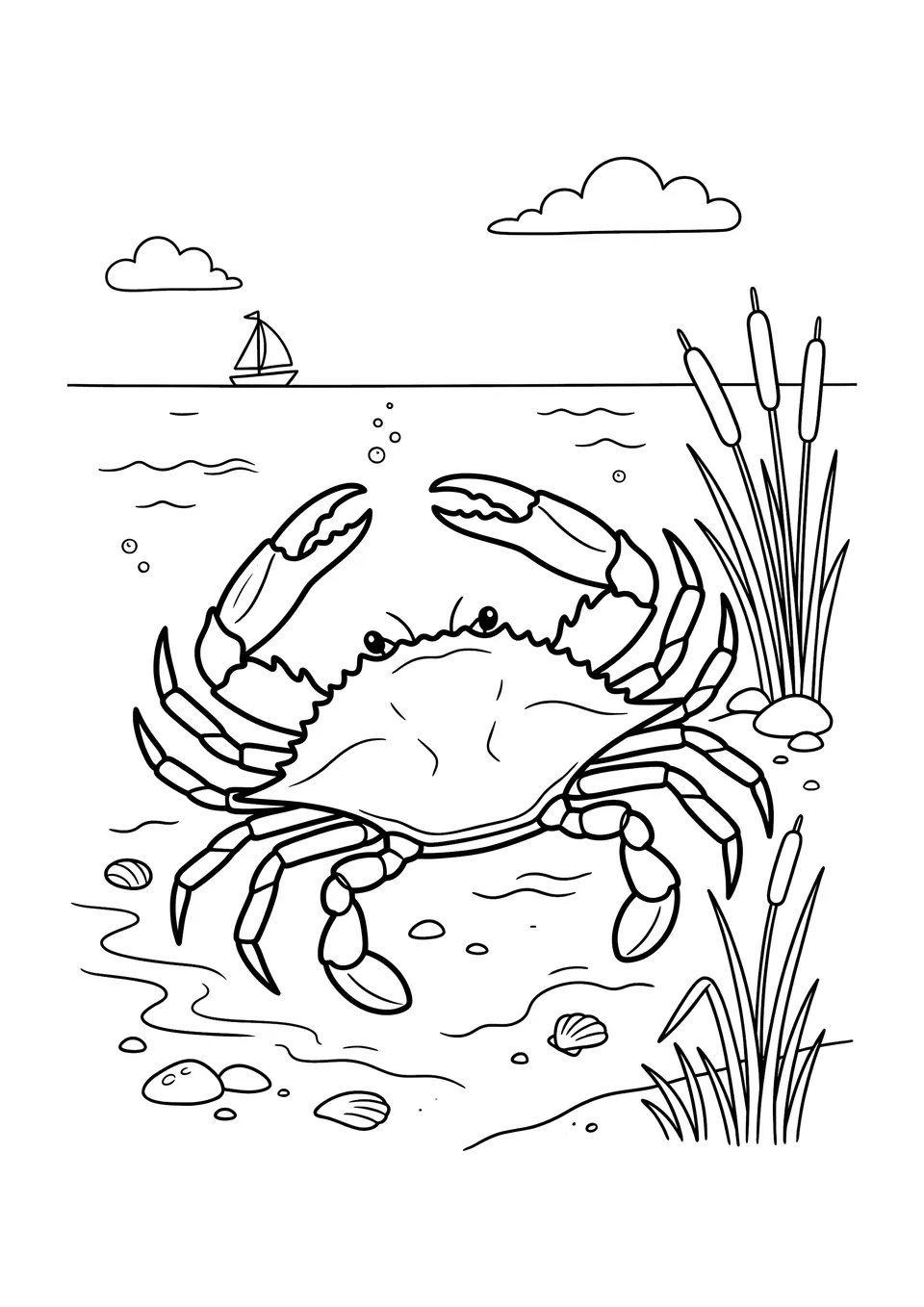
Web preview · Open larger preview (opens in a new tab)
Explore Chesapeake Bay with a blue crab coloring page and an informative reading passage. Young learners can color the scene while discovering how blue crabs live.
PDF · Your plan’s download limits apply
What has a hard shell and swims with its back legs? A blue crab!
Blue crabs live in the Chesapeake Bay. The bay is a large body of water near land. Water from rivers flows into it and mixes with water from the sea.
Near the edge of the bay, reeds grow in shallow water. A blue crab can move among the reeds. Far out on the water, a small sailboat glides past.
A blue crab has five pairs of legs. Its back pair is flat, like tiny paddles. The crab uses them to swim.
Its front pair has claws. The crab uses its claws to grab food and help keep safe. It can also walk along the bottom of the bay, often moving sideways.
Blue crabs eat many kinds of food. They may eat small fish, clams, and bits of dead plants and animals. They can find food on the bay bottom.
The crab’s hard shell helps protect its soft body. But the shell cannot grow with the crab. As the crab grows, it sheds its old shell.
At first, the new shell is soft. The crab can hide while its new shell gets hard. Then the crab has more room to grow.
Other animals live in the bay, too. Fish, birds, and larger crabs may eat blue crabs. The reeds and shallow water are part of a busy home for many living things.
What is this passage mostly about?
Where do blue crabs live?
What do blue crabs use their back legs to do?
How do a blue crab's claws help it?
Name two things a blue crab may eat.
Why does a blue crab shed its old shell?
What happens to the new shell after the crab sheds its old shell?
Why might a crab hide when its new shell is soft?
What does shallow mean when it describes the water near the reeds?
Name one animal that may eat a blue crab.
More ways to practice with this story — every sheet is built from the text itself, answer key included where it counts.
One PDF with a cover, a contents page and every answer key at the back — color the page in, then keep going on paper.
Sentences from the passage with the capitals and punctuation removed — rewrite each one correctly.
Match the passage words to their meanings, then fill the missing words back into real sentences.
Two writing tasks that build on the passage, with plenty of lines to write on.
This free coloring page shows a blue crab among reeds in shallow water, with a sailboat in the distance. Download the coloring page to print for an animal lesson or a relaxing activity.
Pair this printable coloring page with the reading passage, “A Blue Crab in the Bay,” to learn about the crab’s paddle-shaped legs, claws, and habitat. Use comprehension questions and a glossary to support understanding and build vocabulary.
Free coloring pages like this one are useful in the classroom or at home. Invite children to color the scene and share one fact they learned about blue crabs.