


fix the sentence
Sentences from the passage with the capitals and punctuation removed — rewrite each one correctly.
Web preview · Open larger preview (opens in a new tab)
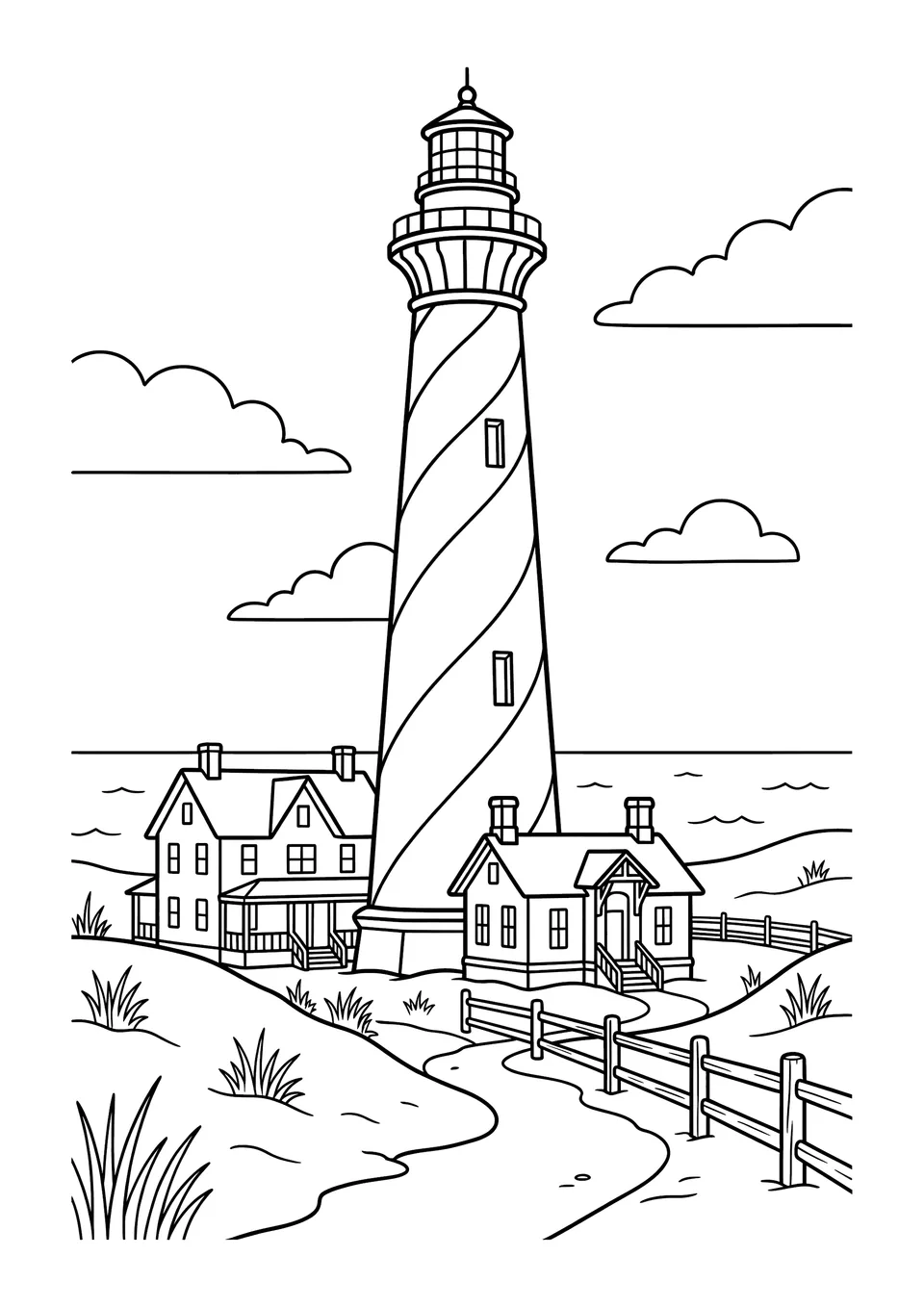
Color the spiral-striped Cape Hatteras Lighthouse and explore the coastal landscape around it. Pair the page with the reading passage, “A Lighthouse on the Move.”
PDF · Your plan’s download limits apply
A tall tower with black and white stripes rises above the dunes on North Carolina’s Outer Banks. Its spiral pattern makes the Cape Hatteras Lighthouse easy to recognize during the day. At night, its light has helped sailors identify a dangerous stretch of coast.
The waters near Cape Hatteras are sometimes called the Graveyard of the Atlantic. Shifting sandbars and powerful currents have contributed to many shipwrecks there. A lighthouse cannot remove these dangers, but its light can help mariners recognize where they are and steer more safely.
The present lighthouse was completed in 1870. It stands about 198 feet tall, making it one of the tallest brick lighthouses in the United States. Its distinctive stripes also served as a daymark: a pattern that helped sailors tell it apart from other coastal structures in daylight.
Before the light was automated, lighthouse keepers had an important job. They tended the lamp and equipment and kept the lens clean so the light could shine clearly. Keepers and their families lived in houses near the tower, close enough for the keepers to care for the light in difficult weather.
The coast itself is always changing. Waves and currents carry sand away from some places and deposit it in others. By the late 1900s, the ocean had moved dangerously close to the lighthouse. In 1999, workers moved the enormous tower and several nearby buildings about half a mile inland to protect them from erosion.
Today, coastal dunes still surround the lighthouse grounds. These sandy ridges, often held together by plant roots, help shelter the land behind them from wind and waves. The striped tower remains a reminder of both the dangers of the sea and the efforts people have made to navigate them.
How do the lighthouse's stripes and light help sailors at different times of day?
Why are the waters near Cape Hatteras called the Graveyard of the Atlantic?
What does the word “daymark” mean in the passage?
What details show why lighthouse keepers needed to live close to the tower?
How did waves and currents create a problem for the lighthouse?
Why did workers move the lighthouse inland in 1999?
How do dunes help protect the land behind them?
How are the lighthouse and coastal dunes alike in the way they help people or land?
Why does the author describe the dangers near Cape Hatteras before explaining the lighthouse's role?
What is the main idea of the passage, and which two details support it?
More ways to practice with this story — every sheet is built from the text itself, answer key included where it counts.
One PDF with a cover, a contents page and every answer key at the back — color the page in, then keep going on paper.
Sentences from the passage with the capitals and punctuation removed — rewrite each one correctly.
Match the passage words to their meanings, then fill the missing words back into real sentences.
Two writing tasks that build on the passage, with plenty of lines to write on.
Download this free coloring page to explore the lighthouse’s spiral stripes, keeper houses, and coastal dunes. Print it for a classroom activity or a quiet project at home.
This printable coloring page with a reading passage introduces students to lighthouse keepers, coastal erosion, and the tower’s remarkable move inland. Use the comprehension questions and glossary to support discussion and build vocabulary.