


fix the sentence
Sentences from the passage with the capitals and punctuation removed — rewrite each one correctly.
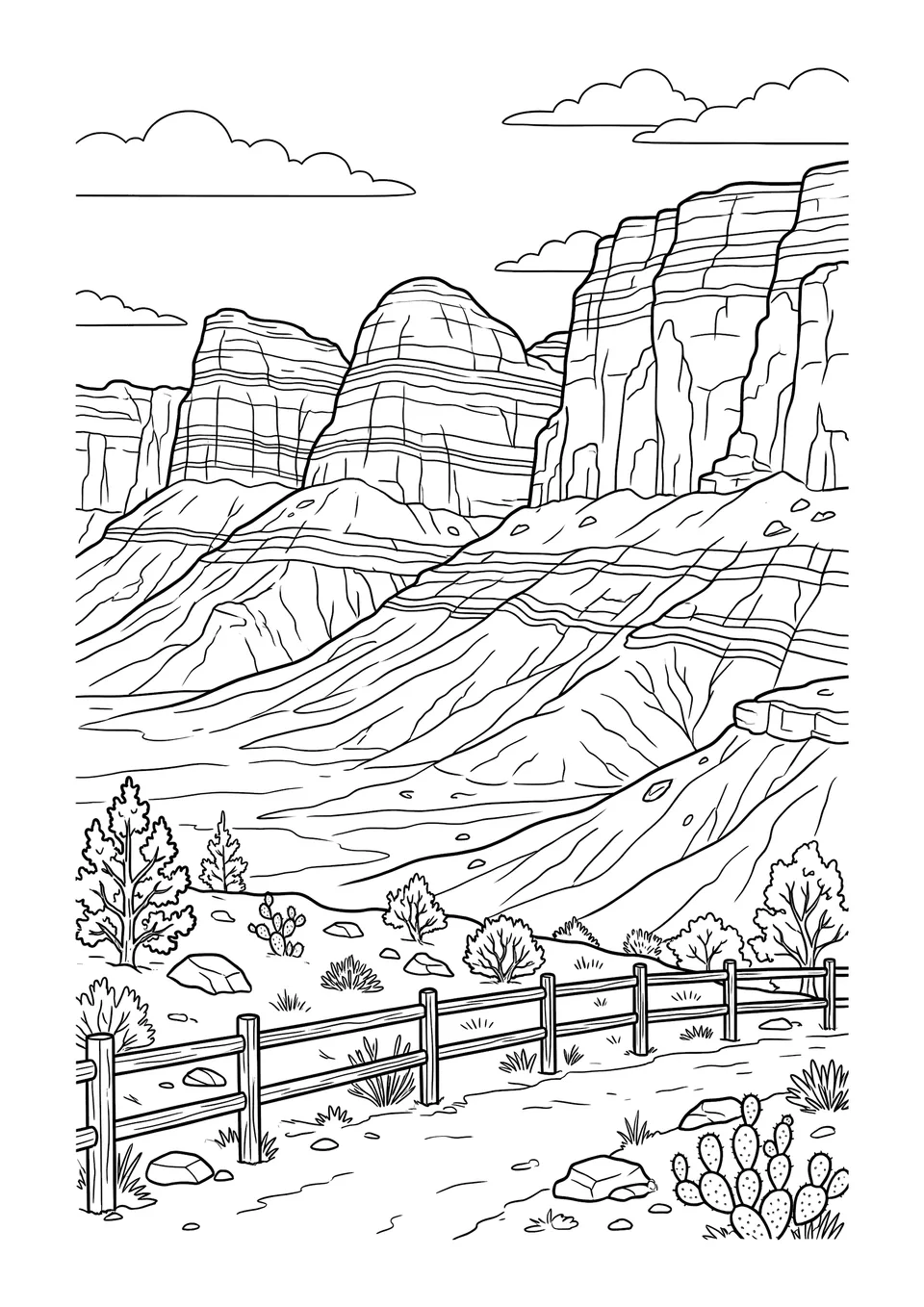
Web preview · Open larger preview (opens in a new tab)
Explore the layered cliffs of Capitol Reef with a printable coloring page and an informative reading passage. Discover how rock layers form and change over time.
PDF · Your plan’s download limits apply
At Capitol Reef National Park in Utah, cliffs rise in bands of red, orange, and pale cream. From a safe public viewpoint, visitors can see that the rock is stacked in layers, like the pages of an enormous history book.
The layers began forming millions of years ago. Sand, mud, and other loose material collected in places such as deserts, rivers, and shallow seas. Over long periods, more material piled on top. Pressure and minerals helped turn these deposits into rock. Because conditions changed over time, the layers formed with different colors and textures.
Later, movements deep within Earth bent many of the rock layers into a giant wrinkle. Geologists call this wrinkle the Waterpocket Fold. It stretches for nearly 100 miles through the region. The bending happened slowly, over millions of years, rather than in one sudden event.
Afterward, water, wind, and changes in temperature helped wear away the rock. This process, called erosion, exposed layers that had once been buried. Some kinds of rock resist erosion better than others. Harder layers can form steep cliffs, while softer layers may wear into slopes beneath them.
A viewpoint gives visitors a chance to notice these patterns without climbing on the cliffs. Park visitors should stay on established trails and in designated viewing areas, and keep back from edges. From there, the colorful rock offers a remarkable view of a landscape shaped over immense stretches of time.
What is the main idea of the passage, and which two details support it?
Why does the author compare the rock layers to the pages of a history book?
How did loose material become rock layers?
Why do the rock layers have different colors and textures?
How was the Waterpocket Fold formed, and how long did the bending take?
How did erosion make buried rock layers visible?
Compare what can happen to harder and softer rock during erosion.
Which detail shows that the landscape changed slowly rather than all at once?
Why does the passage describe layer formation before bending and erosion?
How can visitors observe the cliffs while staying safe?
More ways to practice with this story — every sheet is built from the text itself, answer key included where it counts.
One PDF with a cover, a contents page and every answer key at the back — color the page in, then keep going on paper.
Sentences from the passage with the capitals and punctuation removed — rewrite each one correctly.
Match the passage words to their meanings, then fill the missing words back into real sentences.
Two writing tasks that build on the passage, with plenty of lines to write on.
Download this free coloring page to explore the cliffs of Capitol Reef National Park. The printable coloring page offers space to color the rock bands and notice their different shapes.
Pair the coloring page with the reading passage, comprehension questions, and glossary to learn about rock layers, the Waterpocket Fold, and erosion. It’s a useful activity for upper elementary students in the classroom or at home.