


fix the sentence
Sentences from the passage with the capitals and punctuation removed — rewrite each one correctly.
Web preview · Open larger preview (opens in a new tab)
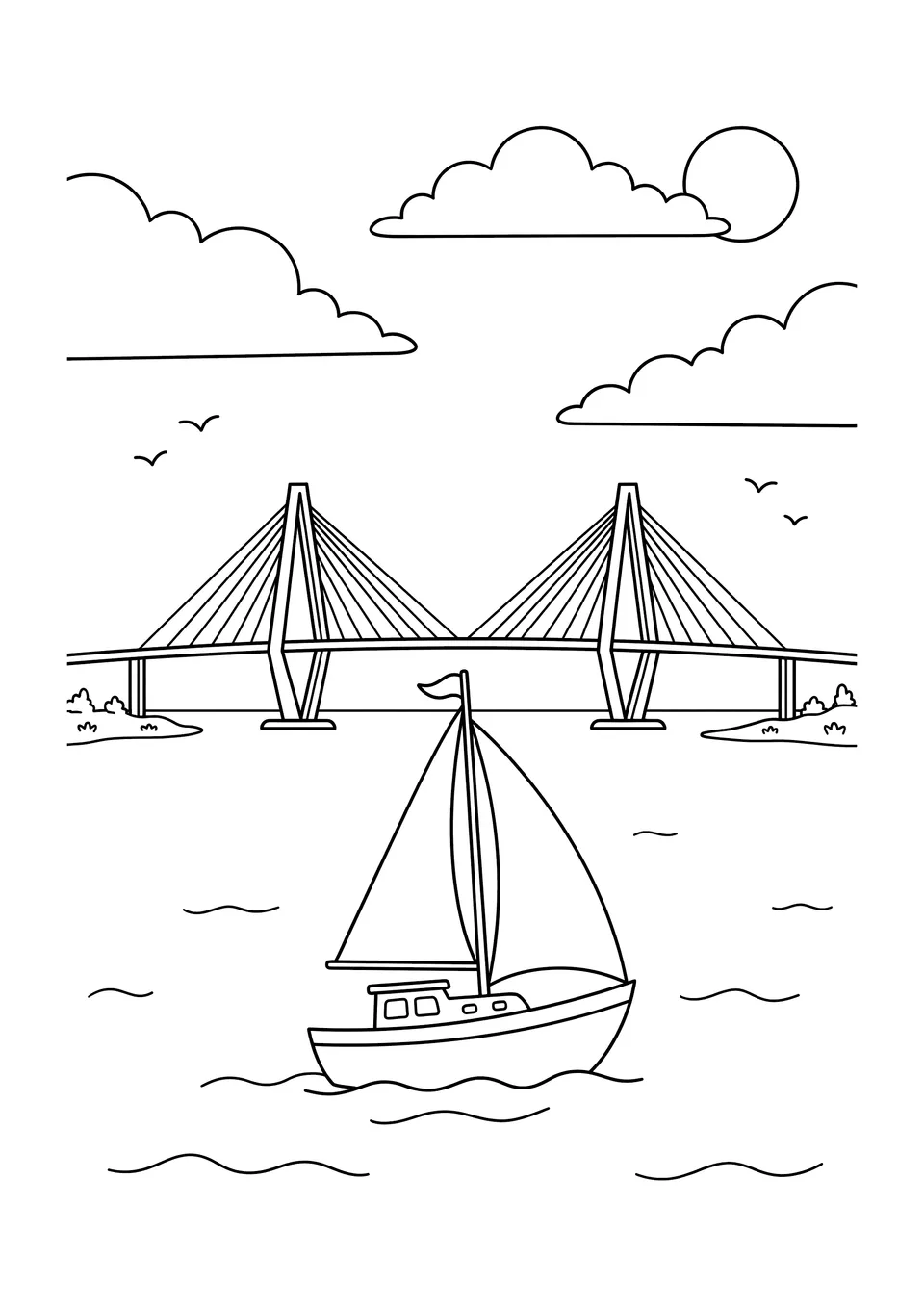
Color a sailboat beneath the Arthur Ravenel Jr. Bridge and explore how this landmark connects communities near Charleston Harbor.
PDF · Your plan’s download limits apply
A single sailboat glides across the water in the foreground. Behind it, tall towers rise above the Arthur Ravenel Jr. Bridge, a familiar sight near Charleston Harbor in South Carolina.
The bridge crosses the Cooper River, connecting the city of Charleston with the town of Mount Pleasant. The river flows toward Charleston Harbor, where it meets other waterways before reaching the Atlantic Ocean. Sailboats, fishing boats, and large cargo ships share these busy waters.
Opened in 2005, the Ravenel Bridge is a cable-stayed bridge. Thick steel cables stretch from two tall towers to support the roadway. The cables spread outward in a pattern that looks a little like a fan. This design helps carry the weight of cars and trucks across the river while leaving a wide opening below for ships.
The bridge replaced two older bridges that had become difficult to use as traffic increased. Today, it has eight lanes for vehicles. A separate path gives people room to walk or ride bicycles across the river. From the path, they can look down at the water and out toward the harbor.
The bridge is also built to withstand powerful natural forces. Coastal South Carolina can experience hurricanes, strong winds, and earthquakes, so engineers had to consider these dangers when designing it. Its height and wide span serve another purpose: they allow large vessels to travel underneath.
From a sailboat on the water, the bridge may seem enormous. From the roadway above, the boat might look like a tiny white triangle. Both views show how the harbor connects the movement of people on land with travel on the water.
What is the main idea of the passage, and which two details support it?
How do the bridge's cables help both road traffic and ships?
Why were the two older bridges replaced?
How does the separate path make the bridge useful to more people?
Which details show that engineers considered natural dangers when designing the bridge?
What does the word 'withstand' mean as it is used in the passage?
How might the bridge look different from a sailboat than the sailboat looks from the bridge?
Why does the author describe the waterways before explaining the bridge's design?
How do the bridge's height and wide span help connect land travel with water travel?
Summarize how the bridge serves different kinds of travelers.
More ways to practice with this story — every sheet is built from the text itself, answer key included where it counts.
One PDF with a cover, a contents page and every answer key at the back — color the page in, then keep going on paper.
Sentences from the passage with the capitals and punctuation removed — rewrite each one correctly.
Match the passage words to their meanings, then fill the missing words back into real sentences.
Two writing tasks that build on the passage, with plenty of lines to write on.
Download this free coloring page to explore the Arthur Ravenel Jr. Bridge and the waters around Charleston Harbor. Like other printable coloring pages, it offers a creative way to learn about a real place.
Pair the coloring page with the reading passage “A Bridge Above Charleston Harbor” to learn how cable-stayed bridges support traffic and leave room for ships. Comprehension questions and a glossary help upper elementary students review what they read.
Use this activity in the classroom or at home as part of a lesson about bridges, engineering, or South Carolina.