


fix the sentence
Sentences from the passage with the capitals and punctuation removed — rewrite each one correctly.
Web preview · Open larger preview (opens in a new tab)
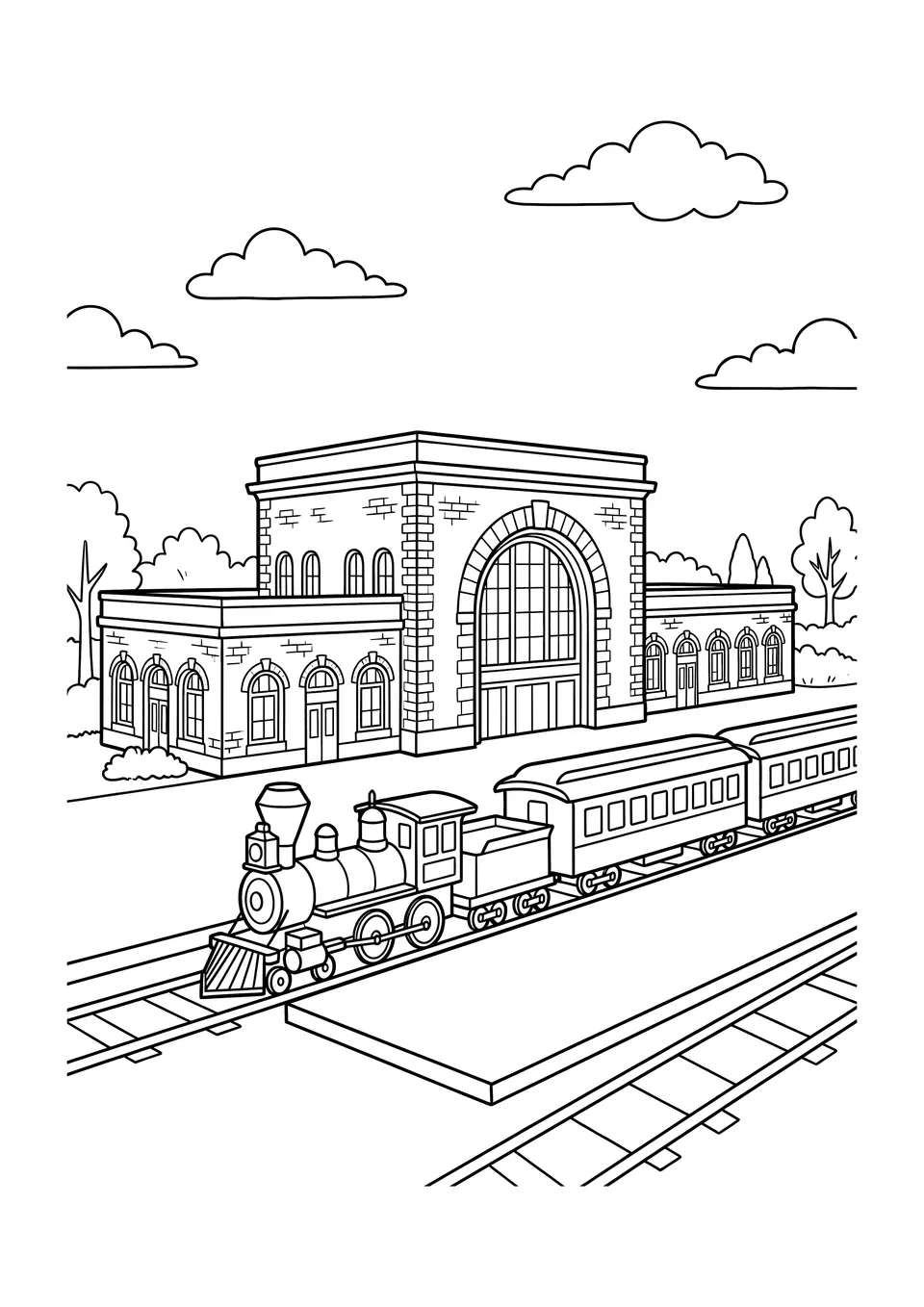
Explore railroad history with a coloring page of Chattanooga Terminal Station and an old passenger train. Pair it with the reading passage “A Station with a Second Life.”
PDF · Your plan’s download limits apply
Imagine waiting beneath a soaring dome while a passenger train pulls into the station. For many travelers in the early 1900s, that was part of a journey through Chattanooga, Tennessee.
Chattanooga Terminal Station opened in 1909. Its grand entrance and large arched windows gave travelers an impressive welcome. Inside, a central dome rose above the waiting room. People could buy tickets, check their luggage, and wait for trains that connected Chattanooga with other cities.
Outside, tracks led to platforms where passengers climbed aboard. A simple passenger train had a locomotive at the front and a line of cars behind it. The locomotive provided the power to pull the cars, while passengers sat inside and watched the landscape pass. Railroad workers helped keep the trains moving and assisted travelers along the way.
For years, rail travel was an important way to make long trips. Later, more Americans traveled by car or airplane, and fewer people rode passenger trains. The station closed in 1970, and its future became uncertain.
The building did not disappear, though. It was restored and reopened in 1973 as part of a hotel complex known as the Chattanooga Choo Choo. Some old railcars became places where guests could stay. The station’s new use gave the historic building another purpose while preserving a reminder of the days when trains brought travelers through its doors.
What is the main idea of the passage?
Which details show that the station was designed to welcome travelers in an impressive way?
How did the locomotive and passenger cars have different jobs?
How did changes in travel help lead to the station’s closing?
Why did the station’s future become uncertain after 1970?
How was the building’s use after 1973 different from its original use?
What does the word “restored” suggest about what happened to the building?
Which detail shows that parts of the railroad’s past were given a new use?
Why does the author describe the station’s early years before explaining its second life?
How does the station’s second life help preserve a reminder of railroad history?
More ways to practice with this story — every sheet is built from the text itself, answer key included where it counts.
One PDF with a cover, a contents page and every answer key at the back — color the page in, then keep going on paper.
Sentences from the passage with the capitals and punctuation removed — rewrite each one correctly.
Match the passage words to their meanings, then fill the missing words back into real sentences.
Two writing tasks that build on the passage, with plenty of lines to write on.
Download this free coloring page to see Chattanooga Terminal Station and a passenger train from the era when rail travel connected cities. The bold outlines and open spaces make it easy to print and color.
This coloring page with a reading passage also includes comprehension questions and a glossary to support learning about the station’s history and its second life. Use it alongside other free printable coloring pages in the classroom or for an at-home activity.