


fix the sentence
Sentences from the passage with the capitals and punctuation removed — rewrite each one correctly.
Web preview · Open larger preview (opens in a new tab)
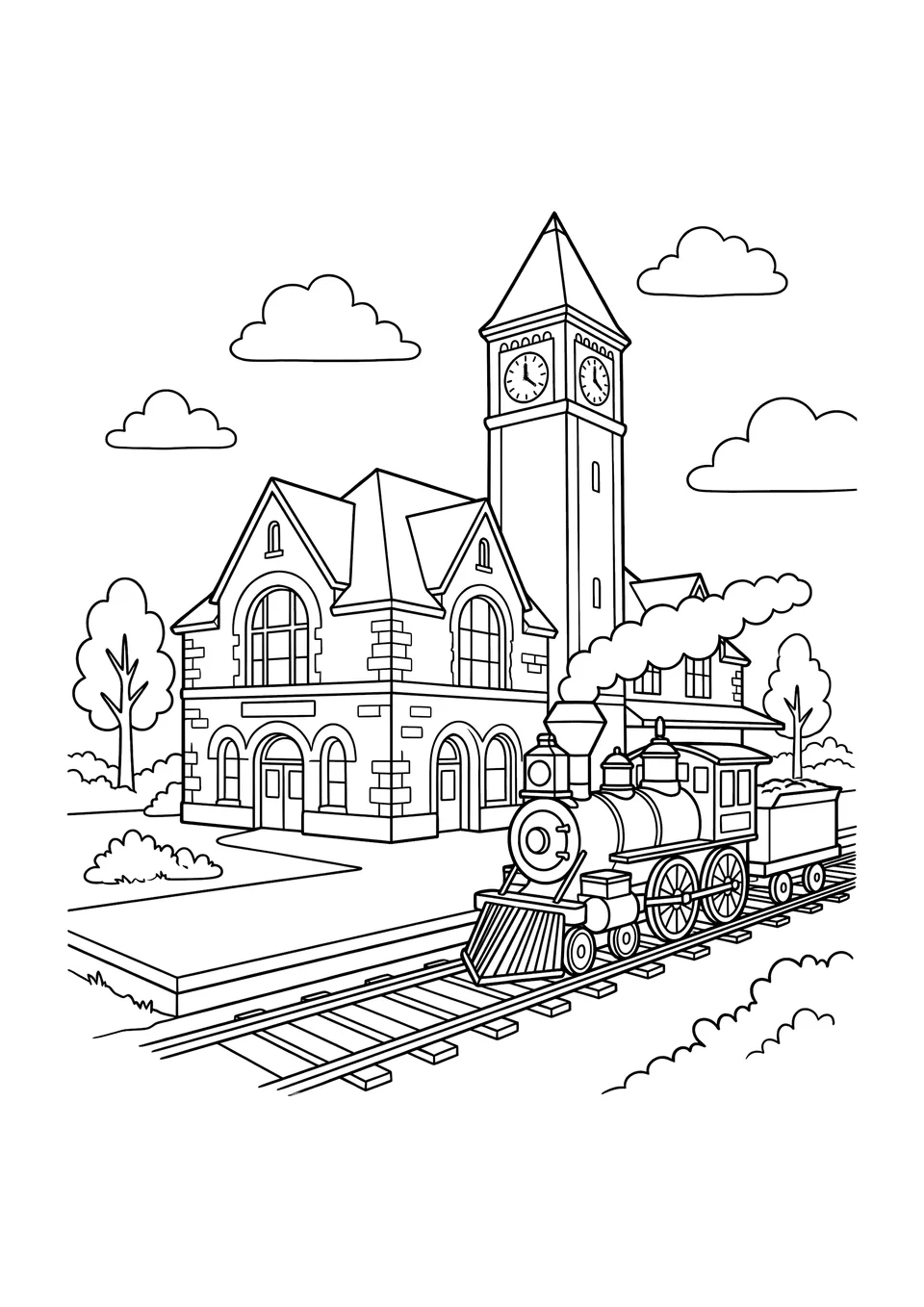
Explore railroad history with a Cheyenne Depot coloring page featuring a steam locomotive. Pair it with the informative reading passage “Cheyenne’s Gateway to the West.”
PDF · Your plan’s download limits apply
Imagine waiting for a train as a steam locomotive rolls toward a grand stone depot. In the late 1800s, scenes like this were part of life in Cheyenne, Wyoming, a city shaped by the railroad.
The Cheyenne Depot was built by the Union Pacific Railroad and opened in 1887. Its thick sandstone walls, arched windows, and tall clock tower made it stand out. The building served as a busy passenger station, where travelers could buy tickets, wait indoors, and board trains. People arriving in Cheyenne could step off the train close to the heart of the city.
Steam locomotives powered many trains in those days. A fire heated water in a large boiler, turning it into steam. The pressure of the steam helped move pistons connected to the locomotive’s driving wheels. As the wheels turned, the engine pulled passenger cars or freight cars along the rails.
Railroads carried more than travelers. Trains brought supplies to growing communities and transported cattle and other goods to distant markets. Railroad workers also needed places to live, shop, and eat, helping Cheyenne grow around the rail line.
Today, the historic depot no longer serves as a regular passenger station. The building houses the Cheyenne Depot Museum, where visitors can explore the city’s railroad history. Its stone walls and clock tower remain reminders of a time when the arrival of a train brought new people, goods, and possibilities to town.
What is the main idea of the passage, and which two details support it?
How did the depot make train travel more convenient for passengers?
How did steam help a locomotive pull train cars?
How did the railroad help Cheyenne grow? Give two examples.
Why might the depot’s location near the heart of the city have been useful to arriving travelers?
What does the word “freight” mean in the passage?
How is the depot used differently today than it was in the late 1800s?
Why does the author describe the depot’s stone walls and clock tower at both the beginning and the end?
How does the paragraph about steam locomotives add to the reader’s understanding of railroad history?
Summarize how the railroad brought new possibilities to Cheyenne.
More ways to practice with this story — every sheet is built from the text itself, answer key included where it counts.
One PDF with a cover, a contents page and every answer key at the back — color the page in, then keep going on paper.
Sentences from the passage with the capitals and punctuation removed — rewrite each one correctly.
Match the passage words to their meanings, then fill the missing words back into real sentences.
Two writing tasks that build on the passage, with plenty of lines to write on.
Download this free coloring page to explore the Cheyenne Depot and the steam locomotives that helped connect communities. The simple outlines make it a welcoming addition to a collection of printable coloring pages.
Use the coloring page with the reading passage “Cheyenne’s Gateway to the West” to learn how trains carried people and goods. Comprehension questions and a glossary can support discussion of railroad history and new vocabulary.
This activity works well for classroom lessons or at-home learning. Print a copy for students to color as they read about Cheyenne’s historic station.