


fix the sentence
Sentences from the passage with the capitals and punctuation removed — rewrite each one correctly.
Web preview · Open larger preview (opens in a new tab)
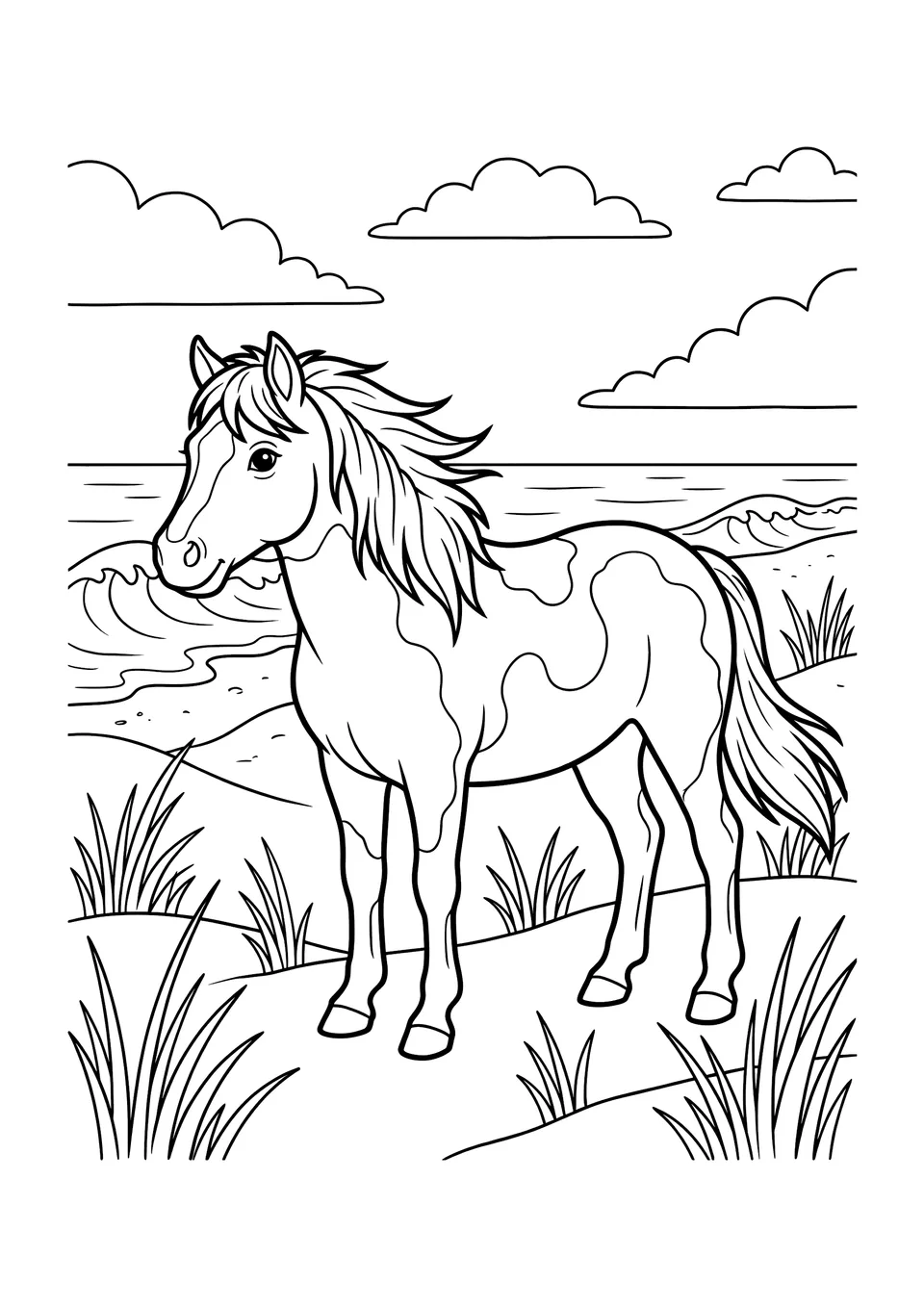
Color a Chincoteague pony by the Atlantic shore while learning about wild ponies and their island home.
PDF · Your plan’s download limits apply
A pony stands in tall grass near the sea. Wind blows its mane as waves roll onto the sand.
This is a Chincoteague pony. Ponies like this live on Assateague Island, off the coasts of Virginia and Maryland.
The island has beaches, dunes, and marshes. Dunes are hills of sand. Marshes are wet places where grasses grow.
The ponies live in groups called herds. They spend much of the day looking for food. They eat grasses and other plants that grow on the island.
Plants that grow near the sea can be salty. The ponies drink fresh water, too. They find it in ponds and other wet places.
The island can be a hard place to live. In summer, the sun is hot, and bugs bite. In winter, cold winds blow across the sand.
The ponies grow thick coats for the cold months. When warmer days come, they shed some of that hair.
A young pony is called a foal. A foal stays close to its mother and drinks her milk. As it grows, it begins to eat plants, too.
People come to the island to see the ponies. The ponies may look calm, but they are still wild animals. They can bite or kick if people get too close.
Visitors should give the ponies plenty of space. They should not feed or touch them. From a safe spot, people can watch a pony graze while clouds drift over the Atlantic shore.
Where do Chincoteague ponies live?
What do the ponies eat on the island?
Where do the ponies find fresh water?
What makes the island hard for ponies in summer?
How do the ponies stay warm during cold months?
What does a foal drink before it begins to eat plants?
Why should visitors stay away from the ponies?
What does the word “shed” mean when the ponies shed hair?
What might a pony do if someone gets too close?
What is this passage mostly about?
More ways to practice with this story — every sheet is built from the text itself, answer key included where it counts.
One PDF with a cover, a contents page and every answer key at the back — color the page in, then keep going on paper.
Sentences from the passage with the capitals and punctuation removed — rewrite each one correctly.
Match the passage words to their meanings, then fill the missing words back into real sentences.
Two writing tasks that build on the passage, with plenty of lines to write on.
Download this free coloring page to see a Chincoteague pony among the dunes. Like other printable coloring pages, it offers open spaces for young artists to make their own colorful scene.
Pair the coloring page with the reading passage, “Ponies by the Sea,” to explore island habitats and how wild ponies live. Use the comprehension questions and glossary to support understanding and build vocabulary.
This activity is suitable for classroom or at-home use. Print a copy for a lesson about animals, a quiet reading activity, or creative time.