


fix the sentence
Sentences from the passage with the capitals and punctuation removed — rewrite each one correctly.
Web preview · Open larger preview (opens in a new tab)
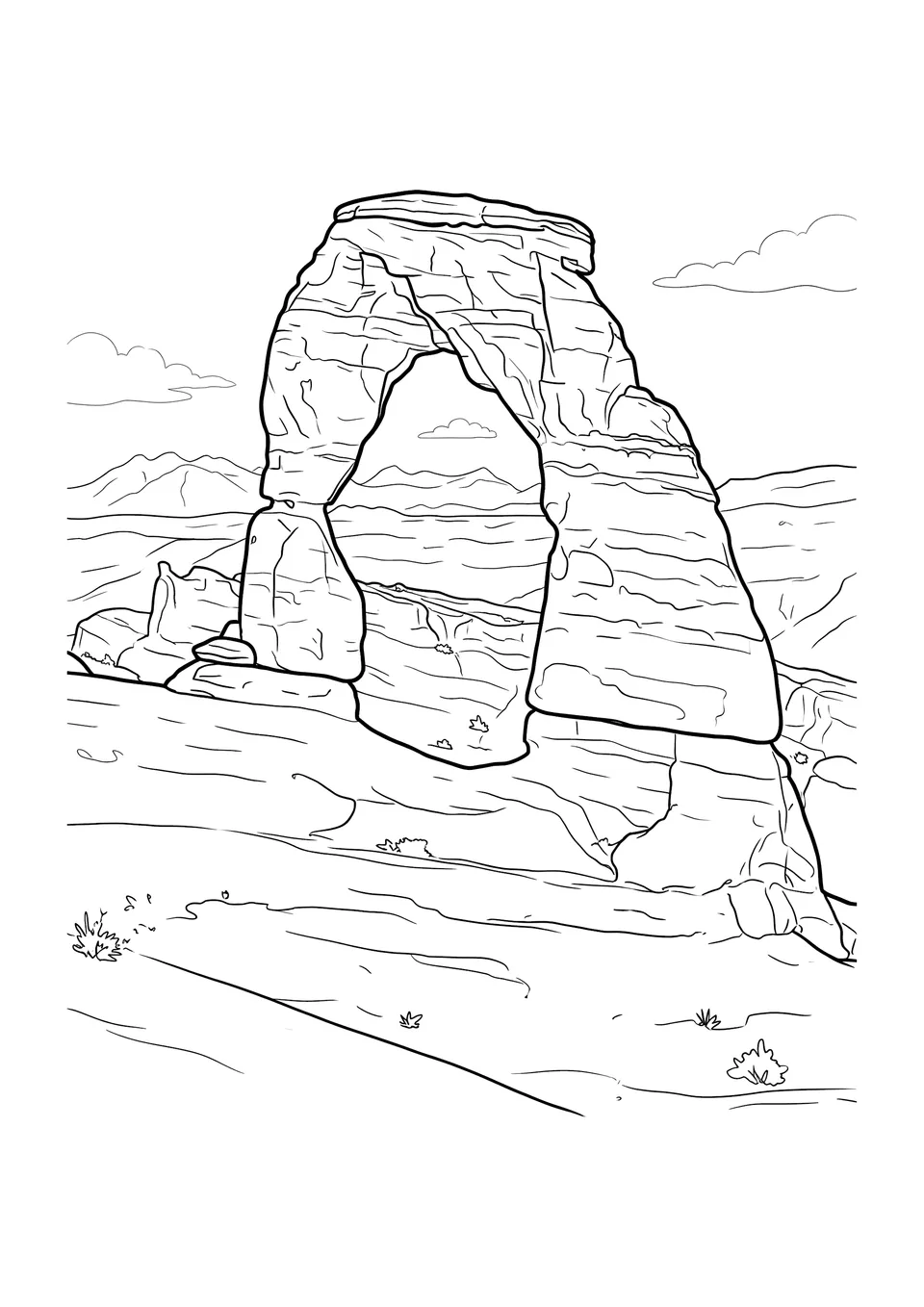
Color Utah’s famous freestanding stone arch while learning how natural forces shaped it. Pair the page with the informative reading passage, “Delicate Arch: A Window in Stone.”
PDF · Your plan’s download limits apply
In the red-rock desert of eastern Utah, a giant stone opening stands against the sky. Delicate Arch rises on its own, with no cliff attached to either side. Its curved top and thick stone legs make it one of the most recognizable sights in Arches National Park.
The arch is made of sandstone, rock formed from grains of sand pressed and cemented together over a long time. Millions of years ago, windblown dunes covered this region. As layers of sand built up, they eventually became rock. Later, movement underground helped crack and bend the rock layers. Erosion, the wearing away of rock, slowly shaped the landscape.
Delicate Arch was once part of a narrow wall of sandstone called a fin. Water seeped into cracks in the rock. When the water froze, it expanded and helped widen the cracks. Over many years, pieces broke away. Wind and rain also helped wear down the stone. Eventually, an opening formed, leaving the freestanding arch seen today.
The opening beneath Delicate Arch is about 46 feet high and 32 feet wide. The arch may look strong, but it continues to change. Water, ice, and other forces still wear away its surface. Given enough time, the arch could collapse, just as other arches have done.
Visitors can see Delicate Arch from viewpoints or hike a trail to get closer. The hike crosses exposed rock and has little shade, so carrying water and preparing for the weather are important. From near the arch, visitors can look through its opening toward the distant landscape. The view reveals both a remarkable shape and a record of the forces that formed it.
What is the main idea of the passage, and which two details support it?
How did sand from ancient dunes become part of Delicate Arch?
How did freezing water help form the arch?
Why does the passage describe Delicate Arch as freestanding?
What details show that Delicate Arch is still changing?
How are the forces that formed the arch related to the forces affecting it today?
Why might visitors need to prepare for the weather before hiking to the arch?
What does the word “exposed” suggest about the rock along the trail?
How does the passage organize information about the arch’s formation?
What can visitors learn by looking at the arch as more than a remarkable shape?
More ways to practice with this story — every sheet is built from the text itself, answer key included where it counts.
One PDF with a cover, a contents page and every answer key at the back — color the page in, then keep going on paper.
Sentences from the passage with the capitals and punctuation removed — rewrite each one correctly.
Match the passage words to their meanings, then fill the missing words back into real sentences.
Two writing tasks that build on the passage, with plenty of lines to write on.
Download this free Delicate Arch coloring page to explore one of Utah’s most recognizable natural landmarks. The bold outlines and open spaces make it easy to print and color.
Pair the printable coloring page with the reading passage, “Delicate Arch: A Window in Stone,” to learn how sandstone, water, ice, and erosion shaped the arch. Comprehension questions and a glossary help upper elementary readers review the text and build vocabulary.
Use this coloring page with its reading passage in the classroom or at home as part of a lesson on natural arches, erosion, or national parks.