


fix the sentence
Sentences from the passage with the capitals and punctuation removed — rewrite each one correctly.
Web preview · Open larger preview (opens in a new tab)
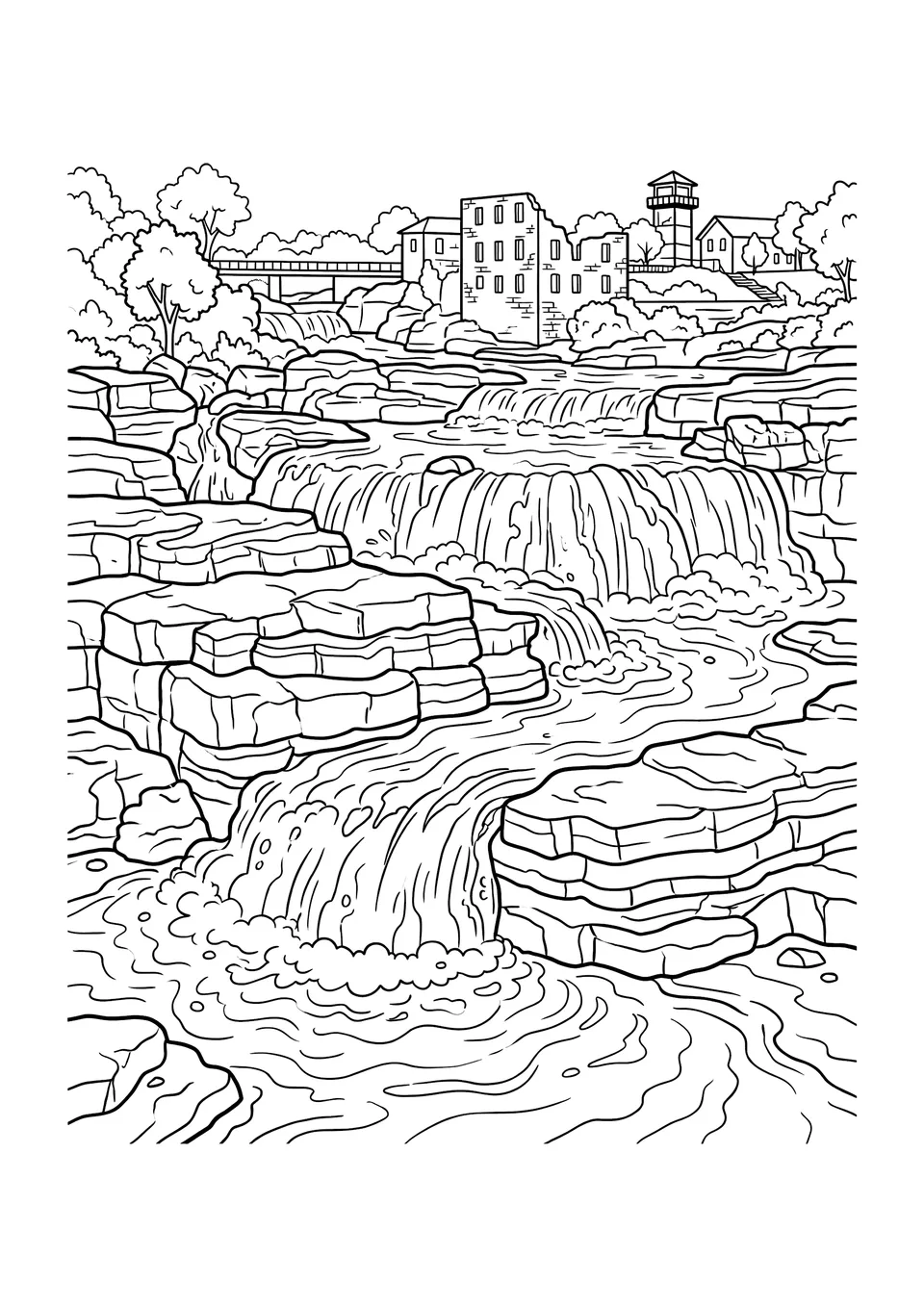
Explore the waterfalls and pink rock ledges of Falls Park with this printable coloring page. Pair it with the informative reading passage “Pink Rocks and Rushing Water.”
PDF · Your plan’s download limits apply
In the middle of Sioux Falls, South Dakota, a river tumbles over broad steps of pink rock. The rushing water and rocky ledges give Falls Park its name and make it a striking place to explore.
The waterfalls are part of the Big Sioux River. Rather than dropping over one tall cliff, the river flows over a series of ledges. In some places, water spreads into thin, white sheets. In others, it rushes through narrow gaps and crashes into pools below. The amount of water can change with the seasons and rainfall, so the falls do not look exactly the same every day.
The pink ledges are made of Sioux quartzite, a very hard rock. Long ago, layers of sand were buried and pressed together. Over an enormous span of time, the grains became tightly cemented, forming the rock visible today. Minerals in the rock help give it its pink and reddish colors.
The river has helped shape the falls by wearing away rock over a long period. Because quartzite is so hard, this process is slow. Water can work into cracks, and pieces of rock can eventually break loose. The uneven ledges left behind direct the river into different channels.
People have long been drawn to the falls. In the 1800s, settlers built mills nearby to use the river's power. The remains of the Queen Bee Mill can still be seen in the park. Today, visitors can walk along paths and look at the falls from viewing areas. The wet rocks and swift water can be dangerous, so staying in designated areas is important.
At Falls Park, an ancient rock and a flowing river come together in the heart of a modern city.
What is the main idea of the passage, and which two details support it?
How are the waterfalls at Falls Park different from a waterfall that drops over one tall cliff?
Why might the falls look different after a rainy season?
How did buried layers of sand become the pink rock visible today?
Why does the river change the quartzite ledges slowly?
How do cracks and uneven ledges affect the shape and flow of the river?
What does the word “designated” mean in the passage, and why should visitors stay in those areas?
How did people use the falls in the 1800s, and how do visitors enjoy them today?
Why does the author include information about both the Queen Bee Mill and modern viewing areas?
How does the passage organize its explanation of the falls, rocks, and people?
More ways to practice with this story — every sheet is built from the text itself, answer key included where it counts.
One PDF with a cover, a contents page and every answer key at the back — color the page in, then keep going on paper.
Sentences from the passage with the capitals and punctuation removed — rewrite each one correctly.
Match the passage words to their meanings, then fill the missing words back into real sentences.
Two writing tasks that build on the passage, with plenty of lines to write on.
Discover how the Big Sioux River flows over hard Sioux quartzite ledges in Falls Park. This free coloring page gives upper elementary students a chance to explore a South Dakota landmark while learning about waterfalls and rocks.
Download the coloring page to print for classroom or at-home use. Pair this printable coloring page with the reading passage, comprehension questions, and glossary to build vocabulary and check understanding.
Looking for free coloring pages that connect art and learning? This coloring page with a reading passage offers a way to bring geography and earth science together.