


fix the sentence
Sentences from the passage with the capitals and punctuation removed — rewrite each one correctly.
Web preview · Open larger preview (opens in a new tab)
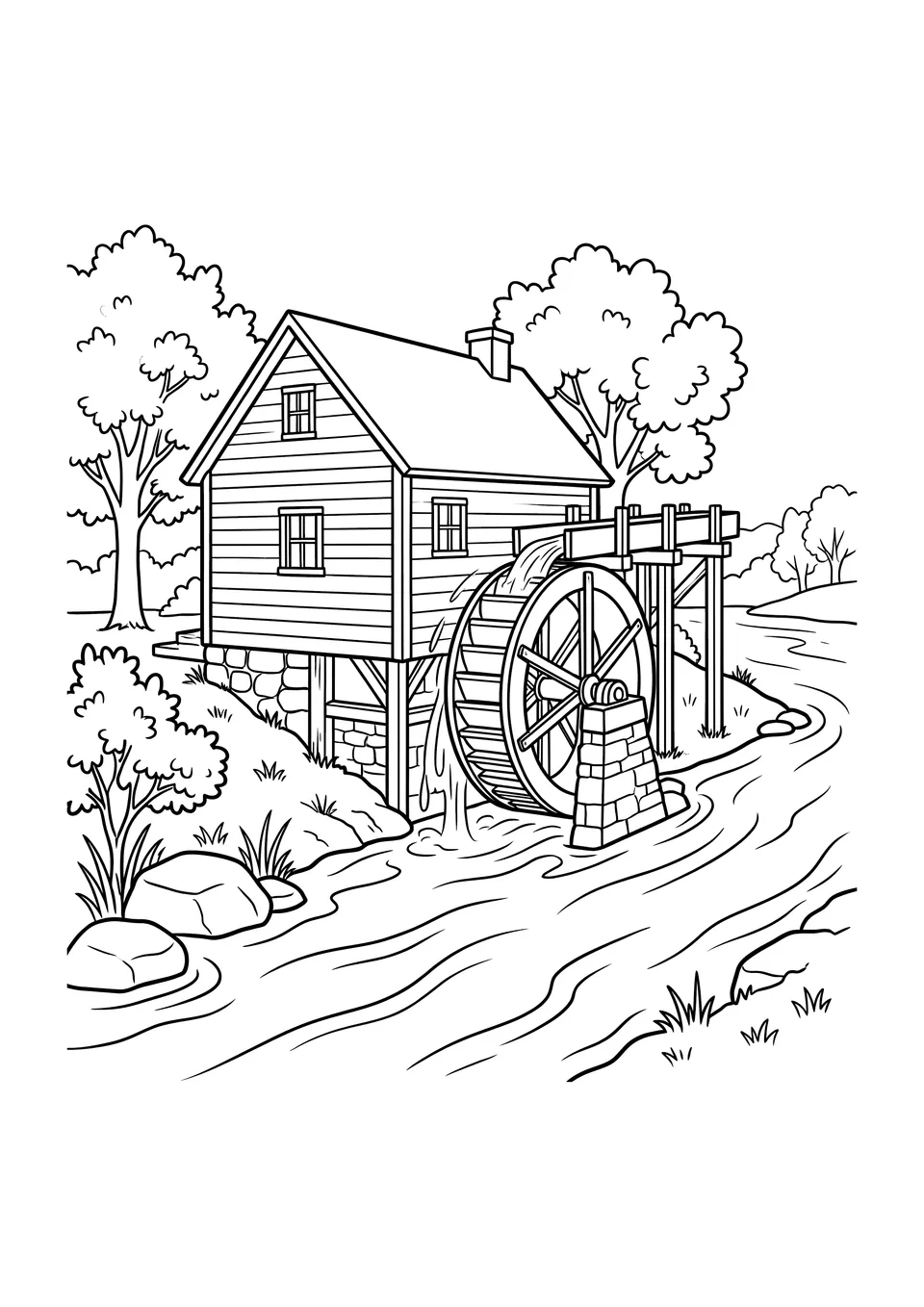
Explore how flowing water powered a historic mill beside the Fox River. Color the scene while learning about water power in Appleton, Wisconsin.
PDF · Your plan’s download limits apply
Before electric motors became common, flowing water could do heavy work. In Appleton, Wisconsin, people used the power of the Fox River to operate mills. The river’s drop in elevation made it a valuable source of energy for the growing community.
Imagine a small historic mill beside the river. Water is guided toward a wheel or turbine, a machine with blades that turn as water passes through them. The moving water pushes the blades, making a shaft spin. Inside the mill, gears carry that turning motion to machines that perform useful work.
Different mills produced different goods. A flour mill could use turning millstones to grind grain into flour. A sawmill could use water power to drive a saw through logs. Appleton became especially known for its paper industry, which also benefited from the Fox River’s power and water.
Mill workers had to pay close attention to the water supply and the machinery. Too little flow could slow the equipment. Gears and other moving parts needed care, and working near them could be dangerous. Dams and channels helped direct and control water, but they also changed the river and affected fish and other living things.
Today, a mill’s simple chain of motion still offers a powerful idea: flowing water can transfer energy to machinery. In modern hydroelectric plants, moving water turns turbines connected to generators, which produce electricity. The equipment has changed, but the river remains a source of energy.
Why was the Fox River a valuable energy source for Appleton?
How did energy travel from the moving water to machines inside a mill?
How did a flour mill and a sawmill use the same source of power for different jobs?
What details show that mill workers needed to pay attention to both the water and the machinery?
Why might too little water flow have been a problem for a mill?
How did dams and channels help mills, and what effect did they have on the river?
What does the word 'direct' mean when the passage describes dams and channels?
How are historic mills and modern hydroelectric plants alike and different in their use of water power?
Why does the author discuss modern hydroelectric plants at the end of the passage?
What is the main idea of the passage, and which two details support it?
More ways to practice with this story — every sheet is built from the text itself, answer key included where it counts.
One PDF with a cover, a contents page and every answer key at the back — color the page in, then keep going on paper.
Sentences from the passage with the capitals and punctuation removed — rewrite each one correctly.
Match the passage words to their meanings, then fill the missing words back into real sentences.
Two writing tasks that build on the passage, with plenty of lines to write on.
Download this coloring page for a printable look at a small water-powered mill beside the Fox River. The flowing water and wheel help students picture how a river can transfer energy to machinery.
Pair the coloring page with the reading passage, “The River That Powered a Mill,” then use the comprehension questions and glossary to review key ideas and vocabulary.
This free coloring page is suited to upper elementary lessons in the classroom or at home. Add it to a collection of printable coloring pages about energy, local history, or places.