


fix the sentence
Sentences from the passage with the capitals and punctuation removed — rewrite each one correctly.
Web preview · Open larger preview (opens in a new tab)
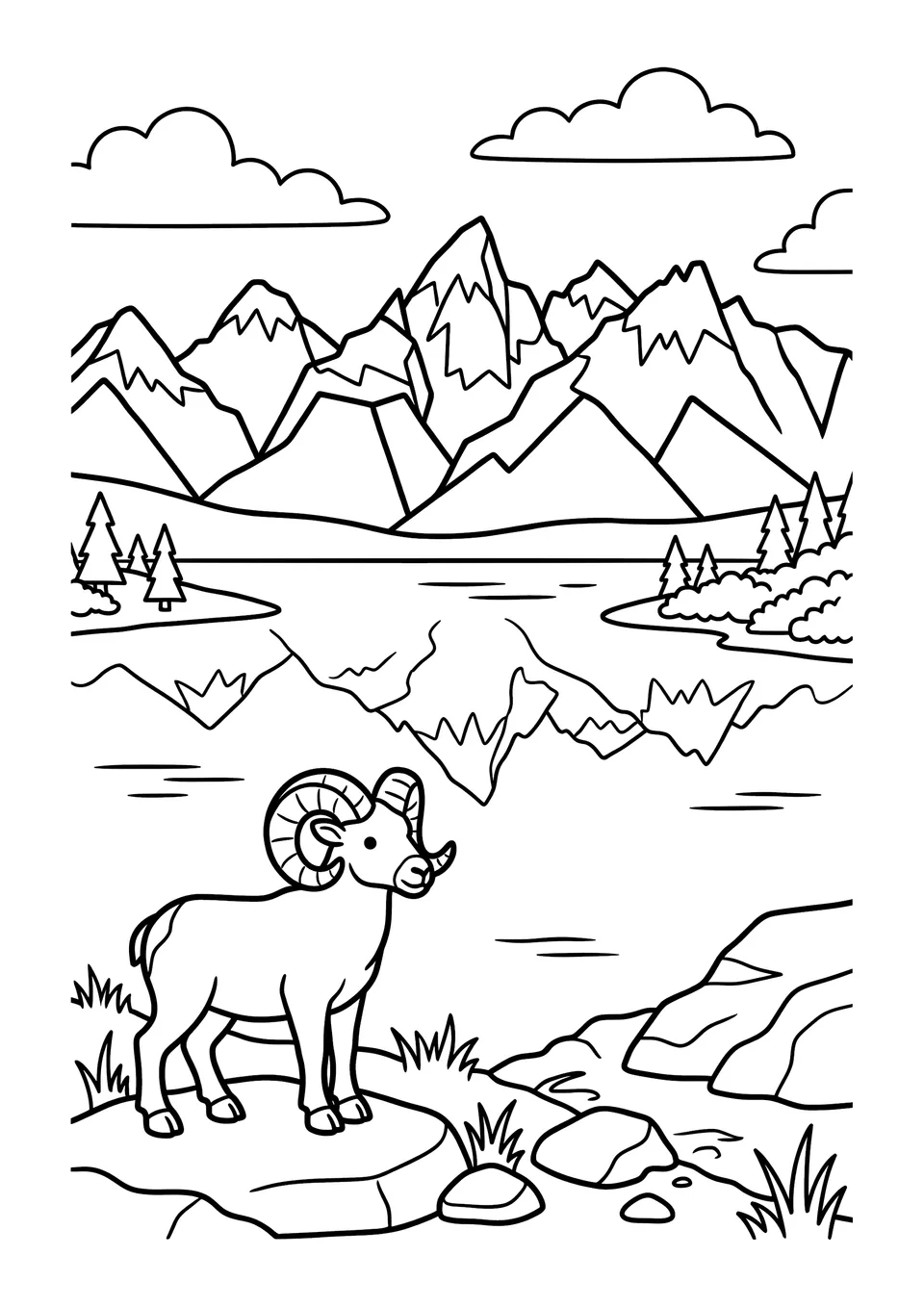
Color a bighorn sheep beside a lake reflecting the Grand Teton peaks. Read about mountain wildlife and how reflections form.
PDF · Your plan’s download limits apply
Can a mountain appear upside down? On a calm day, the Grand Teton peaks can seem to do just that in a lake.
The Grand Tetons rise in Wyoming. Their tall, sharp peaks reach into the sky. Snow rests on some peaks, even when the land below is warm.
A still lake can act like a mirror. Light bounces off the peaks and then off the smooth water. That light reaches our eyes, and we see the peaks in the lake.
The upside-down view is called a reflection. When wind blows, waves move across the lake. The reflection may wiggle or break apart.
Near the lake, a bighorn sheep may stand on a rocky shore. Bighorn sheep have horns that grow from their heads. A ram, or male sheep, can have large horns that curl.
Bighorn sheep are well suited to steep, rocky land. Their hooves have hard edges and softer pads. These help the sheep grip rocks as they climb.
The sheep eat grass and other plants. They can find food on slopes and in open areas. They also need water to drink.
People who spot a bighorn sheep should give it plenty of room. A wild sheep needs space to move and find food. Watching from far away helps keep both people and sheep safe.
On a quiet day, the lake, rocks, peaks, and sheep are all part of the same mountain scene. The lake holds no mountains inside it, but its smooth surface can show their shapes.
Where do the Grand Tetons rise?
What is the passage mostly about?
What happens to light before we see the peaks in the lake?
What does the word “reflection” mean in the passage?
What may happen to the reflection when wind makes waves?
What can a ram's horns look like?
How do a bighorn sheep's hooves help it climb?
Where can bighorn sheep find plants to eat?
Why should people watch bighorn sheep from far away?
What might happen to the view of the peaks if a calm lake becomes windy?
More ways to practice with this story — every sheet is built from the text itself, answer key included where it counts.
One PDF with a cover, a contents page and every answer key at the back — color the page in, then keep going on paper.
Sentences from the passage with the capitals and punctuation removed — rewrite each one correctly.
Match the passage words to their meanings, then fill the missing words back into real sentences.
Two writing tasks that build on the passage, with plenty of lines to write on.
Download this free coloring page to explore the Grand Teton peaks, a calm lake, and a bighorn sheep. Its bold outlines and open spaces make it a good choice for young artists.
Pair the printable coloring page with the reading passage “Peaks, Lake, and Bighorn Sheep” to learn about reflections and mountain wildlife. Comprehension questions and a glossary can help children review new ideas and vocabulary.
Use this and other free coloring pages in the classroom or at home for a reading and art activity.