


fix the sentence
Sentences from the passage with the capitals and punctuation removed — rewrite each one correctly.
Web preview · Open larger preview (opens in a new tab)
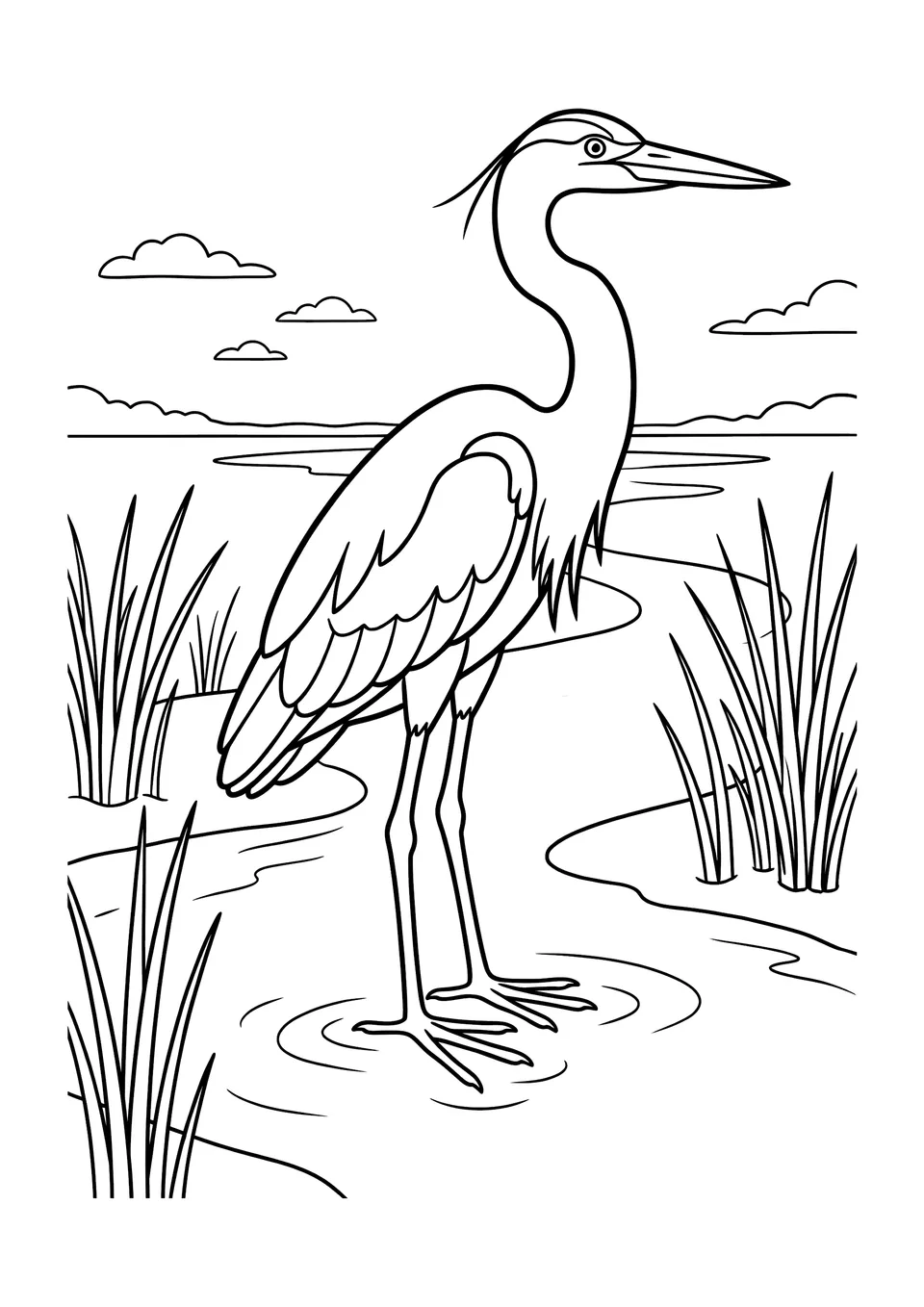
Color a great blue heron standing in a South Carolina salt marsh. Explore its habitat and hunting habits as you read “A Heron in the Salt Marsh.”
PDF · Your plan’s download limits apply
A tall bird stands still in the water. It is a great blue heron. Its long legs rise above the muddy ground.
The heron stands in a salt marsh on the coast of South Carolina. A salt marsh is a wet place near the sea. Tall grasses grow all around the bird.
Small streams wind through the grass. The water rises and falls with the tides. When the tide comes in, more water flows into the marsh.
The heron has blue-gray feathers and a long neck. Its sharp bill looks like a spear. Its long toes help it walk on soft mud.
The bird looks down at the water. It may stand still for a long time. Then, with a quick jab of its bill, it can catch a fish.
A great blue heron eats more than fish. It may also eat crabs, frogs, and other small animals. It swallows its food whole.
The marsh is a good place for the heron to hunt. Small fish and crabs find food and shelter among the grasses. The heron looks for them in the shallow water.
When the bird takes off, its wide wings lift it into the air. It folds its long neck into a curve as it flies. Its legs trail behind its body.
Later, a heron may return to the marsh. It can stand among the tall grass and wait for its next meal.
What is this passage mostly about?
Where does the great blue heron stand?
What happens to the marsh when the tide comes in?
How do the heron's long toes help it?
What does the heron do just before it catches a fish?
Besides fish, what animals may the heron eat?
Why is the marsh a good place for the heron to hunt?
What happens to the heron's neck when it flies?
What does the word “shelter” mean in the passage?
Why might the heron return to the marsh later?
More ways to practice with this story — every sheet is built from the text itself, answer key included where it counts.
One PDF with a cover, a contents page and every answer key at the back — color the page in, then keep going on paper.
Sentences from the passage with the capitals and punctuation removed — rewrite each one correctly.
Match the passage words to their meanings, then fill the missing words back into real sentences.
Two writing tasks that build on the passage, with plenty of lines to write on.
Download this free coloring page to bring a coastal habitat to life. The simple outlines and open spaces make it easy for young learners to color the heron, grasses, and tidal water.
Pair the printable coloring page with the reading passage “A Heron in the Salt Marsh.” Comprehension questions and a glossary can help children practice understanding the text and learn new words.
Use this activity in the classroom or at home as part of a lesson about birds, habitats, or South Carolina wildlife. It is a useful addition to a collection of free coloring pages for young learners.