


fix the sentence
Sentences from the passage with the capitals and punctuation removed — rewrite each one correctly.
Web preview · Open larger preview (opens in a new tab)
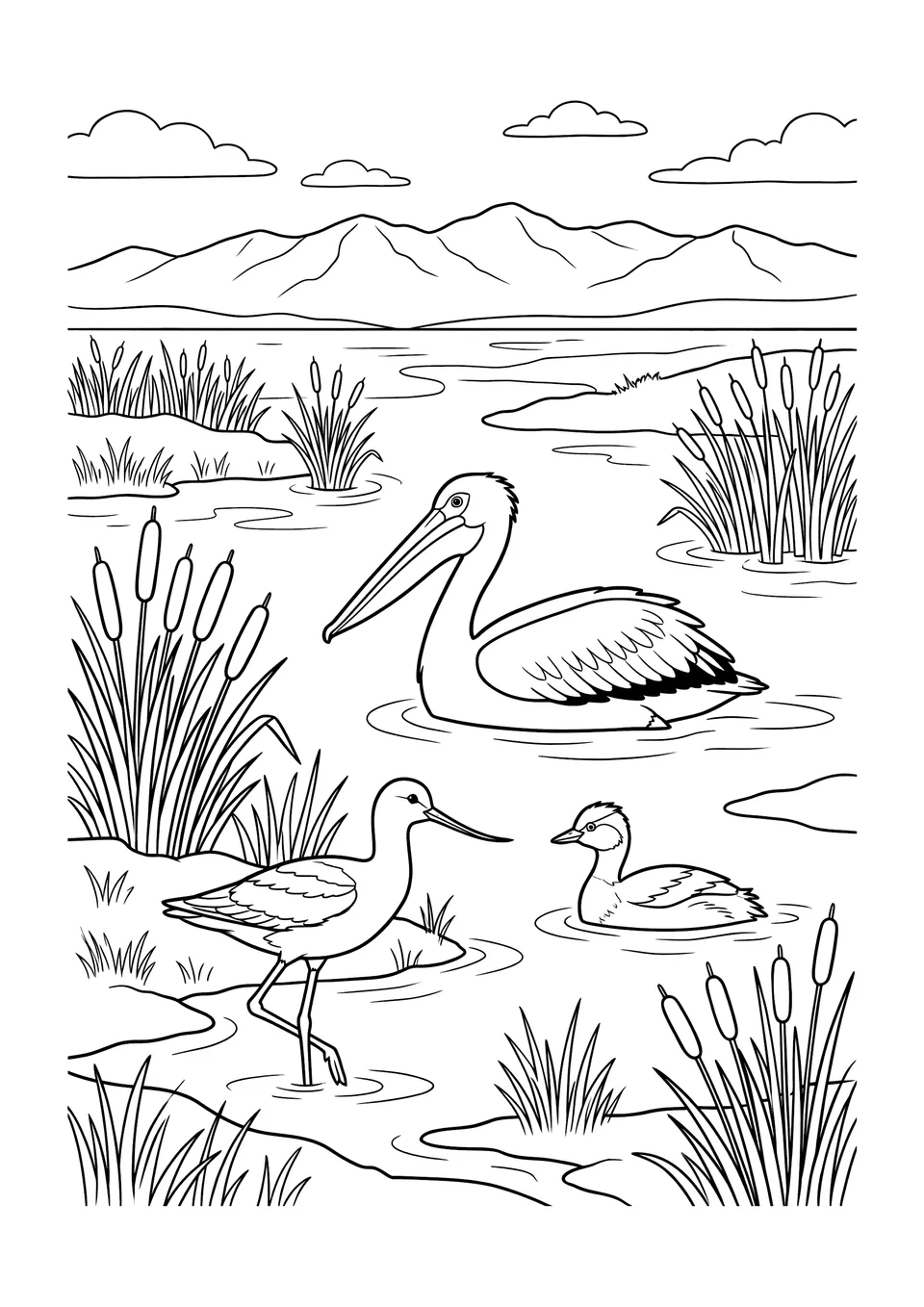
Explore Utah’s Great Salt Lake wetlands with an American white pelican and other waterbirds. Print the coloring page alongside an informative reading passage.
PDF · Your plan’s download limits apply
A huge white bird glides over the wetlands near Utah’s Great Salt Lake. Its black wing feathers show as it flies. This American white pelican is one of many waterbirds that depend on the lake and the marshes around it.
Wetlands are places where water covers or soaks the ground for part or all of the year. Around the Great Salt Lake, rivers and streams bring fresh water into marshes filled with plants such as bulrushes. These marshes provide food and shelter for birds, even though much of the lake itself is too salty for fish.
The American white pelican has a long bill and a stretchy pouch beneath it. Unlike brown pelicans, which dive for fish, American white pelicans usually scoop fish from the water while swimming. Sometimes they work together, swimming in a group to herd fish into shallow water. The birds then dip their bills and catch their meal.
Other waterbirds find different foods. Long-legged American avocets sweep their slender, upturned bills through shallow water to catch small creatures. Eared grebes gather on the lake and eat tiny brine shrimp. These shrimp can live in the salty water where fish cannot.
The wetlands are especially important during migration, when birds travel between seasonal homes. Some stop to rest and refuel before continuing their journeys; others stay to nest and raise young. When less water reaches the wetlands, feeding and nesting areas can shrink. Protecting the water that flows into these habitats helps give pelicans and many other birds places to live, feed, and rest.
What is the main idea of the passage? Give two details that support it.
How do American white pelicans and American avocets catch their food differently?
Why can eared grebes find food in salty lake water where fish cannot live?
How does swimming together help American white pelicans catch fish?
What does the word “refuel” mean when it describes birds stopping during migration?
Why are the marshes important to birds even though much of the lake is too salty for fish?
What might happen to birds if less water reaches the wetlands? Use a detail from the passage.
Why does the author begin with a description of a pelican flying over the wetlands?
How does the passage move from discussing one kind of bird to explaining why the wetlands matter to many birds?
Summarize two ways birds use the wetlands during migration.
More ways to practice with this story — every sheet is built from the text itself, answer key included where it counts.
One PDF with a cover, a contents page and every answer key at the back — color the page in, then keep going on paper.
Sentences from the passage with the capitals and punctuation removed — rewrite each one correctly.
Match the passage words to their meanings, then fill the missing words back into real sentences.
Two writing tasks that build on the passage, with plenty of lines to write on.
Download this free coloring page to meet an American white pelican, an American avocet, and an eared grebe. The printable coloring page shows birds that depend on the Great Salt Lake and its wetlands.
Pair the coloring page with the reading passage, “Waterbirds of the Great Salt Lake,” to learn how these birds find food and use wetland habitats. Comprehension questions and a glossary can help students explore the passage and practice new vocabulary.
Use this activity in the classroom or at home as part of an upper elementary lesson about birds, migration, or wetland conservation.