


fix the sentence
Sentences from the passage with the capitals and punctuation removed — rewrite each one correctly.
Web preview · Open larger preview (opens in a new tab)
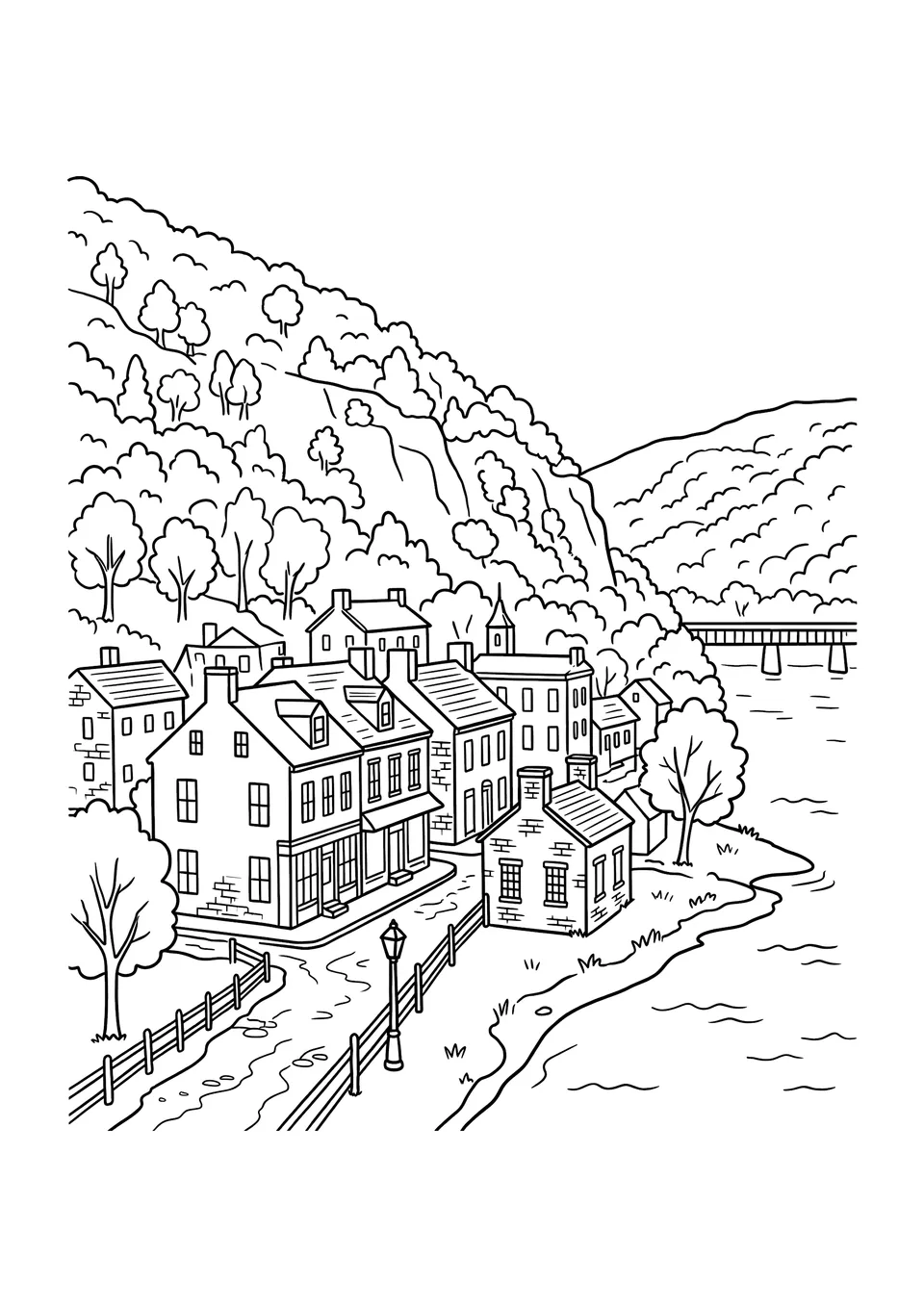
Explore historic Harpers Ferry, where the Shenandoah and Potomac rivers meet. Color the town and surrounding hills as you learn about its past.
PDF · Your plan’s download limits apply
At Harpers Ferry, two rivers meet beneath steep, wooded hills. The Shenandoah River flows into the Potomac River beside this small West Virginia town. Near the water, old brick and stone buildings stand along narrow streets, offering glimpses of the town’s eventful past.
The rivers helped shape Harpers Ferry’s early growth. Flowing water provided power for mills and machinery, while the rivers and nearby transportation routes connected the town with other places. In 1799, the United States government opened an armory here. Workers at the armory made and repaired weapons, and the growing town became a busy manufacturing center.
Harpers Ferry also played a part in the struggle over slavery. In 1859, abolitionist John Brown led a raid on the federal armory. Brown and his followers hoped to seize weapons and help enslaved people gain their freedom. The raid failed, and Brown was captured and later executed. His actions increased tensions between Americans who opposed slavery and those who supported it.
During the Civil War, armies fought for control of Harpers Ferry because of its location and transportation routes. The town changed hands several times, and fighting damaged many buildings.
Today, visitors can walk through the historic lower town and see buildings that have been preserved or restored. Some contain exhibits about the people who lived and worked there. From the streets near the rivers, visitors can look up at the surrounding hills and imagine how the landscape shaped the town’s history.
How did the rivers help Harpers Ferry grow into a manufacturing center?
What central idea connects the town’s rivers, transportation routes, and historic events?
Why did John Brown and his followers raid the armory?
How did Brown’s raid affect tensions over slavery, even though it failed?
Why did armies fight for control of Harpers Ferry during the Civil War?
How were the rivers important to the town’s early growth, while transportation routes were important during the Civil War?
What does the word “preserved” mean when describing buildings in the lower town?
Why might the author describe the town’s landscape before discussing its history?
Which details show that visitors can learn about both the town’s people and its surroundings?
How does the passage move from Harpers Ferry’s past to its present?
More ways to practice with this story — every sheet is built from the text itself, answer key included where it counts.
One PDF with a cover, a contents page and every answer key at the back — color the page in, then keep going on paper.
Sentences from the passage with the capitals and punctuation removed — rewrite each one correctly.
Match the passage words to their meanings, then fill the missing words back into real sentences.
Two writing tasks that build on the passage, with plenty of lines to write on.
Download this free coloring page to discover the historic buildings, rivers, and hills of Harpers Ferry. Like other printable coloring pages, it offers open spaces for students to make the scene their own.
Pair the coloring page with the reading passage “Where Two Rivers Meet” to learn how the landscape shaped the town’s history. Comprehension questions and a glossary can help upper elementary students review key ideas and vocabulary.
Use the activity in the classroom during a lesson on historic places, or print it for learning and creativity at home.