


fix the sentence
Sentences from the passage with the capitals and punctuation removed — rewrite each one correctly.
Web preview · Open larger preview (opens in a new tab)
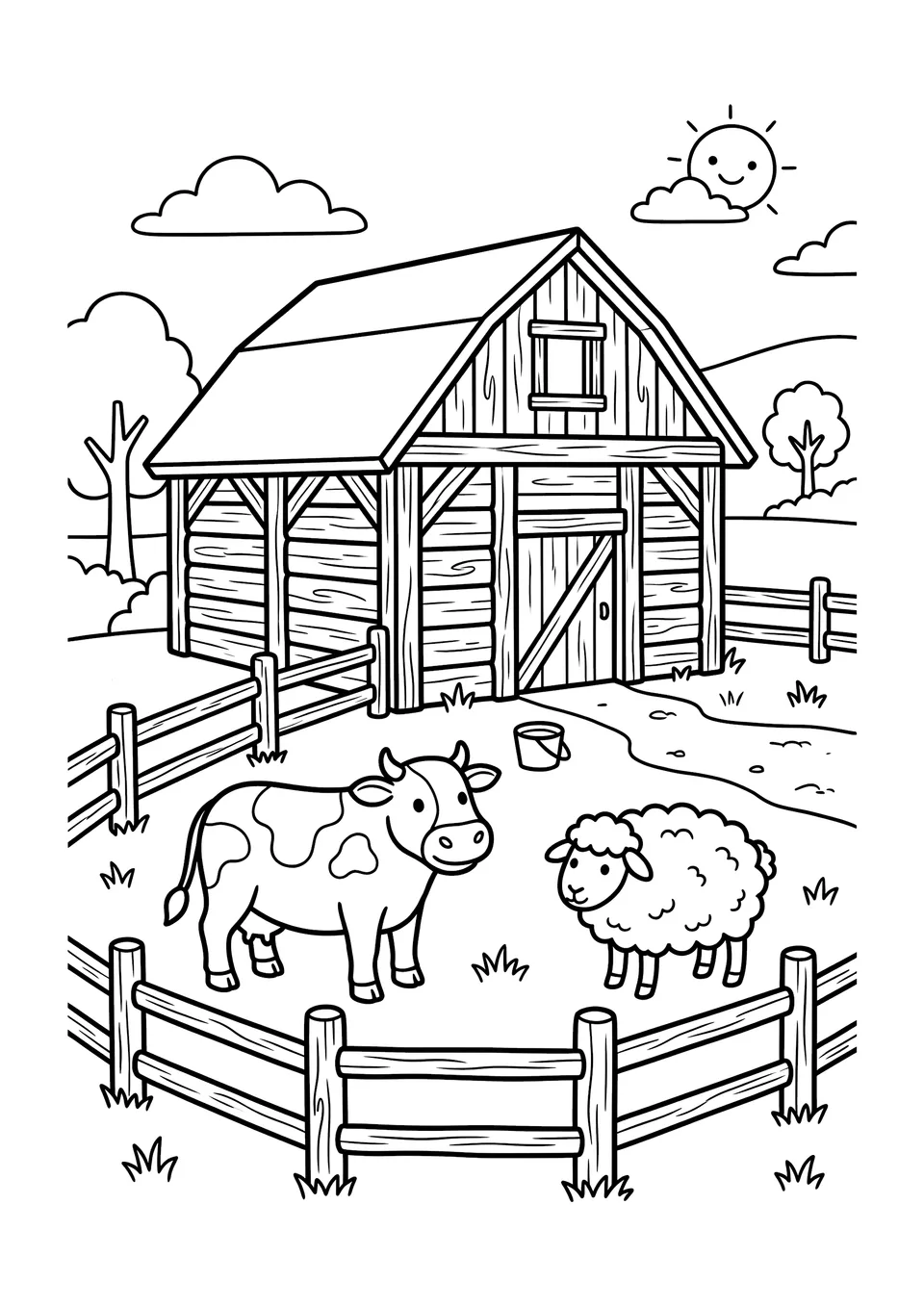
Explore farm life long ago with a barn, a cow, and a sheep to color. Pair the page with the informative reading passage A Farm from Long Ago.
PDF · Your plan’s download limits apply
What did a farm look like long ago? At Old World Wisconsin, you can visit old farm buildings and see how people once lived.
One farm has a barn made with heavy wood beams. These beams are called timbers. They help hold up the barn.
A barn gives farm animals a place to get out of the wind and rain. Farmers can also keep hay inside. Hay is dried grass that animals can eat.
Near the barn, wooden rails make a fence. The rails rest between posts. A fence can help keep farm animals from wandering away.
A cow and a sheep are two animals you might see on a farm. A cow eats grass and hay. It can give milk, too.
A sheep eats grass and hay as well. Its thick coat is called wool. People can cut off the wool and use it to make warm cloth.
Long ago, farm families had lots of work to do. They fed their animals and made sure the animals had water. They also grew crops for food.
Farm work changed with the seasons. In warm months, grass grew in the fields. Farmers cut some of it and dried it for hay.
In cold months, animals still needed food. The hay stored in the barn helped feed them when grass was hard to find.
The barn and fence were useful parts of a farm. At Old World Wisconsin, old buildings help show what farm life was like in the past.
What does the passage teach about?
What can you see at Old World Wisconsin?
How do timbers help the barn?
Why do farm animals need a barn?
How can a fence help farm animals?
What can people make from sheep's wool?
What jobs did farm families do for their animals?
What did farmers do to grass before storing it as hay?
Why was stored hay helpful in cold months?
What might happen if a farm animal wandered away from the farm?
More ways to practice with this story — every sheet is built from the text itself, answer key included where it counts.
One PDF with a cover, a contents page and every answer key at the back — color the page in, then keep going on paper.
Sentences from the passage with the capitals and punctuation removed — rewrite each one correctly.
Match the passage words to their meanings, then fill the missing words back into real sentences.
Two writing tasks that build on the passage, with plenty of lines to write on.
Download this free coloring page to print a simple historic farm scene with a timber barn, rail fence, cow, and sheep. It is a fun addition to a collection of free coloring pages about places and history.
Use the coloring page with the reading passage A Farm from Long Ago to explore how barns, fences, and hay helped farm families. Comprehension questions and a glossary can help young readers review the ideas and learn new words.
These printable coloring pages are useful for lower elementary lessons in the classroom or for reading and coloring at home.