


fix the sentence
Sentences from the passage with the capitals and punctuation removed — rewrite each one correctly.
Web preview · Open larger preview (opens in a new tab)
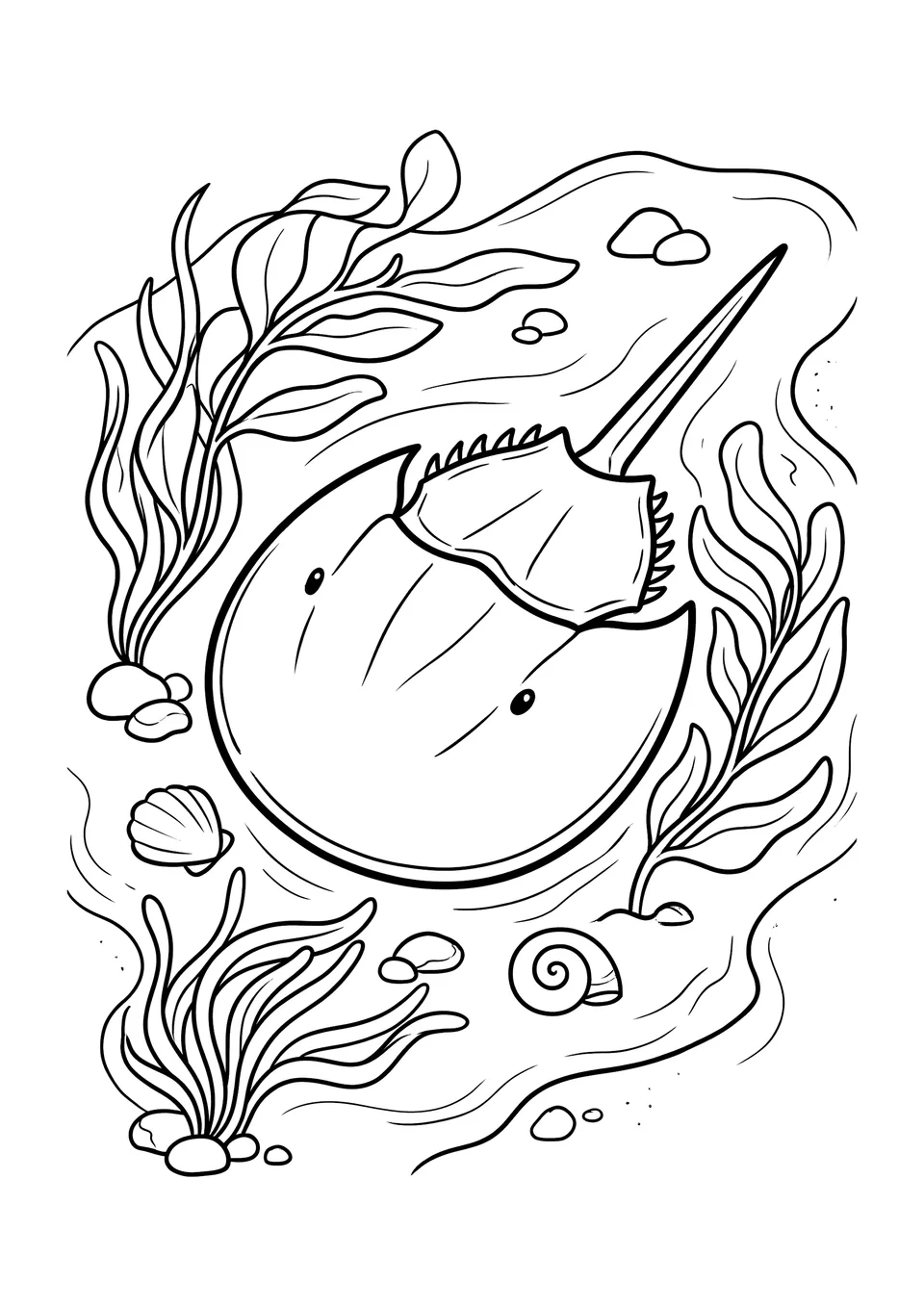
Explore a Narragansett Bay tide pool with a horseshoe crab, seaweed, and shells. Print the coloring page and read “A Crab in a Tide Pool” to learn more.
PDF · Your plan’s download limits apply
What has a hard shell and a long, pointed tail? A horseshoe crab does!
A horseshoe crab may rest in a tide pool by Narragansett Bay. A tide pool is a patch of seawater left on shore when the tide goes out.
The pool holds more than the crab. Strands of seaweed sway in the water. A few empty shells lie on the sand.
The crab’s shell is round at the front. Its shape looks a bit like a horseshoe. The hard shell helps keep the crab safe.
Look closely at its long tail. It may look sharp, but it is not a stinger. If the crab is flipped over, it can use its tail to help turn itself right side up.
Under the shell, the crab has legs for walking. It also has thin parts called gills that take in oxygen from the water.
The crab looks for food on the sandy bottom. It eats small animals, such as worms and clams. Its legs help move food toward its mouth.
A horseshoe crab grows too big for its shell. Then it sheds the old shell. A new, soft shell is underneath and hardens over time.
When the tide comes back in, seawater covers the shore again. The crab can move out of the pool and into the bay.
If you find a horseshoe crab, give it room. Watch as it moves among the seaweed and shells. There is a lot to see in one small pool!
What animal is the passage mostly about?
Where might a horseshoe crab rest when the tide goes out?
What else is in the tide pool with the crab?
How does the crab's hard shell help it?
What can the crab use its tail to do if it flips over?
What do the crab's gills take in from the water?
How do the crab's legs help it eat?
What happens after a crab sheds its old shell?
What does it mean when the seaweed strands sway?
What might the crab do when the tide comes back in?
More ways to practice with this story — every sheet is built from the text itself, answer key included where it counts.
One PDF with a cover, a contents page and every answer key at the back — color the page in, then keep going on paper.
Sentences from the passage with the capitals and punctuation removed — rewrite each one correctly.
Match the passage words to their meanings, then fill the missing words back into real sentences.
Two writing tasks that build on the passage, with plenty of lines to write on.
Download this free coloring page and print it for a closer look at a horseshoe crab in a tide pool. Its bold outlines and open spaces make it a great choice for young learners.
Pair the coloring page with the reading passage “A Crab in a Tide Pool,” comprehension questions, and glossary to explore how horseshoe crabs live and grow. Use these printable resources in the classroom or for learning at home.