


fix the sentence
Sentences from the passage with the capitals and punctuation removed — rewrite each one correctly.
Web preview · Open larger preview (opens in a new tab)
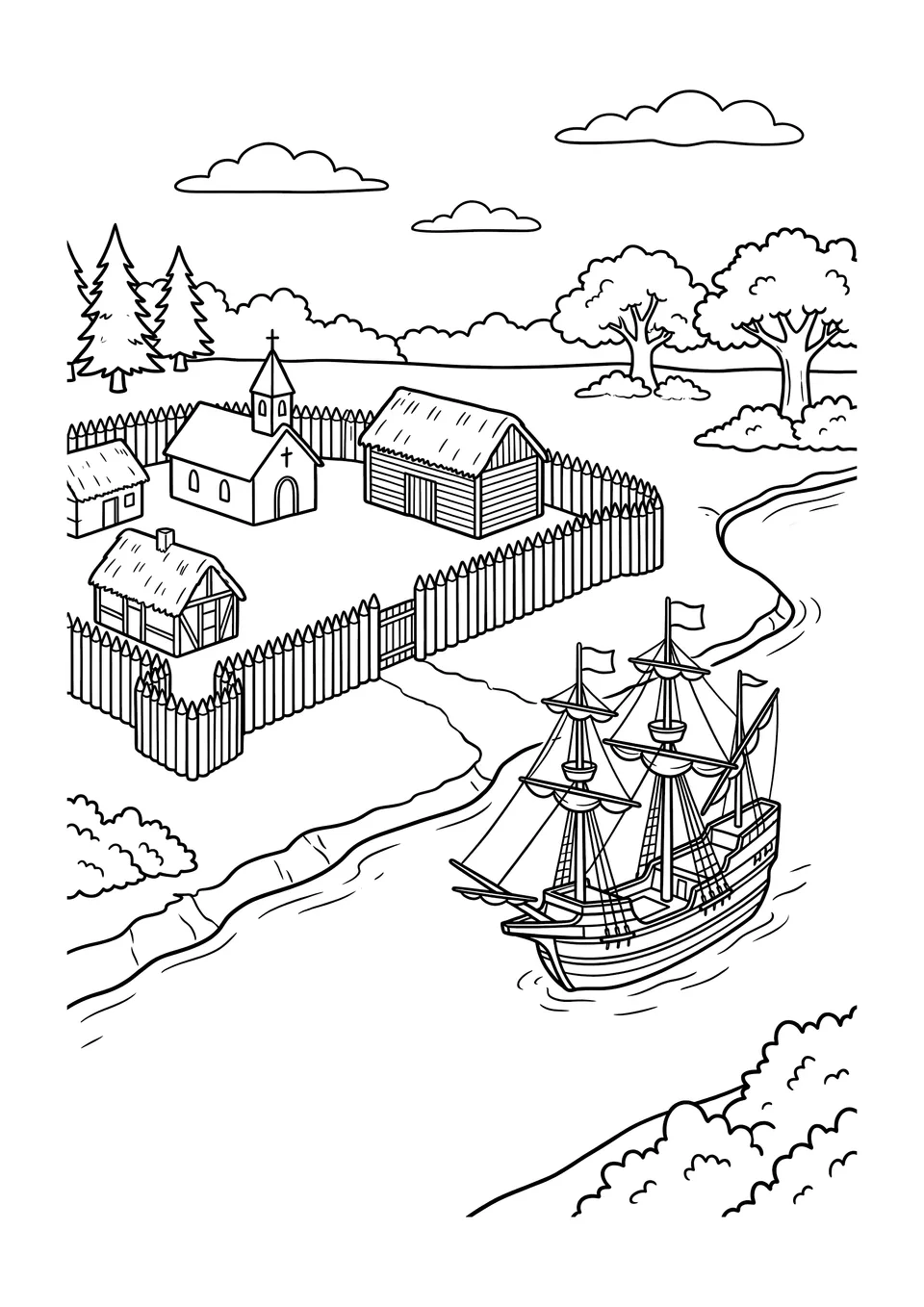
Explore early Jamestown with a ship and settlement buildings beside the James River. Print the coloring page to accompany the reading passage.
PDF · Your plan’s download limits apply
A river can be a road, a source of food, and a barrier against danger. In 1607, English settlers chose a site beside the James River in Virginia for a settlement they called Jamestown. Their ships could sail up the river from the Atlantic Ocean, bringing people and supplies.
The settlers built a fort with a protective wall of upright wooden posts. Inside were a storehouse, a church, and other simple buildings. Many structures were made from timber cut nearby. Ships anchored in the river connected Jamestown to England, but the voyage across the ocean took weeks or months. When supplies ran low, help was far away.
The location had serious problems. The river water near Jamestown could be salty and unsafe to drink, especially during dry periods. Mosquitoes spread disease, and many settlers became ill. The English also struggled to grow enough food. During the winter of 1609–1610, known as the Starving Time, many died from hunger and disease.
Jamestown was not built in an empty land. The Powhatan people had lived in the region for generations, farming, fishing, and hunting. They sometimes traded food with the English, but relations also included mistrust and violent conflict. English settlement brought lasting harm to Native communities as colonists claimed more land.
Today, archaeological discoveries, including traces of the fort and everyday objects, help researchers understand life at Jamestown. A ship on the river and wooden buildings on shore tell only part of a much larger story about survival, trade, and conflict.
How did the James River help connect Jamestown to England?
Why could the river be both useful and dangerous to the settlers?
What details explain why help could not arrive quickly when supplies ran low?
How did conditions at Jamestown contribute to the Starving Time?
How were the Powhatan people's ways of getting food different from the English settlers' experience?
What does the passage show about the relationship between the Powhatan people and the English?
What does the word “anchored” mean in the description of ships in the river?
Why does the author explain that Jamestown was not built in an empty land?
How does the passage move from describing Jamestown's location to explaining its history?
What main idea about Jamestown is supported by the passage's discussion of survival, trade, and conflict?
More ways to practice with this story — every sheet is built from the text itself, answer key included where it counts.
One PDF with a cover, a contents page and every answer key at the back — color the page in, then keep going on paper.
Sentences from the passage with the capitals and punctuation removed — rewrite each one correctly.
Match the passage words to their meanings, then fill the missing words back into real sentences.
Two writing tasks that build on the passage, with plenty of lines to write on.
Download this free coloring page to explore a colonial-era ship and buildings beside the James River. Like other printable coloring pages, it is easy to use in the classroom or at home.
Pair the coloring page with the reading passage, “Jamestown by the River,” to learn about settlement, survival, and relations with the Powhatan people. Use comprehension questions and a glossary to support discussion and understanding.