


fix the sentence
Sentences from the passage with the capitals and punctuation removed — rewrite each one correctly.
Web preview · Open larger preview (opens in a new tab)
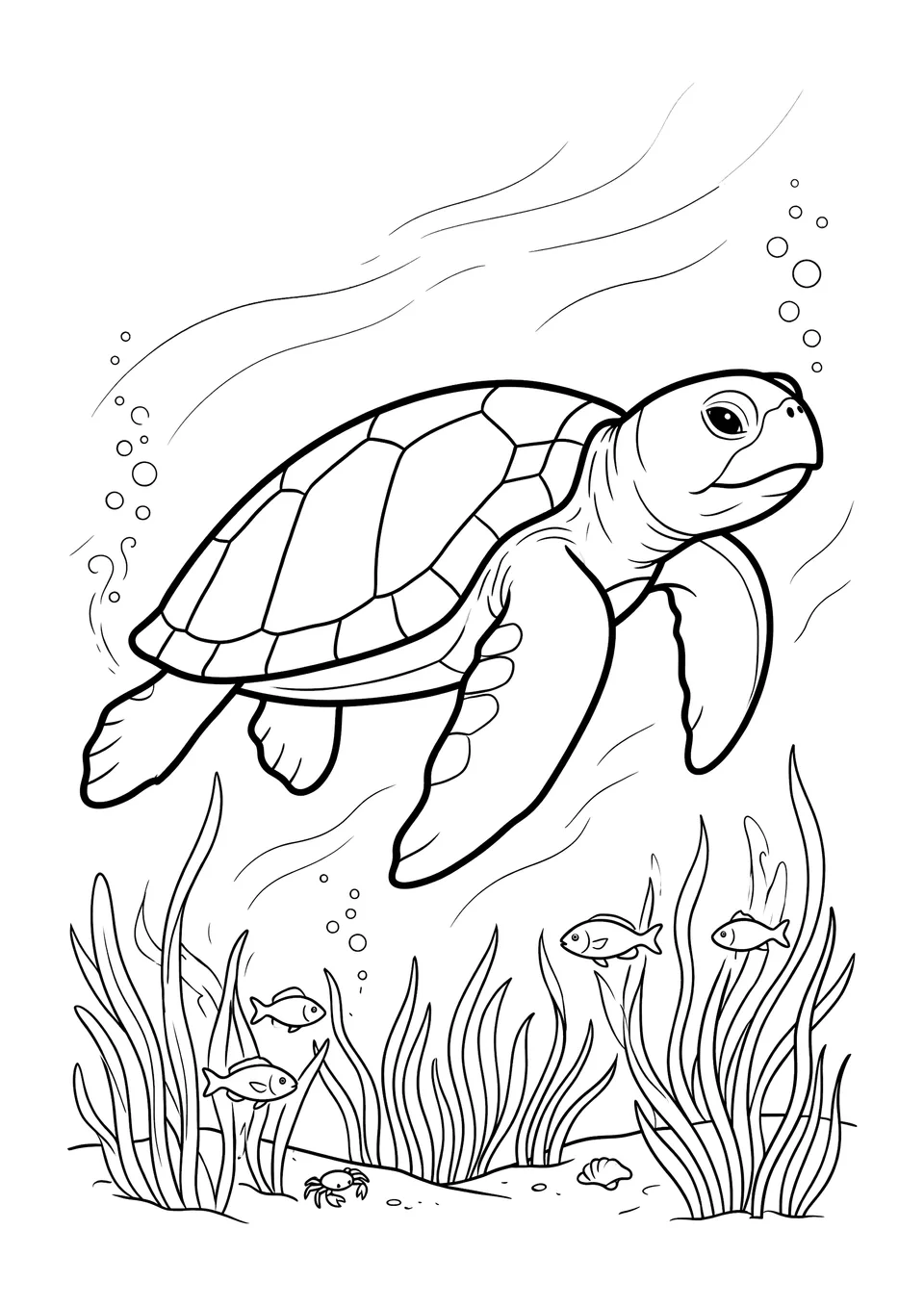
Color a loggerhead sea turtle swimming above seagrass near the South Carolina coast. Learn about its habitat and life cycle with the accompanying reading passage.
PDF · Your plan’s download limits apply
A sea turtle glides through the water near the South Carolina coast. Its broad front flippers move up and down like wings. Below, green seagrass sways in the waves.
This turtle is a loggerhead. It has a large head and a hard shell. Its shell helps protect its body.
A few small fish swim over the seagrass, too. They can hide among the blades. Many kinds of sea life find food or shelter in and near seagrass.
The loggerhead does not breathe under water. It must swim up to the top for air. Then it can dive down again.
A loggerhead has strong jaws. It can use them to crush crabs and other animals with hard shells. It also eats other sea animals.
Loggerheads spend most of their lives at sea. But females come onto sandy beaches to lay eggs. Some nest on beaches along the South Carolina coast.
A female digs a hole in the sand with her back flippers. She lays her eggs in the hole and covers them with sand. Then she heads back to the sea.
Weeks later, tiny turtles hatch from the eggs. They dig their way up through the sand. Then they crawl toward the water.
The young turtles face many dangers. Birds and other animals may eat them. Trash in the sea can hurt turtles, too.
People can help keep beaches and water clean. They can pick up trash and give nesting turtles plenty of space. A clean shore is a safer place for turtles and other sea life.
What animal is this passage mostly about?
Where is the turtle swimming at the beginning?
How does the turtle's shell help it?
Why does the loggerhead swim to the top of the water?
What can small fish do among the seagrass blades?
What does a female loggerhead do after she lays her eggs?
Where do the tiny turtles go after they dig up through the sand?
What does the word “hatch” mean in the passage?
What might happen to a turtle if there is trash in the sea?
How can people help nesting turtles?
More ways to practice with this story — every sheet is built from the text itself, answer key included where it counts.
One PDF with a cover, a contents page and every answer key at the back — color the page in, then keep going on paper.
Sentences from the passage with the capitals and punctuation removed — rewrite each one correctly.
Match the passage words to their meanings, then fill the missing words back into real sentences.
Two writing tasks that build on the passage, with plenty of lines to write on.
Download this free coloring page to pair with “A Sea Turtle Near Shore,” an informative reading passage for lower elementary learners. The picture shows a loggerhead swimming over seagrass with small fish.
Use the coloring page with the reading passage, comprehension questions, and glossary to explore how loggerheads breathe, eat, and nest. These activities work well in the classroom or at home.
Looking for free coloring pages about ocean animals? Add this printable coloring page to a sea life lesson or use it for a quiet coloring activity.